
Key takeaways
Yosemite best hiking trails range from thundering waterfall staircases to granite domes with 360-degree views, all within one valley and its high country. This guide to the Yosemite best hiking trails covers six must-do hikes, the permits and seasonal road closures you need to know, and the gear that handles wet granite, altitude, and long days.
Our top picks


 Yosemite National Park Map
- Publisher : National Geographic Maps
- Edition : 2025th
- Language : English

![Yosemite Day Hikes and National Park Map [Map Pack Bundle] (National Geographic Trails Illustrated Map)](https://m.media-amazon.com/images/I/81JiL2h8mCL._AC_UY218_.jpg)


 100 Hikes of a Lifetime: The World's
- Publisher : National Geographic
- Edition : Illustrated
- Language : English
As an Amazon Associate we earn from qualifying purchases at no extra cost to you.
As an Amazon Associate we earn from qualifying purchases.
By Jake Thompson, gear writer at Roger Bacon Outdoors
🛒 Best Price Today on Amazon
Prime members get fast, free shipping on everything above, plus member-only deals. New members get a 30-day free trial — cancel anytime.
Yosemite Best Hiking Trails to Know
Yosemite’s headline hikes deliver waterfalls, granite, and views that define the Sierra Nevada. These three are the trails first-time visitors dream about, ranging from a moderate waterfall climb to one of the most demanding day hikes in North America. Here is what each one involves.
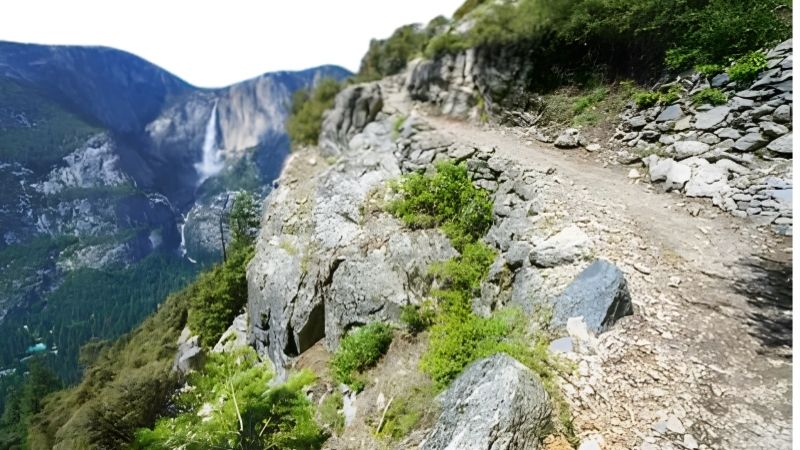
Mist Trail to Vernal and Nevada Falls
The Mist Trail is Yosemite’s signature waterfall hike, climbing granite steps past Vernal Fall and on to Nevada Fall along the roaring Merced River. The full round trip runs about seven miles with roughly 1,900 feet of gain, though turning around at the top of Vernal Fall makes a shorter but still rewarding outing.
Respect the danger here. The wet granite steps are genuinely treacherous, and hikers have died at Vernal Fall, so waterproof, grippy footwear is essential. Note that in 2026 the Mist Trail closes Monday through Thursday during the day for repairs between June 30 and late October, so hike it on weekends or start very early.
Upper Yosemite Falls Trail
For a lung-busting climb with an unforgettable payoff, the Upper Yosemite Falls Trail switchbacks about 7.6 miles round trip and 2,700 feet up beside the tallest waterfall in North America. The strenuous ascent rewards you with a dizzying view straight down the falls and across Yosemite Valley to Half Dome in the distance.
This is a full-day effort that bakes in the sun on exposed switchbacks, so start early and carry plenty of water. If the full climb is too much, the flat Lower Yosemite Fall loop is a short, easy alternative that still puts you at the base of the thundering cascade, which is especially powerful in spring.
Half Dome
Half Dome is the park’s ultimate day hike, a roughly 15-mile round trip climbing 4,800 feet past the Mist Trail waterfalls to the famous cable route up the dome’s shoulder. The final 400 feet haul you up steel cables over bare granite with steep drop-offs, demanding real fitness, an early start, and a head for heights.
A permit is required for the cables, awarded by lottery through Recreation.gov, with a preseason draw in March and a daily lottery two days out. Odds are tough, under 20 percent on many summer days, so have a backup plan. The cables are typically up from late May through mid-October, weather permitting.
More Yosemite Best Hiking Trails
Beyond the big three, the Yosemite best hiking trails include high-country lakes, a domed viewpoint, and the finest Half Dome view that needs no permit. These three round out a trip with less crowded, equally stunning options. Here is what to expect from each.
Clouds Rest
Clouds Rest is the insider’s answer to Half Dome, a roughly 12-to-14-mile round trip from the Tioga Road side that tops out at 9,926 feet, higher than Half Dome itself. It delivers arguably the best 360-degree view in the park, straight across to Half Dome’s face, with a fraction of the crowds and no permit required.
The trade-off is a narrow, exposed spine near the summit that unnerves some hikers, and the trailhead depends on Tioga Road being open, typically late spring through fall. If the Half Dome lottery does not go your way, this is the superb consolation prize that many seasoned hikers actually prefer anyway.
Cathedral Lakes
For an introduction to Yosemite’s high country, Cathedral Lakes is hard to beat, a roughly seven-mile round trip climbing about 1,000 feet from Tioga Road to two alpine lakes beneath the striking spire of Cathedral Peak. Upper Cathedral Lake, with the peak mirrored in its surface, is the showstopper and a fine swimming spot.
It is a moderate hike that trades Valley crowds for granite peaks and meadows, best from summer into early fall once Tioga Road opens. Bring a bug head-net, since mosquitoes in the high country can be fierce in early summer, and pack layers for the cooler, thinner air at higher elevation.
Sentinel Dome and Taft Point
Off Glacier Point Road, Sentinel Dome and Taft Point offer huge views for modest effort, making them a favorite for hikers wanting a payoff without a grueling climb. Sentinel Dome’s short walk ends at a 360-degree panorama, while Taft Point delivers dramatic, railing-free cliff-edge fissures overlooking Yosemite Valley far below.
You can combine both in a loop of about five miles, or do each as a short out-and-back. Because they sit on Glacier Point Road, they are only accessible from roughly late spring through the first snow, so confirm the road is open before planning your visit to either viewpoint.
What to Pack for Yosemite Best Hiking Trails
Wet granite, thin air, and long, exposed days shape what you carry in Yosemite. These five essentials cover the Yosemite best hiking trails, all real and widely available.
| Item | Why It Matters |
|---|---|
| Grippy, waterproof shoes | Wet Mist Trail granite steps |
| Hydration | Long, strenuous, sun-exposed climbs |
| Sun protection | Exposed switchbacks and domes |
| Layers and rain shell | Big temperature and altitude swings |
| Headlamp | Pre-dawn starts for Half Dome |
Grippy, Waterproof Footwear
Footwear makes or breaks a Yosemite hike. The Mist Trail’s wet granite steps are slick enough to be deadly, so waterproof shoes or boots with an aggressive, grippy outsole are essential rather than optional. The same traction protects you on the loose granite of Clouds Rest and the exposed switchbacks of Upper Yosemite Falls.
Choose a sturdy hiking shoe or light boot and break it in well before your trip, since these are long, high-mileage days. A good outsole and solid support pay off over the miles, especially on the steep, rocky descents that punish tired feet and turned ankles late in a big day on the trail.
Hydration and Sun Protection
Yosemite’s marquee hikes are long, strenuous, and often sun-exposed, so carry more water than you think you need, with a reservoir plus extra capacity for a Half Dome or waterfall day. Valley spigots offer safe refills, but filter any water you draw from streams in the backcountry or the high country.
Sun protection is critical on exposed granite and switchbacks, where there is little shade for hours. Pack a wide-brim hat, sunglasses, a sun shirt, and high-SPF sunscreen, and reapply often. The UV is stronger at Yosemite’s elevation, and it reflects off pale granite to burn faster than lower-elevation hikers expect.
Layers, Daypack, and a Headlamp
Temperatures swing hard between a warm Valley floor and a cold, breezy summit or high-country lake, so pack layers plus a packable rain shell for sudden mountain weather. A comfortable daypack carries your water, snacks, layers, and a small first-aid kit without slowing you down on the long climbs.
A headlamp is a quiet essential for the biggest days. Half Dome hikers start before dawn to finish safely, and any long trail can run later than planned. Add a bug head-net for the high country in early summer, when mosquitoes near Cathedral Lakes and Tioga Road can be genuinely brutal after dusk.
Frequently Asked Questions
These are the questions visitors ask most about the Yosemite best hiking trails. Short answers follow.
Do I need a reservation to enter Yosemite in 2026?
No. Yosemite is not using a timed-entry reservation system in 2026, including peak summer, so no day-use reservation is required. The standard 35-dollar per-vehicle pass still applies, and international visitors aged 16 and up pay a 100-dollar surcharge unless they hold an annual or America the Beautiful pass.
Which hikes need a permit?
Only Half Dome requires a permit for day hikers, specifically the cables section, awarded by a competitive Recreation.gov lottery. Every other trail here, including the Mist Trail, Upper Yosemite Falls, Clouds Rest, and Cathedral Lakes, is permit-free for day hiking, though overnight backpacking needs a separate wilderness permit.
When are the high-country trails open?
Trails on Tioga Road, like Clouds Rest and Cathedral Lakes, and Glacier Point Road, like Sentinel Dome and Taft Point, open only from roughly late spring through the first heavy snow, usually by November. Both roads were closed through Memorial Day weekend in 2026, so confirm status before planning a high-country hike.
What is the best beginner hike?
The Lower Yosemite Fall loop and the Mariposa Grove sequoia paths are easy, family-friendly options, while the Mist Trail to the top of Vernal Fall is a rewarding moderate step up. For big views with modest effort, Sentinel Dome and Taft Point off Glacier Point Road are hard to beat when the road is open.
See More:
- best travel backpack for females
- best backpack for laptops
- best hydrogen water bottle
- best headlight restoration kit
Final Thoughts
The Yosemite best hiking trails span waterfall staircases, granite domes, and alpine lakes, so plan around permits, seasonal roads, and their hazards. Enter the Half Dome lottery early, hike the wet Mist Trail on weekends or at dawn, and keep Clouds Rest as a permit-free backup. Pack waterproof shoes, water, sun protection, and layers before you go.







Write Your Review
No reviews yet. Be the first to share your experience!