
Best hiking places in Oahu run from stroller-friendly coastal paths to leg-burning crater stairs, so the right pick depends on your group. This guide to the best hiking places in Oahu sorts trails by difficulty, from easy family walks to tough climbs, and covers the gear you need for island heat, mud, and sun.
Our top picks


As an Amazon Associate we earn from qualifying purchases at no extra cost to you.
As an Amazon Associate we earn from qualifying purchases.
By Jake Thompson, gear writer at Roger Bacon Outdoors
🛒 Best Price Today on Amazon
Prime members get fast, free shipping on everything above, plus member-only deals. New members get a 30-day free trial — cancel anytime.
Easy and Family-Friendly Places to Hike
Some of the best hiking places in Oahu ask very little and give a lot, ideal for families, casual walkers, or a relaxed first day. These three deliver big scenery with gentle grades and short distances. Here is what to expect.
Makapuʻu Point Lighthouse
The Makapuʻu Point Lighthouse Trail is the easiest big-view hike on the island, a paved, roughly two-mile round trip and the only wheelchair-accessible trail on Oahu. It climbs gently to a historic lighthouse with sweeping Pacific views, and it works for strollers, kids, and grandparents alike, with no scrambling anywhere.
It shines as a sunrise walk and, in winter, a humpback whale-watching spot. The main thing to manage is sun, since the open coastal path has little shade, so bring hats and water and consider an early start to enjoy cooler air and softer light over the ocean.
Manoa Falls
Manoa Falls is the easy rainforest favorite, a 1.6-mile round trip through shaded jungle to a 150-foot waterfall just minutes from Honolulu. The gentle grade and lush, Jurassic-Park scenery make it a hit with families and anyone who wants a real waterfall payoff without a hard climb or long drive.
Plan for mud, which lingers year-round, so put kids in closed, grippy shoes rather than sandals. Parking is about seven dollars, and no one should swim at the base, since freshwater here carries a leptospirosis risk. Keep an eye on little ones near the slick rocks by the falls.
Diamond Head
Diamond Head is the accessible bucket-list hike, a 1.6-mile round trip up a crater to panoramic views over Waikiki, gaining about 560 feet on switchbacks, stairs, and old tunnels. It is moderate rather than hard, and plenty of families finish it, though the stairs and heat make it a genuine effort for young kids.
Reserve ahead, since out-of-state visitors need advance reservations plus about five dollars per person and ten to park, as of 2026. Go early, because the crater bowl bakes with almost no shade once the sun is up, and bring water for the exposed climb to the summit.
Harder Best Hiking Places in Oahu
For hikers wanting a challenge, the best hiking places in Oahu include steep ridges and brutal stairs with unforgettable payoffs. These three demand fitness, care, and an early start. Here is the honest picture.
Lanikai Pillbox
The Lanikai Pillbox hike on the Kaʻiwa Ridge is a short but steep 1.6-mile round trip to two WWII bunkers above Kailua. The climb is rocky and exposed with no guardrails, but the reward is a jaw-dropping view of the Mokulua Islands and turquoise Lanikai Beach, especially at sunrise when the light is best.
Parking is limited to residential streets where neighbors are weary of trail traffic, so arrive early and keep noise down. The steep, loose sections call for grippy shoes and careful footing, and the exposure means it is not the best pick for very young children or anyone uneasy with heights.
Koko Head Crater Stairs
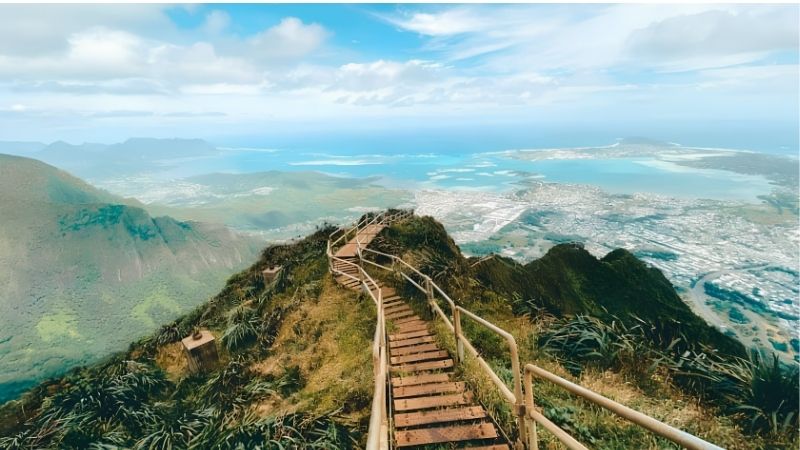
Koko Head is the island’s classic leg-burner, 1,048 old railroad-tie steps straight up the crater with no switchbacks and no shade. Most hikers take 30 to 45 minutes to grind to the top, where 360-degree views stretch from Diamond Head to Hanauma Bay and the Windward Coast reward the effort.
Start very early, because heat reflecting off the ties makes a midday climb punishing. A short bridge section over a gap intimidates some hikers, though a bypass routes around it. Bring plenty of water and take breaks, since this is a favorite local workout that humbles even fit visitors.
Kuliʻouʻou Ridge
Kuliʻouʻou Ridge is the rewarding ridge challenge, a roughly five-mile round trip gaining around 1,800 feet through shaded forest to an open summit. The trail is well-maintained and less crowded than the marquee hikes, and the summit view over the Windward Coast and Koko Head makes the sustained climb well worth it.
It is a moderate-to-strenuous outing that suits hikers with some fitness, so carry ample water for the long ascent. The upper ridge narrows and gets windy near the top, so take care with footing there. It is a great pick when you want solitude and a real climb without technical danger.
What to Pack for the Best Hiking Places in Oahu
From paved paths to crater stairs, Oahu’s heat, mud, and sun call for the same core kit. These five essentials cover the best hiking places in Oahu, all real and widely available.
| Item | Why It Matters |
|---|---|
| Grippy trail shoes | Muddy jungle and steep stairs |
| Water / hydration | Hot, shadeless climbs |
| Sun protection | Strong tropical UV on ridges |
| Kid-friendly daypack | Snacks, water, first aid |
| Basic first-aid kit | Scrapes on rocky trails |
Shoes for the Whole Family
Grippy footwear matters whether you are on a paved path or the Koko Head stairs. Manoa’s mud and the loose rock on Lanikai and Kuliʻouʻou make smooth soles risky, so trail shoes with real tread keep the whole family upright. For kids, closed-toe shoes beat sandals on every one of these trails.
Even on easy hikes like Makapuʻu, sturdy shoes prevent the blisters and stubbed toes that cut a family day short. A light hiker or trail runner with a grippy outsole is the most useful single purchase for tackling the best hiking places in Oahu with children in tow on varied terrain.
Water and Sun Protection
Water is the other must-have, especially on exposed climbs like Koko Head and Diamond Head that offer no shade. Carry at least a liter or two per person, more on hot days, and a hydration reservoir on the longer ridge hikes so everyone can sip steadily and avoid heat exhaustion on the climb.
Tropical sun is stronger than most visitors expect, so pack a wide-brim hat, sunglasses, sun shirts, and reef-safe sunscreen for everyone. On the open ridges and crater rims there is nowhere to hide from the UV, which reflects off rock and water to burn faster than a cloudy mainland day would.
Daypack and First Aid
Carry it all in a comfortable daypack sized for your group, with room for snacks, layers, and water for everyone. A breathable back panel makes a real difference in the island humidity, keeping the pack from turning into a sweaty burden on a hot climb like Diamond Head or Koko Head.
Add a basic first-aid kit, since kids on rocky trails like Lanikai pick up the occasional scrape. A few bandages, antiseptic wipes, and blister plasters turn a small tumble into a non-event and keep the hike fun rather than cut short by a minor injury far from the car.
Snacks matter more than you would think with kids, so pack a few salty and sweet options to keep energy and morale up on the climb. A hungry, tired child on the Koko Head stairs is a quick way to end a promising family hike early.
Frequently Asked Questions
These are the questions families ask most about the best hiking places in Oahu. Short answers follow.
Which Oahu hikes are best for kids?
Makapuʻu Lighthouse is the top family pick, since it is paved, gentle, and stroller-friendly with big ocean views. Manoa Falls suits families too, with an easy grade and a waterfall payoff, though it is muddy. Diamond Head is doable for older kids who can handle stairs and heat.
What is the hardest hike here?
Koko Head Crater is the toughest, with 1,048 steep railroad-tie steps and no shade. Kuliʻouʻou Ridge is a long, sustained climb, and Lanikai Pillbox is short but steep and exposed. Save these for fitter hikers and older kids, and keep the easy trails for younger children or a relaxed day.
Do these places require reservations or permits?
Only Diamond Head requires advance reservations for out-of-state visitors, plus a small entry and parking fee, as of 2026. Makapuʻu, Manoa, Lanikai Pillbox, Koko Head, and Kuliʻouʻou are free and permit-free, though Manoa charges for parking. Always check current rules before you go.
How early should we start?
As early as you can, ideally at or before sunrise on exposed trails. An early start beats the heat on shadeless climbs like Koko Head and Diamond Head, secures parking at busy trailheads, and gives families cooler, safer conditions plus the best light for photos over the coast.
See More:
- best travel backpack for females
- best backpack for laptops
- best hydrogen water bottle
- best headlight restoration kit
Final Thoughts
The best hiking places in Oahu span paved coastal strolls to brutal crater stairs, so match the trail to your group and the heat. Start families on Makapuʻu or Manoa, save Koko Head and Kuliʻouʻou for stronger legs, and reserve Diamond Head ahead. Put everyone in grippy shoes, carry water and sun protection, and pack before you fly.









Write Your Review
No reviews yet. Be the first to share your experience!