
Key takeaways
Best hiking trails at Yosemite range from a misty waterfall staircase to the cable-assisted summit of Half Dome. This guide covers six standout routes with real distances, elevation gain, and difficulty, plus a practical packing list, so you can match a trail to your fitness and time in the park and hike it safely and confidently.
Our top picks
 Yosemite National Park Map
- Publisher : National Geographic Maps
- Edition : 2025th
- Language : English

 100 Hikes of a Lifetime: The World's
- Publisher : National Geographic
- Edition : Illustrated
- Language : English
 National Geographic Complete National Parks of the
- Publisher : National Geographic
- Edition : 3rd
- Language : English


As an Amazon Associate we earn from qualifying purchases at no extra cost to you.
As an Amazon Associate we earn from qualifying purchases.
🛒 Best Price Today on Amazon
Prime members get fast, free shipping on everything above, plus member-only deals. New members get a 30-day free trial — cancel anytime.
Iconic Yosemite Valley Trails
These three are the headline hikes and the reason many visitors come to the park. They top nearly every ranking of the best hiking trails at Yosemite, and each rewards the effort with unforgettable granite scenery. Each is demanding in its own way, so start early, carry plenty of water, and check current conditions before you set out, since some sections close seasonally.
Mist Trail to Vernal and Nevada Falls
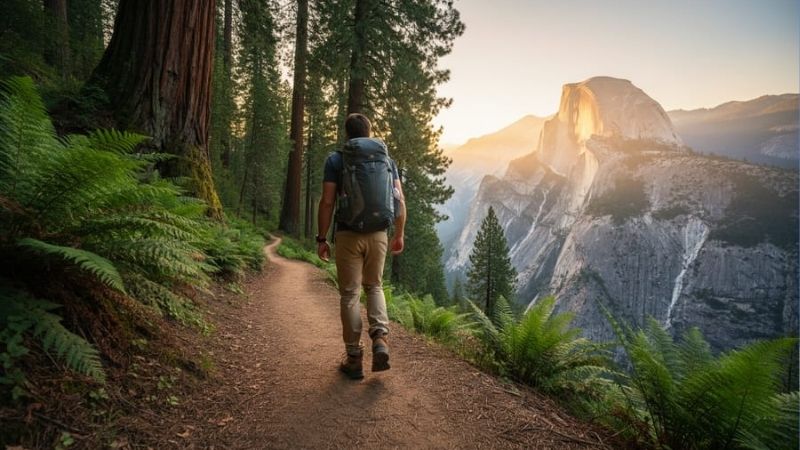
Roughly 6 to 7 miles round trip from Happy Isles with about 1,900 feet of gain, the Mist Trail is Yosemite’s most famous day hike and rates as moderate. You climb a steep granite staircase alongside the cascades, where spring spray soaks hikers and rainbows hang in the gorge.
The stairs above Vernal Fall are steep, wet, and slippery, so grippy footwear is essential, and the stair section closes in winter for ice. For a shorter day, turn around at the footbridge below Vernal Fall; to save your knees on the way down, descend the gentler John Muir Trail.
Half Dome via the Mist Trail
The park’s ultimate day hike runs about 14 to 16 miles round trip with roughly 4,800 feet of gain, and it’s strenuous, taking most hikers 10 to 12 hours. The final 400 feet ascend bare granite on fixed cables, which can be frightening and is dangerous in wet conditions.
A permit is required and issued by lottery, so plan ahead. Start before sunrise, set a firm turnaround time, and carry a headlamp in case you finish after dark. Gloves for the cables and steady nerves make the summit far more manageable.
Upper Yosemite Falls Trail
This strenuous climb covers about 7.2 miles round trip with roughly 2,600 feet of gain to the top of North America’s tallest waterfall. Columbia Rock partway up delivers sweeping valley views, and in wetter seasons you may feel refreshing mist near the top of the falls.
The trail turns rocky and steep, and there’s a waterfall directly downstream near the creek, so stay well back from the edge. The relentless switchbacks make this a serious cardio effort best tackled in cooler morning hours.
More Standout Yosemite Hikes
Beyond the valley icons, these three round out the best hiking trails at Yosemite, from a granite summit that rivals Half Dome to a gentle family stroll. They spread you across the park and suit a range of abilities and time budgets.
Clouds Rest
Starting from Sunrise Lakes near Tenaya Lake, Clouds Rest is about 14 miles round trip with roughly 2,800 feet of gain and rates as strenuous. The summit sits over 1,000 feet higher than Half Dome, and it needs no permit, which makes it a favorite for hikers who want an epic view without the lottery.
The payoff is a narrow granite ridge with 360-degree views across the high country. The exposure near the top is real, so it’s best for sure-footed hikers on a clear, dry day.
Cathedral Lakes
In Tuolumne Meadows, this roughly 7-mile round-trip hike gains about 1,000 feet and rates as moderate, leading to alpine lakes beneath the spire of Cathedral Peak. It’s a high-country classic and a gentler taste of Yosemite’s backcountry beauty.
Because it starts high on Tioga Road, the trailhead is only accessible when the road is open, typically late spring through fall. Afternoon thunderstorms are common in summer, so start early and watch the sky. The lakes make a lovely lunch spot, and strong hikers can push on toward Cathedral Pass for even wider high-country views.
Mirror Lake
An easy 2-to-4.4-mile round trip with only about 100 to 300 feet of gain, Mirror Lake is the most family-friendly of the best hiking trails at Yosemite. The seasonal lake reflects Half Dome towering overhead in spring, then often dries to a meadow by late summer.
The mostly flat, partly paved path suits kids and casual walkers, and you can extend it on the Valley Loop Trail. Go in spring or early summer for the classic mirror reflection before the water recedes.
What to Pack for Yosemite
Yosemite’s granite gets slick near waterfalls, its climbs are long and exposed, and weather shifts fast, so the right gear matters. Here are the essentials worth carrying on the best hiking trails at Yosemite, with dependable options you can find on Amazon.
| Gear | Why You Need It |
|---|---|
| Grippy hiking shoes | Wet granite on the Mist Trail and Half Dome demands traction |
| Trekking poles | Save your knees on long descents like Four Mile and Half Dome |
| Hiking daypack | Carry water, layers, and snacks for all-day routes |
| Insulated water bottle | Long, exposed climbs mean serious hydration |
| Headlamp | Pre-dawn starts and after-dark finishes on Half Dome |
Footwear and Traction
Slick, spray-soaked granite is the top hazard here, so a grippy shoe with a sticky outsole like the Salomon X Ultra or Merrell Moab is the single most important item. Trekking poles such as the budget-friendly Cascade Mountain Tech carbon pair add balance on wet steps and take pressure off your knees on steep descents.
Pack, Water, and Sun
A comfortable daypack like the Osprey Talon 22 carries water, layers, and food for long days, and an insulated bottle such as a Hydro Flask keeps water cold on exposed climbs. Add a wide-brim hat, sunscreen, and sunglasses, since much of the granite offers zero shade.
Safety Extras
A compact headlamp like the Black Diamond Spot is essential for Half Dome’s dawn starts and possible after-dark finishes. Pack a light rain shell for the Mist Trail’s spray and sudden high-country storms, plus gloves for gripping Half Dome’s cables.
Frequently Asked Questions
A few questions come up again and again when planning the best hiking trails at Yosemite. Here are quick, practical answers to help you prepare.
When is the best time to hike in Yosemite?
Late spring through early fall offers the widest trail access, with waterfalls fullest in spring and high-country routes open once Tioga Road clears, usually by late spring. Summer is busiest and hottest, while fall brings quieter trails and crisp air.
Do I need a permit?
Half Dome requires a permit issued by lottery, and the park often requires a reservation to enter in peak season. Most other day hikes, including the Mist Trail and Clouds Rest, don’t need a permit, but always check current park rules.
How hard is the Mist Trail?
The Mist Trail is moderate but strenuous in feel, with steep, wet granite stairs and about 1,900 feet of gain to Nevada Fall. It serves as a gateway to Half Dome and Clouds Rest, so if you can handle it comfortably, bigger objectives open up.
Is Half Dome safe without a guide?
Experienced, fit hikers regularly do Half Dome without a guide, but the cable section is exposed and can be fatal in wet or crowded conditions. Go on a clear day, start early, bring gloves, and turn around if storms threaten. Even so, it remains one of the best hiking trails at Yosemite for those ready for a full-day challenge.
See More:
- Best daypacks for hiking
- Best hiking sneakers men
- Best backpack for hike
- Best backpack for carry on
- Best travel backpack for men
Final Thoughts
The best hiking trails at Yosemite reward every kind of hiker, from families at Mirror Lake to summit-seekers on Half Dome and Clouds Rest. Match the route to your fitness and time, pack grippy shoes, poles, water, and a headlamp, and check permits and conditions before you go — and the park will deliver some of the finest hiking in the country.






Write Your Review
No reviews yet. Be the first to share your experience!