Key takeaways
Hiking boots vs trail runners is the footwear debate every hiker eventually faces, and the honest answer is that it depends on your load, terrain, and feet. This hiking boots vs trail runners guide compares support, weight, traction, and durability across six tested picks so you can match the right footwear to your own trails.
As an Amazon Associate we earn from qualifying purchases.
Our top picks


As an Amazon Associate we earn from qualifying purchases at no extra cost to you. Ratings are shown as listed on Amazon.
By Jake Thompson, outdoor gear writer and long-time trail tester
How to Choose in the Hiking Boots vs Trail Runners Debate
There is no universal winner, only the right tool for your hiking. Four factors decide it: how much weight you carry, your terrain, your priority on speed versus protection, and your foot health. Weigh these honestly and the choice usually becomes obvious.
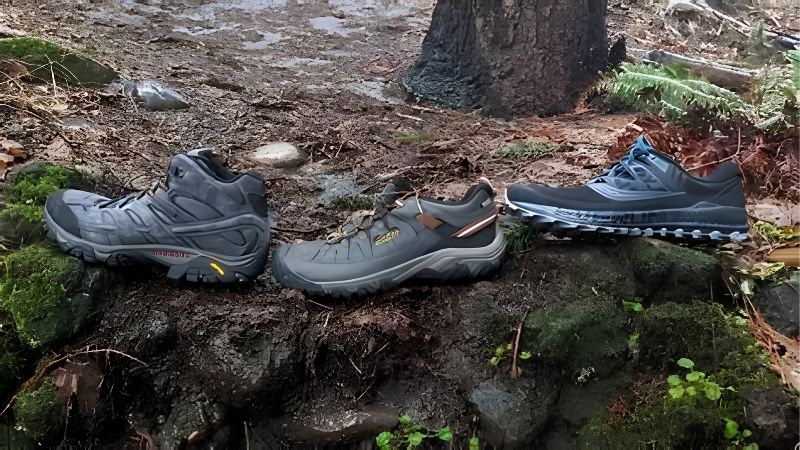
Load and Ankle Support
Boots shine under heavy packs, where a stiff sole and supportive collar steady the ankle on uneven ground. Carry thirty-plus pounds over rough terrain and that support meaningfully reduces rolls and fatigue late in a long day.
Trail runners suit light loads and strong ankles. Many thru-hikers cross thousands of miles in them because a light pack removes the need for a boot’s stability, letting the foot move naturally instead.
Terrain and Traction
Both categories now use sticky rubber like Vibram Megagrip, so traction is often a wash on the outsole itself. The difference is protection: boots better shield the foot from sharp talus and stone bruises, while runners feel nimble but transmit more impact.
Snow, scree, and off-trail travel tilt toward boots for coverage and toe protection. Smooth, dry, or well-graded trails let runners play to their strength, moving fast with less effort.
Weight, Speed, and Fatigue
Weight on the feet costs energy, and the old rule that a pound on the foot equals five on the back still rings true. Trail runners can weigh under a pound and a half a pair, versus nearly three for a burly boot, which adds up over miles.
Lighter feet mean less fatigue and faster miles, so speed-focused hikers gravitate to runners. Those prioritizing all-day protection over pace still favor the boot.
Foot Health and Durability
Runners breathe better and dry faster, which can reduce blisters, but they wear out sooner, often in 300 to 500 miles. Boots last longer, and premium leather models can be resoled to stretch their life for years.
Foot shape matters too. Wide feet often love roomy runners like Altra’s, while feet that need structure and stone protection lean toward a stiffer boot on rough ground.
Top Picks: Hiking Boots vs Trail Runners
To make the comparison concrete, here are three standout boots and three standout trail runners, with the table laying out weight, drop, and outsole. Each pick notes who it suits so you can see both sides of the hiking boots vs trail runners choice.
| Model | Type | Weight (pair, men’s) | Outsole | Best For |
|---|---|---|---|---|
| Salomon X Ultra 5 Mid GTX | Boot | ~1 lb 15 oz | All-Terrain Contagrip | Lightweight support |
| Merrell Moab 3 Mid WP | Boot | ~2 lb 4 oz | Vibram TC5+ | Budget all-rounder |
| Salomon Quest 4 GTX | Boot | ~2 lb 14 oz | Contagrip TD | Heavy loads |
| Hoka Speedgoat 6 | Trail runner | ~1 lb 5 oz | Vibram Megagrip | Cushioned, fast miles |
| Altra Lone Peak 9 | Trail runner | ~1 lb 6.4 oz | Vibram Megagrip | Wide feet, zero drop |
| Brooks Cascadia 20 | Trail runner | ~1 lb 11 oz | Vibram Megagrip | Structured, stable ride |
Salomon X Ultra 5 Mid GTX
The X Ultra 5 Mid is the boot for hikers who want support without the bulk. At about 1 lb 15 oz a pair it is remarkably light for a mid boot, yet the Gore-Tex liner and All-Terrain Contagrip outsole deliver dry feet and confident grip on technical dirt and light backpacking loads.
Salomon lasts run narrow, so wide feet should try before buying, and it lacks the burly protection of a heavier boot. For hikers leaning toward boots but craving a nimble feel, it is a near-perfect middle ground.
Merrell Moab 3 Mid WP
The Moab 3 Mid is the value boot half the trail already wears. Its Vibram TC5+ outsole, plush padding, durable leather-and-mesh upper, and over-ankle support make it comfortable out of the box and dependable for day hikes and moderate backpacking, in wide sizes too.
It is heavier and less breathable than a trail runner, and the lugs skate on slick rock. For beginners who want boot support and durability at a friendly price, though, it is the safe default.
Salomon Quest 4 GTX
When the pack is heavy and the terrain rough, the Quest 4 is the boot side’s heavy hitter. Its 4D chassis, tall Gore-Tex collar, and Contagrip TD outsole deliver stability, protection, and a locked-in heel on steep, loaded descents where runners feel sketchy.
At nearly three pounds it is heavy, warm in summer, and overkill for light days. But for expedition loads and demanding ground, it is exactly the support the boot camp is arguing for.
Hoka Speedgoat 6
The Speedgoat is the trail runner that converts boot loyalists. A plush, protective midsole isolates the foot while a Vibram Megagrip outsole with deep lugs grips technical ground, and it stays surprisingly light for all that cushion, easing long-mileage days.
Hoka’s fit runs narrow, and like all runners it wears faster than a boot and offers no ankle collar. For fast hikers and thru-hikers with light packs, though, it is a benchmark on the runner side.
Altra Lone Peak 9
The Lone Peak is the runner beloved by long-distance hikers with wide or finicky feet. Its zero-drop platform and FootShape toe box let toes splay naturally, reducing hot spots, while a roughly 25 mm stack balances cushion and ground feel at a fair price.
The zero drop needs a transition period for calves and Achilles, and the roomy, slipper-like fit feels too loose for some. For wide-footed hikers who want natural movement, it is a cult favorite for good reason.
Brooks Cascadia 20
The Cascadia is the structured, stable runner for hikers who want lockdown on uneven ground. Its updated Vibram Megagrip outsole grips a mix of surfaces, a moderate drop suits runners transitioning from road shoes, and DNA Flash cushioning keeps the ride lively yet controlled.
The narrower, more structured fit is less roomy than an Altra, and lockdown can slip on the most extreme terrain. For hikers who want a runner that feels planted and secure, it is a long-standing favorite.
Market Context: Prices, Tariffs and Timing in 2026
Whichever way you lean in the hiking boots vs trail runners question, 2026 pricing rewards a little timing. Imported footwear costs remain uncertain under shifting tariff policy, but closeout stock and the seasonal calendar open real chances to save.
Why Prices Are Moving
Both boots and runners are almost entirely imported, and tariff policy has stayed in flux in 2026 even after legal challenges, keeping costs elevated. Premium brands have raised prices using their pricing power, while budget and mid-tier makers pass costs straight to shoppers.
Because policy keeps changing, brands describe future pricing as guesswork. That uncertainty is a fair reason to buy a proven model you trust while it is in stock rather than betting on a lower price later.
Where the Deals Are
Retailers are clearing pre-tariff inventory through late 2026, so last-season versions of both boots and runners are the best place to find genuine markdowns. Trail runners update yearly, which means the prior model often sells at a steep discount with near-identical performance.
Back-to-school demand firms up early-fall prices, but Amazon’s fall sale event in early October and the late-November Black Friday and Cyber Monday windows bring the deepest cuts of the year.
Buying for Your Style
If you are switching to trail runners, buy early enough to log break-in and transition miles before a big trip, since zero-drop and low-drop shoes need calf adaptation. Popular sizes and widths also sell out fast at closeout prices.
For boots, a precise fit and break-in time matter more than a small saving. Whichever you choose, having the right footwear broken in before a trip beats a cheaper pair arriving late.
Frequently Asked Questions
These are the questions hikers ask most in the hiking boots vs trail runners decision.
Are trail runners safe for backpacking?
Yes, for light loads and hikers with strong ankles, which is why many thru-hikers use them. For heavy packs or rough, rocky, or snowy terrain, boots offer support and protection that reduce injury risk.
Do boots prevent ankle rolls better?
A supportive collar helps steady the ankle under load on uneven ground, but strong ankles and careful footing matter just as much. Runners rely on your own stability, while boots add external support.
Which causes fewer blisters?
Trail runners breathe and drain better, which can reduce blisters, but fit is what really decides it. A well-fitted boot with good socks and heel-lock lacing can be just as blister-free as a runner.
Can I use one pair for everything?
Many hikers do, choosing based on their most common conditions. Runners cover fast, light, dry outings well, while boots handle heavy loads and rough terrain, so pick for the trips you take most often.
See More:
- Best boots for rocky trails
- Best boots for snow hiking
- Budget hiking shoes
- Premium hiking boots
- Hiking shoe comparison chart
Final Thoughts
The hiking boots vs trail runners answer is personal: boots win for heavy loads, rough terrain, and durability, while trail runners win for speed, breathability, and low fatigue on light-load days. Match the six picks above to your pack weight, terrain, and feet, buy a proven model while sizes last, and you will end the debate with the footwear that actually fits your hiking.