Key takeaways
Camping mattress review shoppers want home-like comfort at the campsite, and thick, warm mattresses deliver exactly that. This camping mattress review compares six plush self-inflating and air mattresses by thickness, R-value, and comfort so you can find a cozy bed that turns a night in the tent into a genuinely good sleep.
As an Amazon Associate we earn from qualifying purchases.
Our top picks


As an Amazon Associate we earn from qualifying purchases at no extra cost to you. Ratings are shown as listed on Amazon.
By Jake Thompson, outdoor gear writer and long-time trail tester
How to Read This Camping Mattress Review
Car-camping mattresses prioritize comfort over weight, so the criteria differ from a backpacking pad. Focus on thickness, R-value, mattress type, and inflation and durability. Weigh these four and you land a plush, warm bed that suits your tent and camping style. Car camping frees you from weight limits, so comfort and warmth become the whole point.
Thickness and Comfort
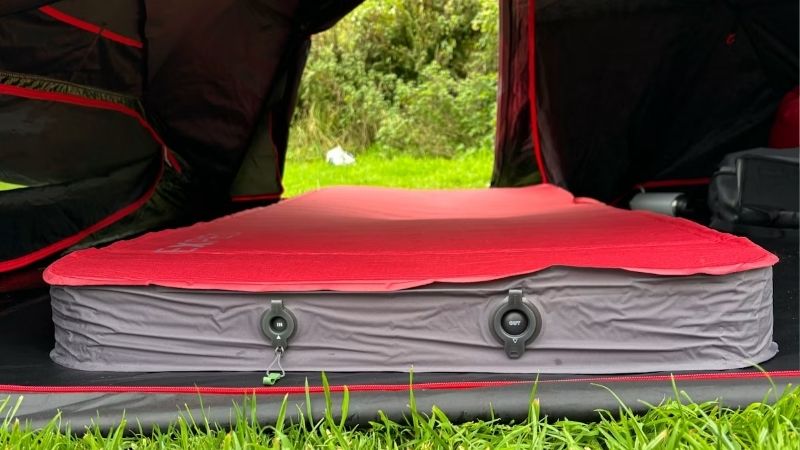
Thickness is what separates a mattress from a pad. Three inches feels comfortable, while four or five inches feels closest to a real bed and keeps side sleepers’ hips from bottoming out on hard ground.
Foam interiors add plushness beyond air alone. Self-inflating mattresses with generous internal foam stay comfortable even when not stiffly inflated, which side sleepers especially appreciate.
R-Value and Warmth
Even car campers need warmth from the ground, and thick mattresses often deliver high R-values. Values of 7 or above are common in premium models, keeping you warm well into cold-weather camping.
Standard air mattresses without insulation offer almost no warmth, which is why people sleep cold on them. Match R-value to your season, and pair a plain air bed with a pad or bag rated for the cold.
Mattress Type
Two types dominate car camping. Self-inflating foam mattresses are warm, plush, and durable but heavy, while tall air mattresses are lighter and more compact but need a pump and offer little insulation.
Choose by priority. Self-inflating models suit campers who want warmth and comfort in one, while raised air beds suit those who want a tall, bed-like surface for easy entry.
Inflation and Durability
Inflation ease varies widely. Self-inflating mattresses fill most of the way on their own but need topping off, sometimes slowly, while air mattresses inflate fast with a built-in or separate pump.
Durability comes from valve quality and shell fabric. Premium mattresses use tougher materials and better valves that resist leaks, while budget models may develop slow leaks or slippery finishes over time.
Top Picks: Camping Mattress Review
This camping mattress review lines up six plush mattresses from premium self-inflating models to budget air beds, with a match for any car camper. The table compares thickness, R-value, and best use, then each pick gets an honest look at its comfort and trade-offs.
| Mattress | Thickness | R-Value | Best For |
|---|---|---|---|
| Exped MegaMat 10 | 4 in | ~8.1 | Best overall comfort |
| REI Co-op Campwell Mattress | 3.5 in | ~7 | Best budget |
| Big Agnes Captain Comfort Deluxe | 5 in | ~8.3 | Thickest, plushest |
| NEMO Roamer | ~3.5 in | ~6 | Easiest inflation |
| Sea to Summit Comfort Deluxe | ~4 in | ~4-6 | Durable value |
| SoundAsleep Dream Series | ~18 in raised | Low | Tall air bed |
Exped MegaMat 10
The MegaMat 10 is the comfort benchmark, with four inches of plush self-inflating foam and a high R-value around 8.1 that keeps side sleepers warm in any season. Ample interior foam stays comfortable even when softly inflated, feeling close to a real mattress.
It is heavy, bulky, and the slowest of the premium mattresses to top off, so an electric pump helps. For maximum car-camping comfort and warmth, though, it reigns supreme.
REI Co-op Campwell Mattress
The Campwell is the budget standout, delivering a solid R-value around 7, a durable polyester build, and simple inflation for far less than premium models. It goes toe-to-toe with pricier mattresses on comfort for occasional campers.
Its materials are not quite as tough as top-tier options, and it is thinner than the plushest picks. For campers who want real comfort and warmth without overspending, though, it is excellent value.
Big Agnes Captain Comfort Deluxe
The Captain Comfort is the thickest, plushest pick at five inches, with a high R-value around 8.3 that handles cold nights. Its generous loft cradles hips and shoulders, making it a dream for side sleepers who want maximum cushion.
It is heavy and packs large, strictly car-camping gear. For campers who prioritize the plushest possible surface and strong warmth, though, it is one of the most comfortable mattresses available.
NEMO Roamer
The Roamer is the easiest to live with, thanks to a fast self-inflating design and an outstanding pump sack that removes the need for lung power. It is very comfortable and user-friendly, making setup and teardown quick and painless.
It feels slightly bouncier than the firmest mattresses and often needs a small top-off before bed. For campers who value convenience alongside comfort, though, it is one of the friendliest options here.
Sea to Summit Comfort Deluxe
The Comfort Deluxe is the durable value pick, costing less than the top mattresses while keeping the rugged bottom fabric serious campers prefer. It delivers dependable comfort and warmth with build quality that holds up to frequent use.
It is not quite as plush or warm as the premium leaders. For campers who want durability and solid comfort at a mid-range price, though, it is a smart, no-drama choice.
SoundAsleep Dream Series
The Dream Series is the classic tall air bed, with a built-in pump that inflates it in about a minute to an 18-inch raised, bed-like height that supports two adults. It is affordable and easy, ideal for campers who want a familiar mattress feel.
Like all plain air beds it offers little insulation and can lose air overnight as temperatures drop. For warm-weather car camping with easy setup, though, it is a comfortable, budget-friendly bed.
Market Context: Prices, Tariffs and Timing in 2026
Mattresses carry real dollar swings, so timing helps in this camping mattress review for 2026. Import cost pressure and the seasonal calendar shape prices, and premium self-inflating models especially move with the market.
Why Prices Are Uncertain
Most mattresses are imported, and 2026 tariff policy has stayed in flux even after legal challenges, keeping costs elevated. Premium self-inflating mattresses have edged up as brands use pricing power, while budget air beds pass costs straight to shoppers.
Because policy keeps shifting, brands call future pricing guesswork. That is a fair reason to buy a proven mattress you trust while it is in stock rather than waiting on a lower price.
Where the Deals Are
Closeout stock is the value play. Retailers are clearing pre-tariff inventory through late 2026, so prior-year versions of proven mattresses offer real markdowns, since designs change little year to year.
Spring and early summer bring camping-gear promotions, and major fall sales cut prices further. Timing a purchase to a sale is the surest way to land a plush mattress for less.
When to Buy
Amazon’s fall event in early October and the late-November Black Friday and Cyber Monday windows bring the deepest cuts, and mattresses make popular gifts. A wishlist plus price tracking helps you buy at the low.
If a trip is booked, prioritize the right thickness and warmth over a small saving. A plush, warm mattress in hand beats a cheaper one that leaves you cold or bottoming out.
Frequently Asked Questions
These are the questions campers ask most in a camping mattress review.
Self-inflating or air mattress?
Self-inflating foam mattresses are warmer, plusher, and more durable but heavier, while air mattresses are lighter, taller, and easier to inflate but poorly insulated. Choose by whether you prioritize warmth and comfort or a bed-like height. Many campers own both: a warm self-inflating pad for cold trips and a tall air bed for summer guests.
Do I need a high R-value for car camping?
For cold-weather camping, yes, since the ground steals heat even in a tent. Premium mattresses with an R-value of 7 or above keep you warm, while plain air beds need a pad or warm bag added. Cold seeps up through any tent floor, so ground insulation matters even beside the car.
Why do air mattresses go flat overnight?
Cooling air contracts and the shell stretches, so mattresses lose firmness overnight. Inflating a couple of hours before bed lets the material stretch, and topping off before sleep keeps the surface firm. It is normal behavior, not a leak in the mattress.
Are these mattresses good for backpacking?
No. Car-camping mattresses are thick, heavy, and bulky, built for comfort rather than portability. For backpacking, choose a lightweight air pad that packs small, and save the plush mattress for trips near the car.
See More:
- Best boots for rocky trails
- Best boots for snow hiking
- Budget hiking shoes
- Premium hiking boots
- Hiking shoe comparison chart
Final Thoughts
This camping mattress review comes down to matching thickness, warmth, and type to your car camping. The Exped MegaMat leads on comfort, the Campwell wins on value, the Captain Comfort is plushest, and the SoundAsleep gives a tall bed feel. Match the R-value to your season, buy a proven mattress while stock lasts, and your nights at camp will feel like home. Spend once on a comfortable mattress and years of better camp sleep follow.