Key takeaways
Camping cookware guide advice comes down to one truth: the right pot depends on how and where you cook. This roundup compares five field-tested cook sets across material, weight, capacity, and cleanup, from a group car-camping kit to an ultralight titanium pot, so you can choose gear that matches your meals instead of the wrong pans for the job.
As an Amazon Associate we earn from qualifying purchases.
Our top picks
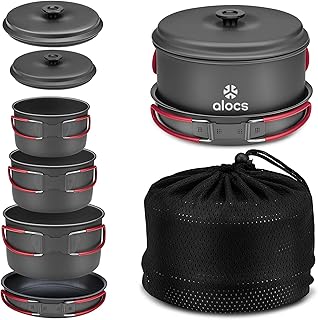


As an Amazon Associate we earn from qualifying purchases at no extra cost to you. Ratings are shown as listed on Amazon.
By Jake Thompson
How to Use This Camping Cookware Guide
Cookware choices start with your trips, not the price tag. This camping cookware guide asks three questions before you buy: what material fits your cooking, how many people you feed, and how far you carry the kit. Get those right and the rest of the decision falls into place quickly.
Material and Heat Performance
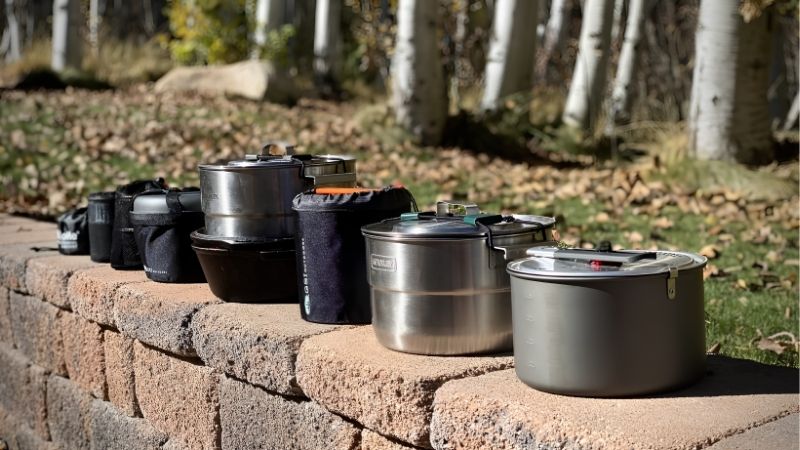
Material shapes how your cookware performs. Hard-anodized aluminum heats fast and evenly for a fair price, stainless steel is tough and cheap but heavier, titanium is featherlight yet heats unevenly, and cast iron is nearly indestructible but very heavy. Match the metal to the cooking you actually do.
Nonstick coatings add convenience at a cost. Ceramic and other nonstick finishes make cleanup easy and cook eggs without sticking, but they scratch if abused and wear over time. Bare metal lasts longer and takes abuse, so weigh easy cleanup against long-term durability for your kit.
Capacity and Group Size
Size the set to your party. A solo hiker thrives with a single small pot, a couple wants a pot plus a pan, and a family needs a multi-piece set with larger pots and several bowls. Buying too big adds weight and bulk, while too small means cooking in frustrating batches.
Think about how it nests. A good camping cookware guide values kits where pots, pans, and cups pack into one tidy bundle, since organized nesting saves space and keeps pieces from rattling loose. Check that lids double as pans and that mugs stack inside to maximize efficiency.
Weight and How You Travel
How you get to camp decides how much weight you can justify. Backpackers should prioritize light titanium or thin aluminum, while car campers can bring heavy stainless or cast iron without a second thought. Be honest about whether the kit rides on your back or in a trunk.
Durability factors into weight, too. Ultralight pots dent and scratch easily, while heavier sets shrug off abuse for decades. The right balance in any camping cookware guide depends on whether you count grams on a thru-hike or want cookware that survives years of hard family use.
Top Picks: Cookware for Every Kind of Camper
With those factors in mind, this camping cookware guide lines up five strong sets, each matched to a different material and style of cooking. The table sums up the essentials, and the reviews below explain who each set suits and the trade-offs you should expect before you buy.
| Set | Material | Serves | Weight | Best For |
|---|---|---|---|---|
| GSI Pinnacle Camper | Hard-anodized aluminum | 4 | Car-camp | Group nonstick meals |
| Stanley Base Camp Cook Set | Stainless steel | 4 | Heavier | Durable value |
| Lodge Cast Iron Skillet | Cast iron | Varies | Heavy | Searing and fire |
| Snow Peak Trek 900 | Titanium | 1-2 | ~6.2 oz | Ultralight backpacking |
| MSR Ceramic 2-Pot | Ceramic nonstick | 2-4 | Moderate | Easy cleanup |
GSI Pinnacle Camper – Best for Groups
For families, the GSI Pinnacle Camper is a complete car-camping kit. It nests three-liter and two-liter hard-anodized pots, a nine-inch nonstick skillet, and four cups, bowls, and plates into one bundle that doubles as a washbasin, covering nearly every cooking task for up to four people.
The full set is bulky and heavier than a minimalist kit, so solo hikers will find it overkill. For groups who want matching, organized cookware that packs and cleans up together, though, it is a convenient and thorough choice.
Stanley Base Camp Cook Set – Best Value
The Stanley Base Camp Cook Set brings durable stainless steel to the campsite for a fair price. It serves about four with a large pot, and its bowls, plates, and utensils nest inside for compact storage, giving car campers a rugged, dishwasher-safe kit that shrugs off years of rough handling.
Stainless is heavier than aluminum or titanium and heats less evenly, with hot spots over a small burner. But for campers who value toughness and easy cleanup over weight, its durability-per-dollar is hard to beat.
Lodge Cast Iron Skillet – Best for Fire
The Lodge Cast Iron Skillet is the piece for searing, frying, and cooking over a fire. Cast iron holds and spreads heat beautifully, comes pre-seasoned for a naturally nonstick surface, and is virtually indestructible, making it ideal for bacon, cornbread, and anything you want to brown over coals or a camp stove.
It is heavy, needs proper drying and oiling to prevent rust, and is strictly for car camping. But for campers who want restaurant-quality searing and a pan that lasts generations, it is a timeless, affordable choice.
Snow Peak Trek 900 – Best Ultralight
For backpackers, the Snow Peak Trek 900 titanium set keeps weight to a minimum. It pairs a roughly 900-milliliter pot with a frypan lid that doubles as a plate, weighs about 6.2 ounces together, and carries a lifetime warranty, making it a durable, packable core for solo or duo trips.
Titanium heats unevenly and can scorch food over a hot spot, and it costs more than aluminum. But for hikers who count every gram and mostly boil water or cook simple meals, its weight-to-durability ratio is excellent.
MSR Ceramic 2-Pot – Best Nonstick
The MSR Ceramic 2-Pot set makes cleanup effortless with a genuine nonstick surface. Two lightweight pots with ceramic coating release food easily and rinse clean with little water, offering a high capacity-to-weight ratio that suits couples and small groups cooking real meals in the backcountry.
The thin aluminum can dent, and the ceramic coating wears if scraped with metal utensils. But for campers who hate scrubbing burnt-on food and want easy, sticky-free cooking, it is a smart, convenient set.
Frequently Asked Questions
A few questions come up again and again when campers work through a camping cookware guide. Here are quick, practical answers to help you finalize your kit.
What material is best for camping cookware?
It depends on your trips. Hard-anodized aluminum offers the best all-around balance of heat, weight, and price. Titanium wins for ultralight backpacking, stainless steel for durable value, and cast iron for searing and fire cooking. Choose the material that fits how you cook and how far you carry it.
Do I need a nonstick set?
Nonstick coatings make cooking eggs and cleanup much easier, which many campers love. The trade-off is durability, since coatings scratch and wear over time, especially with metal utensils. If you cook sticky foods often, nonstick is worth it; if you value longevity, bare metal lasts far longer.
How many pieces of cookware do I really need?
Most campers need less than they think. A solo hiker can cook everything in one pot, while a couple does well with a pot and a pan. Families benefit from a multi-piece set. Start with the minimum for your group size and add pieces only if your meals demand them.
How do I care for camping cookware?
Wash promptly with mild soap and warm water, avoiding harsh scrubbers on nonstick coatings. Dry cookware fully before storing to prevent rust or mildew, and re-season cast iron with a light oil coat after cleaning. Store the set nested and dry so it is ready for your next trip.
See More:
- Best camp chair
- Lightweight camp chair
- Camping table review
- Backpacking cookware set
- Camp stove review
Final Thoughts
The point of this camping cookware guide is to match your kit to your cooking. The GSI Pinnacle serves groups, the Stanley set delivers stainless value, and the Lodge skillet rules the fire, while the Snow Peak titanium and MSR ceramic sets cover ultralight and nonstick backcountry needs. Weigh material, capacity, and weight, then pick the cookware you will actually use.