
Key takeaways
Best cooler box for camping choices come down to three specs: quart capacity, construction type and tested ice life. Nail those and the box fits your trunk, your group and your trip length. This guide sizes hard-sided boxes to real use, from weekend couples to multi-day groups, with honest trade-offs on each.
Our top picks


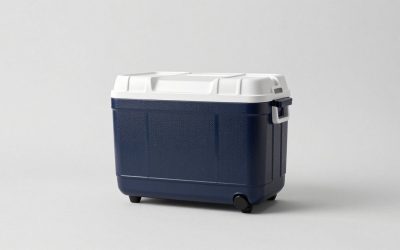
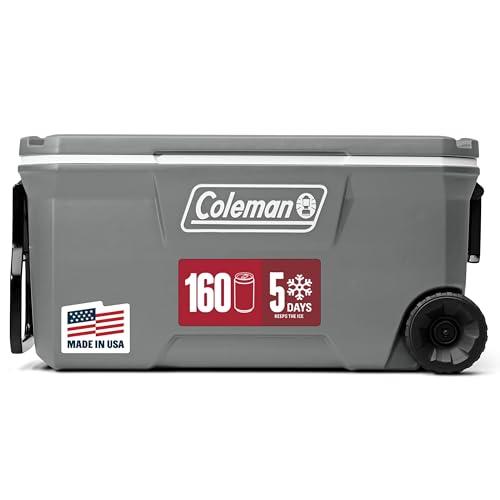 Coleman Classic Series Insulated Portable Rolling Cooler
All-terrain wheels roll over sand gravel and grass
Hard lid doubles as a seat up to 250 pounds
Tethered drain plug resists leaks and losing the cap
At over 20 pounds empty it's heavy before loading
100 quart size needs significant storage space


As an Amazon Associate we earn from qualifying purchases at no extra cost to you.
As an Amazon Associate we earn from qualifying purchases.
🛒 Best Price Today on Amazon
Prime members get fast, free shipping on everything above, plus member-only deals. New members get a 30-day free trial — cancel anytime.
How to Choose the Right Camping Cooler Box
Picking the best cooler box for camping means matching capacity to your group, then weighing construction against how long you need cold to last. These four criteria keep you from over- or under-buying.
Capacity by Trip and Group
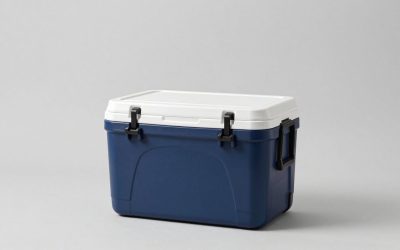
The best cooler box for camping is sized to people and days. A 20 to 30-quart box suits solo or day trips, a 45 to 60-quart box covers a weekend for a couple, and 55 to 75 quarts handles groups over multiple days. The RTIC 52-quart class is the versatile middle, fitting a trunk while holding a long weekend for two.
Remember the ice math: real performance assumes a 2:1 ice-to-food ratio, so usable food space is less than the sticker quart number. If you plan to run that ratio, size up one bracket from what the raw capacity suggests.
Construction: Rotomolded vs Molded
Rotomolded boxes like the Yeti Tundra and Pelican Elite are formed as a single piece, giving thick walls, better insulation and standout durability. Injection- and blow-molded boxes from Coleman and Igloo cost far less but use thinner plastic and shorter ice life.
The gap is real: premium rotomolded boxes cost four to six times more than budget models but hold cold two to three times longer and last three to five times as long. For frequent campers, the per-trip cost of a premium box can actually undercut replacing cheap ones.
Ice Retention Expectations
Set expectations by tier. Budget boxes hold ice 3 to 5 days, mid-range 5 to 8 days, and premium rotomolded models 10-plus days, all assuming 70 to 80 degree weather and normal use. Pre-chilling the box and limiting lid openings meaningfully extends every one of those numbers.
Sealing hardware matters as much as foam. Boxes without gaskets or latches, like some Coleman Classic and Xtreme models, let cold escape faster, which is why they trail rotomolded designs even at similar sizes.
Portability and Transport
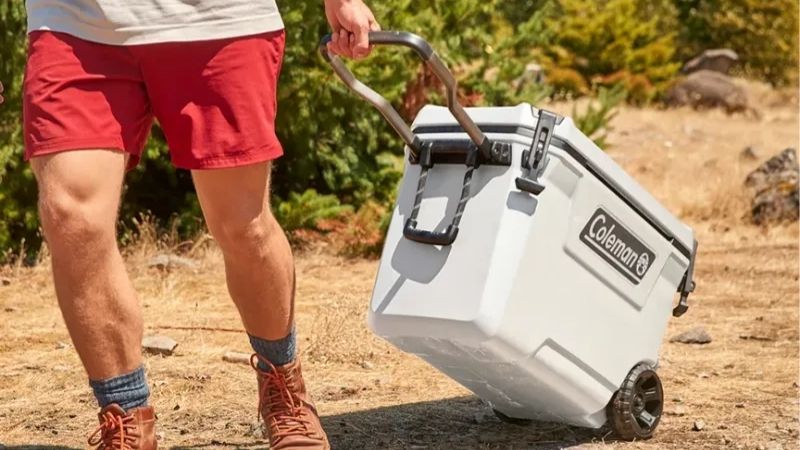
A loaded 65-quart box gets heavy fast, often needing two people to carry. If you haul over grass, sand or rough ground, a wheeled box such as the RovR RollR saves your back, though wheels eat into interior volume.
Check empty weight too: the RTIC 52 Ultra-Light lands near 21 pounds, light for its class, while big rotomolded and wheeled boxes can exceed 60 to 80 pounds loaded. Match transport to how far the box travels from car to campsite.
Top Picks for the Best Cooler Box for Camping
These six hard-sided boxes span budget to premium and fixed to wheeled, all currently on Amazon. The table snapshots the key specs before the detailed picks.
| Cooler Box | Construction | Approx. Ice Life | Capacity Class | Best For |
|---|---|---|---|---|
| Yeti Tundra 65 | Rotomolded | Up to 10 days | 55-75 qt | Groups / all-around |
| RTIC 52 QT Ultra-Light | Injection-molded | ~8 days usable | 52 qt (21 lb) | Weekend couples |
| Pelican Elite | Rotomolded | ~8 days | Mid-large | Rugged abuse |
| Igloo BMX 52 | Blow-molded | ~5 days | 52 qt | Budget-rugged |
| Coleman Classic 70-Quart | Molded (no latches) | Budget range | 70 qt (100+ cans) | Big groups on a budget |
| RovR RollR 60 | Rotomolded + wheels | Multi-day | Large, wheeled | Rough terrain hauls |
Yeti Tundra 65
The Tundra 65 is the reference box for camping groups. Rotomolded construction and thick insulation deliver up to 10 days of ice in good conditions, and the 55 to 75-quart class hits the sweet spot for two-plus people over several days using a proper ice-to-food ratio.
It is heavy and premium-priced, and you will usually want a second person to move it loaded. If you camp often and want one box that lasts years, the cost per trip makes more sense than the sticker suggests.
RTIC 52 QT Ultra-Light
The RTIC 52 Ultra-Light is the value pick for weekend couples. At 52 quarts and around 21 pounds, it fits a trunk, holds a long weekend for two, and retained usable ice for roughly 8 days in independent testing, with interior temps near 29 to 31 degrees at the 48-hour mark.
It is injection-molded rather than rotomolded, so it is a step below the toughest boxes, and some users note stretchy latches. For most campers, the price-to-performance ratio is hard to beat.
Pelican Elite
The Pelican Elite is the box for people who are rough on gear. In field testing it held ice around 8 days and shrugged off repeated shoulder-height drops with no structural damage, making it the most reliable choice when the cooler takes real abuse.
Its price sits near Yeti territory, so it is not a budget option. American manufacturing and durability certifications appeal to buyers who prioritize a box that survives expeditions rather than just weekends.
Igloo BMX 52
The Igloo BMX 52 strikes a smart balance of price and toughness. This blow-molded box holds ice about 5 days, offers 52 quarts, and adds practical touches like integrated cup holders and sturdy side handles for two-person carries.
It is not rotomolded, so both ice life and long-term durability trail premium boxes. For campers who want a rugged, affordable box for shorter trips, it is one of the best budget performers.
Coleman Classic 70-Quart
The Coleman Classic 70-Quart is the big-group budget answer. As one of the largest boxes here, its 100-plus-can capacity easily feeds a crowd, and the low price makes it painless to own several for car-camping weekends.
The trade-off is sealing: without latches or a lid gasket, cold escapes more easily, so ice life is short compared to sealed rotomolded boxes. Pack it heavy with ice and it still cools a lot of food for the money.
RovR RollR 60
The RollR 60 solves the transport problem for a big rotomolded box. Its puncture-resistant tires handle rocks and uneven terrain better than most wheeled coolers, so you can roll a loaded box from car to camp without carrying it.
Wheels and the frame reduce usable interior volume relative to the footprint, and it is bulky to store. For campsites with a long or rough walk from parking, that trade is well worth it.
What Tariffs and End-of-Summer Timing Mean for Buyers
A cooler box is a multi-year purchase, so 2026 pricing and seasonal timing are worth a look before you commit to the best cooler box for camping.
Foam and Material Costs Are Rising
Coolers lean on polyurethane foam and molded plastics, and specialty foams have climbed 10 to 15% under new tariffs, part of a roughly 7.7% overall cost rise flagged by an Outdoor Industry Association survey. Many brands now describe future prices as estimates.
For a box you will keep for years, that argues for buying the size you want now rather than waiting on a lower price that may not arrive. Locking in today beats gambling on a volatile supply chain.
Shop the End-of-Season Window
Late summer into early fall is prime cooler-buying season, with plenty of stock before ranges thin out. It also lines up with end-of-season markdowns and, later, Prime Big Deal Days in October and Black Friday, when premium boxes often see their best discounts.
If your pick is a must-have for upcoming trips, buy now rather than gambling on a sale. Popular sizes in premium boxes sell through, and a discount you cannot order does nothing for your weekend.
Price Uncertainty Favors Buying Now
Nearly every brand now frames future pricing as an estimate because tariffs and freight keep moving. When makers will not promise a price holds, the practical read is to buy the best cooler box for camping you want while today number is in front of you.
That is doubly true for premium rotomolded boxes, whose foam-heavy builds are most exposed to material inflation. Waiting for a deeper cut can backfire if the base price climbs first.
Frequently Asked Questions
These questions come up most when campers shop for a hard-sided box.
What size cooler box do I need for camping?
The best cooler box for camping for a weekend couple is a 45 to 60-quart box; for groups over multiple days, step up to 55 to 75 quarts. Remember a 2:1 ice-to-food ratio reduces usable space, so size up one bracket if you want maximum cold.
Is a rotomolded cooler worth the money?
If you camp often, yes. Rotomolded boxes hold cold two to three times longer and last three to five times as long as budget models, so the per-trip cost can undercut repeatedly replacing cheap coolers.
How do I make ice last longer?
Pre-chill the empty box, pack a 2:1 ice-to-food ratio, keep it out of direct sun, and open the lid as little as possible. These habits add days to any box, budget or premium.
Do I need wheels?
Only if you haul the box over grass, sand or rough ground far from the car. A wheeled box like the RovR RollR saves your back, but wheels reduce interior volume, so skip them if you park close to your site.
See More:
- Best rolling cooler
- Best roller cooler
- Best wheeled cooler
- Best water bottle insulated
- Best cooling cooler
Final Thoughts
The best cooler box for camping is the one whose capacity, construction and ice life match your group and trip length. Reach for the Yeti Tundra 65 for groups, the RTIC 52 Ultra-Light for weekend value, or the Coleman Classic 70 to feed a crowd cheaply, and buy ahead of the deal calendar given rising foam costs. Size it right and any box here will keep camp cold.

Write Your Review
No reviews yet. Be the first to share your experience!