
The best waterproof for tent fabric is not about grabbing a popular brand, but about matching the right formula to your tent’s material, since the wrong chemistry wastes money and can ruin your gear. This guide compares six tested 2026 sprays and sealers across fabric compatibility, breathability, UV protection, and application, so you can restore your tent’s water resistance rather than waking up damp from a worn-out coating.
As an Amazon Associate we earn from qualifying purchases.
🛒 Best Price Today on Amazon
Prime members get fast, free shipping on everything above, plus member-only deals. New members get a 30-day free trial — cancel anytime.
Start 30-Day Prime Free Trial →See Today’s Amazon DealsHow to Choose the Best Waterproof for Tent Fabric
The best waterproof for tent care starts with matching the product to your fabric and the job. Before comparing products, weigh four levers that decide results: fabric compatibility, spray versus seam sealer, breathability, and UV protection with application. Get these right and your tent sheds water like new.
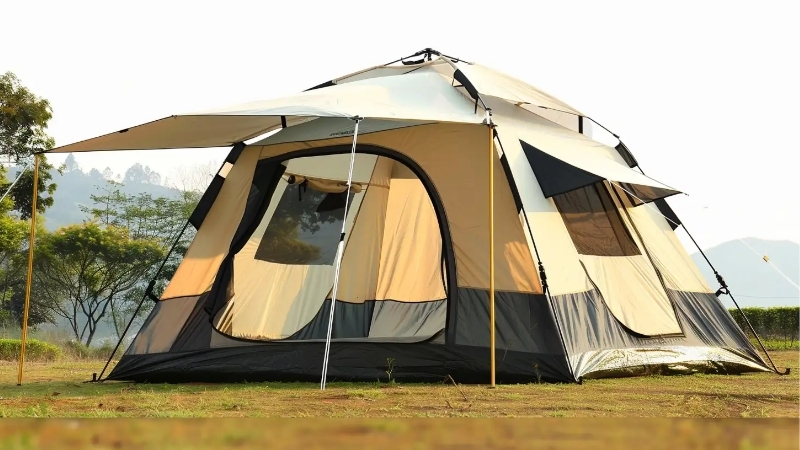
Fabric Compatibility
The single most important question is what your tent is made from, since the spray’s chemistry must match the fabric. Durable water repellent sprays restore the beading coating on synthetic nylon and polyester rainflies.
Silicone treatments suit canvas and cotton and hold up in heavy rain, but can stiffen or ruin breathable synthetic fabric. Getting this wrong wastes money and can permanently damage your tent, so match carefully.
Spray Versus Seam Sealer
A whole-fly spray and a seam sealer do different jobs, so know which you need. Sprays restore water repellency across the fabric, while seam sealers target the stitched seams where sprays do not help.
Many tents actually fail at the seams or floor rather than the fabric, where a spray alone will not fix the leak. For a full refresh, a spray plus a seam sealer covers both the fabric and the vulnerable stitching.
Breathability
Breathability matters because a tent that cannot breathe traps condensation, leaving you damp inside. Durable water repellent sprays restore beading while keeping the fabric breathable.
Silicone coatings can seal so thoroughly that they reduce breathability, which is fine for canvas but poor for a breathable backpacking fly. On multi-day trips, a breathable treatment cuts internal moisture buildup noticeably.
UV Protection and Application
Sun is a silent killer of tent fabric, so a treatment that adds UV protection prolongs your tent’s life alongside waterproofing. Some sprays combine water and sun protection in one step.
Application varies, from simple spray-on formulas to ones that ask you to clean the fabric first or cure at room temperature. Water-based, PFAS-free options are safer to work with and better for the environment.
Buying Tent Waterproofing in 2026: Prices and Timing
Beyond formula, timing shapes what you pay for the best waterproof for tent maintenance in 2026. Chemical and packaging costs have climbed, and camping season swings prices, so a little planning helps.
Tariffs and Material Costs
Broad tariff pressure on imported components has nudged outdoor-care product costs upward this year. Brands have described some new prices as estimates that may shift as trade conditions change.
The practical upshot is that these treatments are inexpensive relative to a tent, so re-proofing is almost always cheaper than replacing gear. When you spot a worn coating, treating it early prevents bigger problems.
Seasonal Timing
Waterproofing demand rises heading into camping season, so stocking up in the off-season can save money and ensure you have product on hand. Buying ahead means you are ready before the first wet trip.
Major sales windows, including October’s Prime Big Deal Days and the late-November Black Friday and Cyber Monday stretch, often bundle outdoor-care products at a discount.
Treat Before It Fails
Most people do not realize how quickly a tent’s water resistance breaks down, since sun, abrasion, and use wear out the coating even before it visibly leaks. Treating at the first sign of poor beading keeps you dry.
Buying early lets you clean and re-proof at home in dry conditions, following the product’s directions, so the treatment cures properly before your trip.
Top Picks: The Best Waterproof for Tent Products Reviewed
These six picks for the best waterproof for tent protection span an all-in-one overall, a technical DWR, an eco-friendly option, a general-purpose value, a canvas silicone, and a seam sealer. The table gives a quick overview, then each review covers who it suits and its trade-offs.
| Product | Type | Best For | Price Tier |
|---|---|---|---|
| Nikwax Tent & Gear SolarProof | DWR + UV | Best overall | Mid |
| Gear Aid Revivex DWR Spray | DWR | Technical synthetic | Mid |
| Nikwax TX.Direct Spray-On | DWR | Eco-friendly | Mid |
| Scotchgard Heavy Duty Water Shield | General | All-purpose value | Budget |
| Kiwi Camp Dry Heavy Duty | Silicone | Canvas and heavy rain | Budget |
| Gear Aid Seam Grip TF | Seam sealer | Sealing seams | Mid |
Nikwax Tent & Gear SolarProof
The Nikwax Tent & Gear SolarProof is our best overall, a water-based, PFAS-free treatment that restores durable water repellency while adding UV protection to fight the sun damage that degrades fabric. It works best after cleaning with Nikwax’s wash, and one bottle covers a large tent.
It is aimed at synthetic fabrics rather than canvas. For most campers refreshing a nylon or polyester tent, it is the smartest, most complete pick.
Gear Aid Revivex DWR Spray
The Gear Aid Revivex DWR Spray is our technical synthetic pick, engineered for nylon, polyester, and Gore-Tex to restore both water repellency and breathability in one application. Campers report noticeably less condensation on multi-day trips after using it.
It is priced above budget general sprays. For campers with technical synthetic tents who want breathability restored too, it is the clearest fabric-first choice.
Nikwax TX.Direct Spray-On
The Nikwax TX.Direct Spray-On is our eco-friendly pick, a PFC-free, water-based DWR that needs no heat to cure, making it beginner-friendly, and it restores beading on breathable synthetic flies without harming breathability. Application is simple and clean.
It is best for synthetic fabrics, not canvas. For eco-conscious campers who want an easy, effective refresh on breathable tents, it is an excellent option.
Scotchgard Heavy Duty Water Shield
The Scotchgard Heavy Duty Water Shield is our all-purpose value pick, an easy-to-find aerosol that works on almost anything, from canvas tents to boots and packs, at a wallet-friendly price. It is the easy-button choice for general use.
It is not optimized for technical breathable membranes. For campers who want an affordable, versatile spray for mixed gear, it is a dependable value.
Kiwi Camp Dry Heavy Duty
The Kiwi Camp Dry Heavy Duty is our canvas and heavy-rain pick, a silicone water repellent that holds up well against heavy rain and suits canvas and cotton tents. It lays down a tough, water-shedding barrier.
Its silicone formula can stiffen breathable synthetic fabric, so it is not for technical flies. For owners of canvas tents facing serious rain, it is a strong, affordable choice.
Gear Aid Seam Grip TF
The Gear Aid Seam Grip TF is our seam-sealing pick, the industry standard for sealing the leaky seams and old coatings where whole-fly sprays cannot help. It targets the stitching that often fails first.
It treats seams, not the whole fabric, so it pairs with a spray rather than replacing one. For campers chasing a seam leak, it is the go-to fix.
Frequently Asked Questions
Quick answers to the questions campers ask most when choosing the best waterproof for tent care.
How do I know which product my tent needs?
Start with your fabric. Synthetic nylon or polyester rainflies want a durable water repellent spray that restores beading and keeps breathability, while canvas and cotton tents want a silicone treatment that stands up to heavy rain. Do not use silicone on breathable synthetic fabric, as it can stiffen and ruin it. Matching chemistry to fabric is the whole game.
Will a spray fix a leaking seam?
No. Whole-fly sprays restore water repellency across the fabric but do not seal the stitched seams, which is where many tents actually leak. For seam leaks you need a dedicated seam sealer, applied to the stitching. For a full refresh, use a spray on the fabric and a seam sealer on the seams so both the surface and the vulnerable stitching are protected.
How often should I re-waterproof my tent?
It varies with use and sun exposure, but the signal is simple: when water stops beading and starts soaking in, the coating has worn out. Sun, abrasion, and repeated use degrade the finish faster than many campers expect, even before an obvious leak. Treating at the first sign of wetting out, rather than waiting for a soaking, keeps you comfortable.
Are these treatments safe for the environment?
Many modern options are water-based and PFAS-free or PFC-free, which are safer to work with and better for the environment than older solvent formulas. Some also skip added scent, VOCs, and optical brighteners. If eco-impact matters to you, look for these labels, and apply in a ventilated space following the directions to use the product safely and effectively.
See More:
- best rain jacket for runners
- best everyday carry multi tool
- best travel binoculars
- best safari binoculars
- best rangefinding binoculars
Final Thoughts
Choosing the best waterproof for tent protection comes down to matching the formula to your fabric and the job rather than grabbing any popular can. Nikwax Tent & Gear SolarProof leads overall, Gear Aid Revivex suits technical synthetics, and Kiwi Camp Dry covers canvas, while Gear Aid Seam Grip seals seams. Treat your tent before the coating fails, match the chemistry to the fabric, and any of these six will keep you dry.
Our top picks


As an Amazon Associate we earn from qualifying purchases at no extra cost to you.


Write Your Review
No reviews yet. Be the first to share your experience!