
Key takeaways
Best shoes for trail running come down to matching grip, cushion, and drop to the ground you actually run on. This guide compares six tested pairs — from a do-everything all-arounder to a max-cushion crusher and a mud specialist — with real weights, stack heights, and lug depths so you can pick with confidence rather than guesswork.
As an Amazon Associate we earn from qualifying purchases.
🛒 Best Price Today on Amazon
Prime members get fast, free shipping on everything above, plus member-only deals. New members get a 30-day free trial — cancel anytime.
Start 30-Day Prime Free Trial →See Today’s Amazon DealsHow to Choose the Best Shoes for Trail Running
The best shoes for trail running are the ones tuned to your terrain, mileage, and stride. Before comparing models, it helps to weigh four levers that shape ride and durability: outsole traction, cushioning, heel-to-toe drop, and overall weight. Get these right and the shoe disappears under you.
Match Traction to Your Terrain
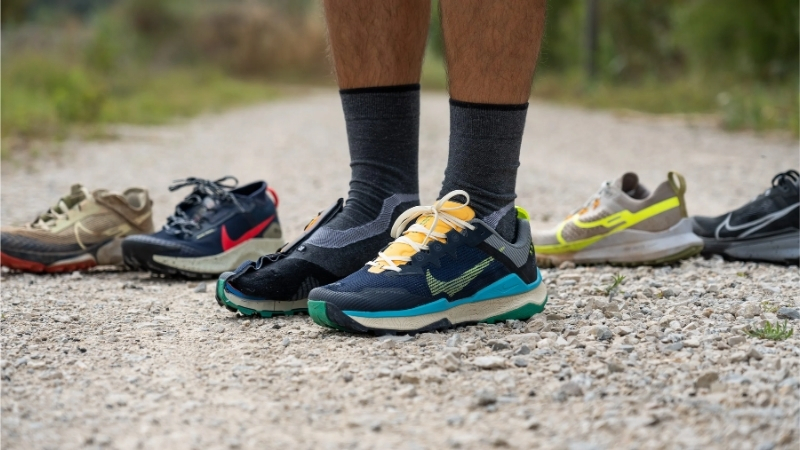
Lug depth and rubber compound decide how a shoe bites. Muddy, loose ground rewards deep 5mm-plus lugs, while hardpack and gravel run smoother on shallower lugs that do not feel clumsy on pavement. Vibram Megagrip and Saucony PWRTRAC are the sticky compounds worth seeking out.
In testing on wet granite and root-strewn singletrack, Megagrip outsoles held lines that shallower-lugged trainers slid off. If your routes mix road and dirt, a moderate 4mm lug keeps you steady on trail without chewing up your stride on the connector miles.
Cushion and Stack Height
Stack height is how much foam sits between foot and ground. A tall 37/32mm stack, as on the Speedgoat, soaks up rocky descents and long-distance pounding, while a lower stack keeps you closer to the trail for nimble, technical footwork and quick direction changes.
More foam is not automatically better. Over off-camber terrain, a very tall midsole can feel tippy, so pair big cushion with a wide platform. Runners chasing all-day comfort lean high-stack; those who want precise foot placement often prefer a firmer, lower deck.
Heel-to-Toe Drop
Drop is the height difference between heel and forefoot, usually 0 to 12mm. Higher drops around 8-12mm suit runners transitioning from road shoes, while lower and zero drops encourage a midfoot strike but demand stronger calves and a careful break-in period.
Most current trail shoes land at a moderate 4-6mm, a sweet spot that works for a wide range of gaits. If you are unsure, start near your road-shoe drop and adjust from there rather than jumping straight to zero drop.
Weight, Fit, and Protection
A typical trail shoe weighs 9-11 ounces per men’s shoe; lighter feels faster but often trims rock plates and overlays. Rock plates shield the sole on jagged terrain, while reinforced toe caps and gaiter attachments add protection for rough, brushy country.
Fit matters more off-road than on. Trails shift your foot around, so look for a locked-down heel and enough toe-box room to splay on descents. HOKA models tend to run narrow, while Altra builds a famously roomy foot-shaped toe box.
Buying Trail Shoes in 2026: Prices and Timing
Gear pricing is unusually fluid this year, and the best shoes for trail running are squarely in the crosshairs. A little context on tariffs and seasonal timing can save you real money if you plan the purchase instead of buying on impulse mid-season.
How Tariffs Are Nudging Prices Up
Outdoor brands report input costs rising roughly 7.7% under new tariffs, with technical materials like high-tenacity nylon climbing 10-15%. In footwear terms, a shoe that sold near $50 can drift toward $59-64, and mid-priced models often move $20-40 as those costs pass through.
Brands have been candid that quoted prices are estimates while supply chains settle. That uncertainty cuts against waiting indefinitely: the trend line on trail-shoe pricing points up, not down, for the foreseeable stretch of the season.
Seasonal Timing and Availability
Late summer is prime restock season, so sizes and popular colorways are at their fullest right now. As fall arrives and demand spikes, the common sizes in top models are the first to sell through, leaving you waiting or settling for a second choice.
If you can hold out, October’s Prime Big Deal Days and the late-November Black Friday window bring the deepest discounts. Build a wishlist now, track prices, and you will be ready to strike when the good deals actually land.
Why Buying Sooner Can Pay Off
For a must-have pair you will lace up all season, buying early beats gambling on both stock and price. You get a proper fit window to break the shoes in, and you sidestep the mid-season size crunch that hits the most popular models hardest.
The move is simple: buy staples early when selection is broad, but hold discretionary upgrades for the big sale events. That split lets you dodge the worst of the price creep while still catching genuine markdowns later in the year.
Top Picks: The Best Shoes for Trail Running
These six picks are the best shoes for trail running across the terrain most runners actually face, from smooth rolling dirt to technical alpine rock and shoe-sucking mud. Every pair below is current, in stock on Amazon, and chosen for a specific job rather than a one-size-fits-all promise.
| Shoe | Drop | Weight (men’s) | Best For |
|---|---|---|---|
| Saucony Peregrine 16 | 5mm | ~10 oz | All-around |
| HOKA Speedgoat 7 | 5-6mm | ~10.7 oz | Max cushion |
| Brooks Cascadia 19 | 8mm | ~11.1 oz | Long, stable runs |
| Salomon Speedcross 6 | ~10mm | ~10.4 oz | Mud & soft ground |
| Altra Lone Peak 9 | 0mm | ~10.6 oz | Zero-drop & wide feet |
| HOKA Torrent 4 | 5mm | ~9 oz | Value |
Saucony Peregrine 16 — Best All-Around
If you want one pair that does nearly everything, this is it. The Peregrine 16 pairs a grippy PWRTRAC outsole with 5mm lugs and firm-but-lively PWRRUN cushioning, handling casual dirt strolls and technical ridgelines with equal composure. It is the shoe most reviewers hand to a runner asking what to buy first.
The trade-off is character: it excels at everything without dominating any single category, so mud specialists and max-cushion fans may want something more focused. A GORE-TEX version exists for wet climates, though it adds weight. For most runners, the standard model is the smarter, more versatile call.
HOKA Speedgoat 7 — Best Max Cushion
Built for runners who want plush protection over long, rugged miles, the Speedgoat 7 stacks 37/32mm of supercritical EVA over a Vibram Megagrip outsole with 5mm lugs. Reviewers found this version lighter and springier than before, and the deep bite handles nearly any surface with confidence at around 10.7 ounces.
Two catches: the fit runs narrow, a longstanding Speedgoat trait that has not changed, and the latest model carries a noticeable price hike. If your feet are wide or budget is tight, look elsewhere; if you log big vertical and want a cushioned, do-it-all crusher, few shoes match it.
Brooks Cascadia 19 — Best for Long, Stable Runs
The Cascadia is the approachable, protective workhorse for runners who value balance over aggression. The switch to DNA Loft v3 foam gives this version real energy return the older, flatter models lacked, while a wide, stable platform keeps you planted on wonky terrain over distance. It even feels usable on pavement to the trailhead.
At about 11.1 ounces it is one of the heavier picks here, and dedicated mud-runners will want deeper lugs. But if you are not racing ultras and want a comfortable, secure shoe for long training days, the Cascadia’s predictable ride is exactly the point.
Salomon Speedcross 6 — Best for Mud and Soft Ground
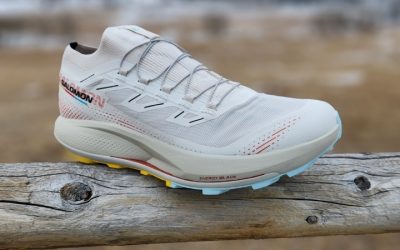
When the trail turns to slop, the Speedcross earns its reputation. Deep, aggressive chevron lugs and a higher drop dig into mud, wet grass, and loose dirt where shallower-lugged shoes skate. The signature Quicklace system cinches a secure fit fast, which matters when conditions are miserable and your hands are cold.
Those tall lugs feel clumsy and wear quickly on hardpack and pavement, so this is a specialist, not an everyday trainer. The fit is snug and performance-oriented. If your routes are consistently soft, muddy, or technical, though, nothing here grips loose ground more confidently.
Altra Lone Peak 9 — Best Zero-Drop and Wide Fit
A thru-hiker and trail favorite, the Lone Peak 9 pairs a zero-drop platform with Altra’s roomy, foot-shaped toe box that lets your toes splay naturally on long descents. Editors who hiked the Triple Crown raved about earlier versions across thousands of miles, and the balanced cushioning suits big days without feeling mushy.
Zero drop is not for everyone: runners coming from higher-drop shoes need a gradual break-in to avoid calf and Achilles strain. Outsole durability has historically been the weak point on high-mileage use. For wide feet and a natural ride, though, it remains the benchmark.
HOKA Torrent 4 — Best Value
The Torrent proves a capable trail shoe need not be expensive. At roughly 9 ounces it is the lightest pick here, with a nimble, responsive ride and enough grip for everything from local dirt to exposed ridgelines. For newer trail runners it is a well-rounded, wallet-friendly entry that punches above its price.
You give up the plush stack and rock protection of pricier crushers, so it is less ideal for very long, rocky ultras. The lower-profile cushioning also transmits more of the ground. But as an affordable, do-most-things trail shoe, the Torrent 4 is hard to beat on value.
Frequently Asked Questions
A few common questions come up whenever runners shop for the best shoes for trail running. Here are quick, practical answers to help you finalize your pick.
Are trail running shoes worth it for hiking?
For most day hikers and even many backpackers, yes. Trail runners are lighter and more flexible than boots, letting you cover ground with less effort, and models like the Lone Peak and Speedgoat have thousands of thru-hiking miles behind them. The trade-offs are less ankle support and shorter outsole lifespan.
How long do trail running shoes last?
Expect roughly 300-500 miles depending on the shoe, your weight, and terrain. Aggressive lugs on rocky or abrasive ground wear faster, while the midsole foam also loses its rebound over time. Watch for flattened lugs and a dead-feeling ride as signs it is time to replace them.
What drop is best for trail running?
There is no universal answer, but most current shoes settle at a moderate 4-6mm that works for a broad range of runners. If you are coming from road shoes with an 8-12mm drop, match that first, then transition lower gradually if you want a more natural midfoot strike.
Can I use trail running shoes on the road?
Short connector miles on pavement are fine, and moderate-lug shoes like the Peregrine handle mixed routes well. But deep-lugged mud shoes such as the Speedcross feel awkward and wear quickly on hard surfaces. For heavy road mileage, a dedicated road shoe is the better tool.
See More:
- Best rated binoculars for hunting
- Best waterproof boots for hiking
- best waterproof rain jacket women
- sleeping pad best
Final Thoughts
The best shoes for trail running are the ones matched to your terrain, mileage, and stride, not just the flashiest release of the season. The Peregrine 16 is the safe all-around bet, the Speedgoat rewards long cushioned miles, and the Speedcross owns the mud. Buy your staples early while sizes are full and prices are still climbing, and you will be running happy long before the fall crowds thin the shelves.
Our top picks


As an Amazon Associate we earn from qualifying purchases at no extra cost to you.

Write Your Review
No reviews yet. Be the first to share your experience!