
Key takeaways
Best rated binoculars for hunting matter more than most hunters admit — you glass far more than you shoot. This roundup compares six field-tested pairs, from a value-leading 10×42 to a premium ED-glass upgrade, with real specs on magnification, objective size, eye relief, and field of view so you can pick the right glass for your terrain and light.
As an Amazon Associate we earn from qualifying purchases.
🛒 Best Price Today on Amazon
Prime members get fast, free shipping on everything above, plus member-only deals. New members get a 30-day free trial — cancel anytime.
Start 30-Day Prime Free Trial →See Today’s Amazon DealsHow to Choose the Best Rated Binoculars for Hunting
The best rated binoculars for hunting are the ones matched to how far you glass, how long you sit, and how dim the light gets at the edges of legal shooting hours. Four factors carry most of the decision: magnification and objective size, glass quality, durability, and the balance of field of view and eye relief.
Magnification and Objective Size
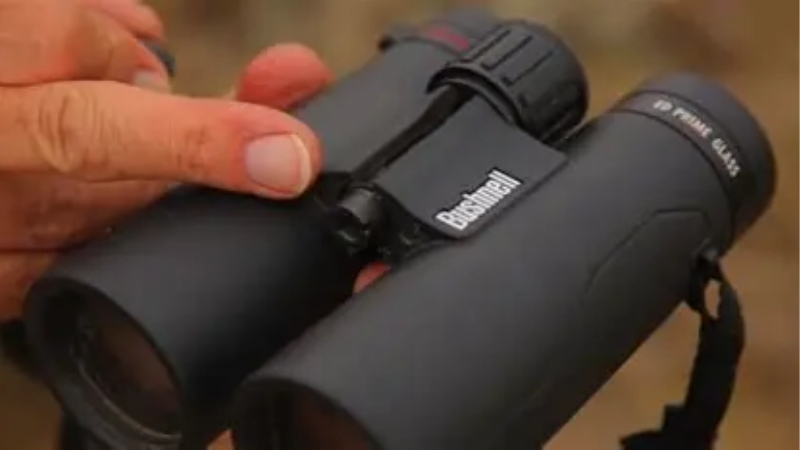
The 10×42 configuration is the hunting standard for good reason. Ten-power reaches across open country to evaluate animals at 300-600 yards, while a 42mm objective gathers enough light for the critical dawn and dusk windows without making the binocular too heavy to carry all day.
Terrain shifts the math. In thick timber, 8×42 gives a wider, steadier view for close work, while 12×50 pulls in detail for Western glassing beyond 800 yards at the cost of weight and hand-holding stability. Most hunters are best served by a versatile 10×42.
Glass, Coatings, and Low-Light Performance
Coatings separate good glass from mediocre. Fully multi-coated lenses, dielectric and phase-corrected roof prisms, and HD or ED elements boost brightness and cut the color fringing you see on high-contrast edges like antlers against sky. The payoff shows most in that last legal light.
The jump from a $150 pair to a $500 pair is real: sharper edges, truer color, and far less eye strain over hours of glassing. Above roughly $500, gains get incremental. For most hunters, a solid HD 10×42 sits right at the value sweet spot.
Weight, Waterproofing, and Durability
You wear binoculars on your chest for entire days, so ounces matter. A magnesium chassis around 21-24 ounces carries comfortably, while argon or nitrogen purging prevents internal fogging and a proper waterproof rating keeps you hunting through rain and river crossings.
Field abuse is a given. Rubber armor, a scratch-resistant exterior lens coating like ArmorTek, and an included chest harness protect the investment. One tester dropped a pair fifteen feet from a treestand and kept hunting, which tells you more than a spec sheet.
Field of View and Eye Relief
A wider field of view makes finding and tracking game easier, especially moving animals in timber. Around 330 feet at 1,000 yards is typical for a 10×42, while wider-view models near 360-plus feet trade a little reach for faster target acquisition in close cover.
Eye relief matters for glasses-wearers: look for 15mm or more so you see the full image without vignetting. Twist-up eyecups let you dial in the fit. If you hunt in eyeglasses, prioritize longer eye relief over almost any other secondary spec.
Buying Hunting Optics in 2026: Season and Prices
Timing your purchase around the season and the current pricing climate can save real money on the best rated binoculars for hunting. A little planning beats scrambling for glass the week before opening day, when stock is thin and prices are least forgiving.
Beat the Hunting-Season Rush
Peak hunting runs September through November, and demand for optics climbs with it. Buying early gives you time to learn your binocular, tune the eyecups and diopter, and get comfortable glassing before you are counting on it in the field with an animal in front of you.
Early season is also when inventory is fullest. As opening days arrive, popular configurations sell through and harnesses and cases go out of stock, leaving late shoppers waiting or settling for a second choice at a worse price.
How Tariffs Affect Optics Pricing
Optics are not immune to the broader gear cost increases of roughly 7.7% under new tariffs, and duties on aluminum and steel touch tripods and mounting hardware too. Nearly every brand has signaled that current prices are estimates while supply chains and duties keep shifting.
That uncertainty argues against waiting indefinitely on a known must-have. If a specific model fits your budget and terrain now, locking it in avoids betting on a pricing trend that has been pointing up rather than down across the outdoor category.
Timing Deals vs. Availability
The deepest discounts still cluster around October’s Prime Big Deal Days and late-November Black Friday. If your season allows, build a wishlist and watch prices so you can pounce when a genuine markdown lands rather than paying full freight mid-season.
The balance is simple: buy the glass you truly need for opening day early, and reserve patience for upgrades and accessories you can wait on. That way you never miss a hunt for want of binoculars, but still catch the real sales when they arrive.
Top Picks: The Best Rated Binoculars for Hunting
These six picks are the best rated binoculars for hunting across budgets and terrain, so there is a match here whether you are outfitting your first season or upgrading tired glass. Every pair below is current and in stock on Amazon, chosen for a clear role rather than a vague promise of doing everything.
| Binocular | Config | Weight | Best For |
|---|---|---|---|
| Vortex Diamondback HD | 10×42 | ~21.3 oz | Overall value |
| Maven B1.2 | 10×42 | ~28 oz | Premium glass |
| Vortex Crossfire HD | 10×42 | ~24 oz | Budget |
| SIG Sauer Buckmaster | 10×42 | ~24 oz | Under $100 |
| Vortex Diamondback HD | 12×50 | ~29 oz | Open country |
| Nikon Prostaff P3 | 10×42 | ~21 oz | Wide field of view |
Vortex Diamondback HD 10×42 — Best Overall Value
This is the pair most hunters should start with. Vortex fits an HD optical system with dielectric, phase-corrected roof prisms on a magnesium chassis at 21.3 ounces, argon-purged and waterproof, with ArmorTek on the glass and a GlassPak harness included. One owner found it brighter than his Nikon ProStaff 7s in a smaller body.
At around $210 there is little to fault: edges soften slightly and it lacks true premium ED glass, but the difference is small for the money. Backed by Vortex’s unconditional VIP warranty, it is the value benchmark every other pair here gets measured against.
Maven B1.2 10×42 — Best Premium
For hunters who glass for hours and want the best image money reasonably buys, the B1.2 delivers. ED glass yields superior edge-to-edge clarity, the longest eye relief in this group, and standout performance in challenging light. An unusually short close focus even makes it double as a birding pair.
The catches are price and weight: it costs roughly twice the Diamondback and rides heavier on your chest all day. Whether the incremental optical gain justifies the jump depends on how much time you spend behind the glass. For serious glassers, it earns its keep.
Vortex Crossfire HD 10×42 — Best Budget
The Crossfire delivers most of the Diamondback’s performance at a lower price, making it the smart entry point for new hunters. The HD optical system reduces chromatic aberration, it is tripod-adaptable, and testers found it held usable brightness up to thirty minutes past sunset during golden-hour hunts.
You give up the Diamondback’s dielectric coatings and a touch of glare resistance, and at about 24 ounces it is slightly heavier. But for roughly 60 percent of the price, it covers the fundamentals well and carries the same VIP warranty behind it.
SIG Sauer Buckmaster 10×42 — Best Under $100
A genuine sub-$100 price from a trusted brand makes the Buckmaster the true budget entry here. It offers 16mm of eye relief — more than the Diamondback, a plus for eyeglass wearers — and an IPX-7 waterproof rating that shrugs off rain and brief submersion in the field.
The review count is modest and the glass will not match HD-coated pairs for edge sharpness or low-light punch. But for a first season, a backup pair, or a truck binocular, it is hard to argue with the price-to-capability ratio on offer.
Vortex Diamondback HD 12×50 — Best for Open Country
When you glass big Western basins and count on picking apart distant slopes, the 12×50 version adds reach and light-gathering the 10×42 cannot match. The extra magnification helps evaluate animals past 800 yards, and the 50mm objectives keep images bright in low light at the edges of the day.
The trade-offs are weight and hand-hold stability: at higher power, small shakes are amplified, so pair it with a tripod for extended glassing. In tight timber it is overkill. For open country and long-range low light, though, it is the right tool.
Nikon Prostaff P3 10×42 — Best Wide Field of View
Nikon’s Prostaff P3 stands out for an unusually wide field of view — around 367 feet at 1,000 yards — which makes finding and tracking moving game noticeably easier in closer cover. Fully multi-coated optics deliver bright, sharp images, and the lightweight body carries comfortably all day.
It lacks the ED glass and premium coatings of pricier pairs, so edge clarity and low-light reach fall short of the Maven. But if your hunting leans toward timber and close-to-mid range where a wide view speeds acquisition, it is a strong, affordable choice.
Frequently Asked Questions
A handful of questions come up every time hunters shop for the best rated binoculars for hunting. Here are direct answers to help you finalize the right glass.
Is 8×42 or 10×42 better for hunting?
It depends on terrain. 10×42 is the all-around standard, reaching across open country while staying carry-friendly. 8×42 offers a wider, steadier field of view that shines in thick timber and close cover. If you hunt varied ground and want one pair, 10×42 is the safer default.
Do I need HD or ED glass for hunting?
Not strictly, but it helps. HD and ED elements reduce color fringing and improve brightness, which matters most in the dim minutes at dawn and dusk when animals move. For casual use, quality fully multi-coated glass is fine; for serious low-light glassing, the upgrade pays off.
How important is waterproofing on hunting binoculars?
Very. Hunting means rain, snow, and river crossings, and internal fogging can end a glassing session. Look for argon or nitrogen purging plus a sealed, waterproof body. Nearly every pair on this list is fully waterproof and fogproof, which should be a baseline, not a bonus.
Are expensive binoculars worth it?
Up to a point. Moving from $150 to around $500 brings real gains in sharpness, color, and eye comfort over long sessions. Beyond roughly $500, improvements are incremental. Most hunters get the best return in the $200-500 range, which is why the Diamondback HD is such a strong pick.
See More:
- Best shoes for trail running
- Best waterproof boots for hiking
- best waterproof rain jacket women
- sleeping pad best
Final Thoughts
The best rated binoculars for hunting are the ones matched to your terrain, your light, and your budget, not the highest price tag on the shelf. The Diamondback HD 10×42 is the value benchmark, the Maven B1.2 rewards long glassing sessions, and the 12×50 owns open country. Buy your season’s glass early, before opening-day demand thins stock and pricing gets less forgiving, and you will be dialed in when it counts.
Our top picks


As an Amazon Associate we earn from qualifying purchases at no extra cost to you.




Write Your Review
No reviews yet. Be the first to share your experience!