Key takeaways
Best portable stove shopping runs from a two-ounce burner that vanishes into a pack to a compact tabletop unit that can feed a whole family. This roundup compares five proven stoves across weight, fuel type, boil speed, wind resistance, and simmer control, so you can match one to how you cook and how far you actually carry it.
As an Amazon Associate we earn from qualifying purchases.
Our top picks


As an Amazon Associate we earn from qualifying purchases at no extra cost to you. Ratings are shown as listed on Amazon.
By Jake Thompson
How to Choose a Portable Stove
Before comparing models, picture your typical trip. A thru-hiker counting grams needs a very different burner than a car camper cooking breakfast for four. Finding the best portable stove for you comes down to four decisions that determine whether a stove earns a spot in your kit or gathers dust in the garage.
Stove Type and Weight
Portable stoves fall into a few families. Canister burners screw onto isobutane-propane cans and weigh as little as 2.6 ounces. Integrated systems pair a burner with a locking pot for speed and wind protection. Tabletop stoves run on larger propane or butane cans and cook like a home range but weigh several pounds.
Weight follows type directly. If you carry your stove on your back, an ultralight canister burner is the obvious call. If it rides in a trunk to a campsite, the extra bulk of a two-burner buys you real cooking surface and comfort that lightweight stoves simply cannot match.
Fuel Type and Availability
Fuel shapes where and when a stove works. Isobutane-propane canisters are clean, simple, and efficient but get sluggish in deep cold. Green propane bottles are cheap and easy to find at any hardware store. Butane cartridges are inexpensive but struggle in low temperatures, so match the fuel to your climate.
Also think about resupply. On a long trail, canisters can be hard to find in small towns, while propane is everywhere. The best portable stove for a remote trip is one whose fuel you can actually buy along the way without hunting through three towns to find it.
Boil Speed and Simmer Control
If you mostly rehydrate freeze-dried meals, raw boil speed matters most, and integrated systems shine. If you want to fry eggs or simmer a sauce, look for a broad burner head and a valve that throttles down to a low, steady flame instead of only roaring at full blast.
Wind is the hidden variable. An exposed burner can double its boil time and burn fuel fast in a breeze, so a built-in windscreen or a recessed burner head is worth real money if you camp on ridgelines, beaches, or open desert where shelter is scarce.
Top Picks: The Best Portable Stoves Right Now
With those factors settled, here are five of the best portable stove options available, each clearly suited to a different style of cooking. The table sums up the key numbers, and the reviews below explain who each stove fits and the trade-offs to expect before you buy.
| Stove | Weight | Fuel | Boil (1 L) | Best For |
|---|---|---|---|---|
| MSR PocketRocket 2 | 2.6 oz | Iso-propane canister | ~3.5 min | Ultralight backpacking |
| MSR PocketRocket Deluxe | ~3 oz | Iso-propane canister | ~3.5 min | Backcountry cooking |
| Jetboil Flash | ~13 oz (with pot) | Iso-propane canister | ~4.5 min | Fast solo boiling |
| Gas One GS-3400P | Tabletop | Butane/propane | Varies | Budget tabletop |
| Coleman Classic | Car-camping | Propane | Varies | Group car camping |
MSR PocketRocket 2 – Best Ultralight
For gram-counters, the best portable stove is often the tiny MSR PocketRocket 2. It weighs just 2.6 ounces, folds to the size of a matchbox, and still puts out a respectable 8,200 BTUs, boiling a liter in roughly three and a half minutes. Serrated pot supports grip cookware well, and it costs far less than an integrated system.
It has no built-in igniter, so you carry a lighter, and its open burner is exposed to wind. But for a reliable, packable burner that pairs with any pot, it has earned its legendary status among backpackers who want simplicity over gadgets.
MSR PocketRocket Deluxe – Best for Cooking
The PocketRocket Deluxe adds the features serious backcountry cooks want. A pressure regulator keeps output steady as the canister empties and in the cold, a push-button igniter saves fumbling with a lighter, and a broad, recessed burner head resists wind and simmers low enough to actually saute rather than scorch.
At around three ounces it is barely heavier than the standard model, though it costs noticeably more. If you cook real meals in the field instead of just boiling water, that extra spend buys genuine control that cheaper burners cannot deliver.
Jetboil Flash – Best Fast Boiler
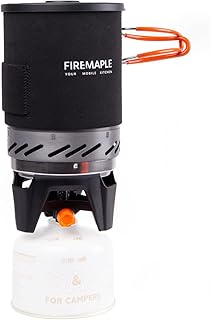
When speed is everything, the Jetboil Flash is a personal cooking system built to boil water fast. The burner locks into an insulated pot, a push-button lighter fires it up, and a color-change indicator shows when the water is ready, all while sipping fuel efficiently for morning coffee and freeze-dried dinners.
It is a boiler first, so simmering delicate food is not its strength, and at roughly 13 ounces with the pot it is heavier than a bare burner. For solo hikers who mainly want hot water quickly, though, few stoves are as fuss-free.
Gas One GS-3400P – Best Budget Tabletop
The Gas One GS-3400P is the value pick for camp cooks who want a real burner without spending much. Its dual-fuel design runs on cheap butane cartridges or, with the included hose, standard propane bottles, giving you flexibility that most budget stoves lack, plus a wide base that steadies a full-size pan.
It is a single burner, so cooking for a crowd means working in batches, and the plastic case feels less rugged than pricier stoves. For tailgates, cabins, and casual weekends, though, the cooking power per dollar is hard to argue with.
Coleman Classic – Best for Groups
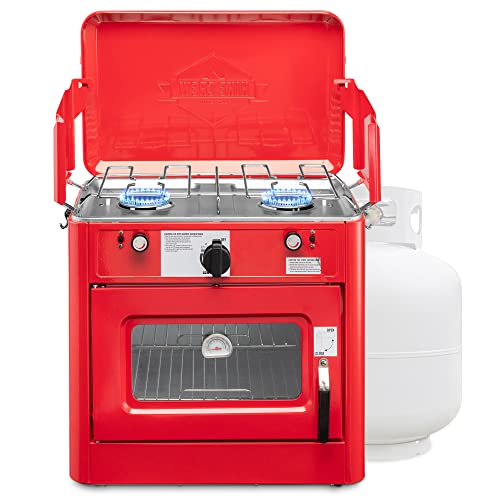
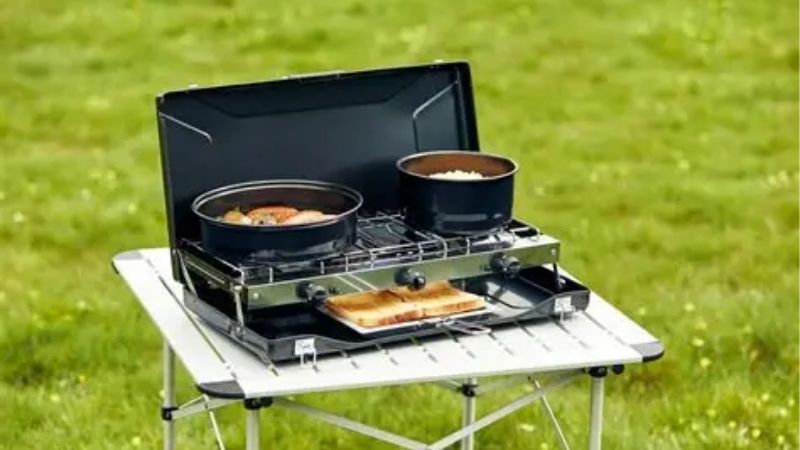
For feeding a family, the Coleman Classic two-burner remains a car-camping staple. Two independently adjustable burners put out around 10,000 BTUs each, a fold-up wind baffle shelters the flames, and the whole thing latches shut into a slim case that stows easily in a packed trunk.
It runs only on green propane bottles and is far too heavy to carry any distance, so it is strictly a drive-up stove. But for reliable, affordable cooking with two pots going at once, it has anchored campsite kitchens for decades.
Frequently Asked Questions
A few questions come up again and again when campers shop for the best portable stove. Here are quick, practical answers to help you finalize your choice.
Are canister stoves safe to use in cold weather?
Canister stoves work down to near freezing, but performance drops as temperatures fall because the fuel struggles to vaporize. Keeping the canister in a jacket pocket until use, or choosing a regulated stove, helps a lot. For deep winter, a liquid-fuel stove is a more dependable choice.
How much fuel should I bring?
Plan on roughly one small canister per person for a weekend of boiling water, more if you cook full meals or melt snow. Cold, wind, and altitude all increase fuel use. It is wise to carry a little extra, since running out mid-trip is far worse than a few spare ounces.
Can I use a portable stove inside a tent?
No. Running any stove inside a tent or closed vehicle risks carbon monoxide poisoning and fire. Always cook outside in the open air with good ventilation. If weather forces you under cover, use a vestibule with the sides open and never leave a lit stove unattended.
Do I need an integrated system or a separate burner?
If you mainly boil water for meals and drinks, an integrated system is faster and more fuel-efficient. If you want to cook varied meals or use your own pots, a standalone burner is more flexible and usually cheaper. Match the tool to the food you actually plan to make.
See More:
- Best camp chair
- Lightweight camp chair
- Camping table review
- Backpacking cookware set
- Camp stove review
Final Thoughts
The best portable stove is the one that fits your fuel, your climate, and the way you cook. Ultralight hikers will love the PocketRocket 2, backcountry cooks the Deluxe, speed-seekers the Jetboil Flash, and families the Coleman Classic, while the Gas One covers budget tabletop duty. Weigh your priorities, then pick the burner you will reach for trip after trip.