Key takeaways
- Food: about 1.5-2 lb per person per day.
- Water: 2.2 lb per liter; most hikers carry 2-3 liters between sources.
- Fuel: about 0.5 lb for a small canister on a 3-4 day trip.
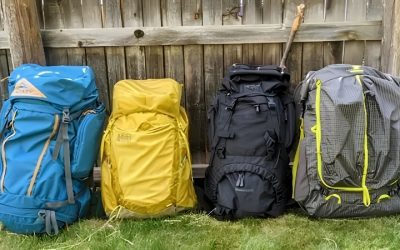
The best hiking backpacks for backpacking in 2026 are the Osprey Atmos AG LT 65 for all-around comfort, the Gregory Baltoro 65 for heavy loads and long trips, the REI Co-op Flash 55 for value, the Osprey Exos 58 and Granite Gear Blaze 60 for lighter framed carries, and the Hyperlite Mountain Gear Southwest 55 or ULA Circuit for ultralight hikers. The right one depends less on brand than on one number: the total weight you will actually carry.
Start with your loaded pack weight, not liters
Capacity gets the attention, but suspension is what determines comfort, and every pack’s suspension is designed for a weight range. Add up your base weight (everything except food, water and fuel) and your heaviest day’s consumables:
- Food: about 1.5-2 lb per person per day.
- Water: 2.2 lb per liter; most hikers carry 2-3 liters between sources.
- Fuel: about 0.5 lb for a small canister on a 3-4 day trip.
Worked example: a 16 lb base weight, four days of food (7 lb), 2.5 liters of water (5.5 lb) and fuel (0.5 lb) gives a starting weight of 29 lb. That hiker is comfortable in almost any pack on this list. Swap in a 24 lb base weight with a bear canister (about 2.5 lb) and the total jumps to roughly 40 lb, which rules out the ultralight frameless and minimal-frame designs.
Backpacking packs compared
| Pack | Capacity | Approx. pack weight | Comfortable load range | Frame / back panel | Typical price range |
|---|---|---|---|---|---|
| Osprey Atmos AG LT 65 (Aura AG LT 65 women’s) | 65 L | About 4.2 lb | 25-45 lb | Suspended mesh, alloy frame | $280-$320 |
| Gregory Baltoro 65 (Deva 60 women’s) | 65 L | About 4.8-5 lb | 30-50 lb | Framed, ventilated, pivoting hip belt | $330-$400 |
| REI Co-op Flash 55 | 55 L | About 2.6 lb | 20-35 lb | Framed, ventilated back pad | $200-$240 |
| Osprey Exos 58 (Eja 58 women’s) | 58 L | About 2.9 lb | 20-35 lb | Suspended mesh, light frame | $240-$290 |
| Granite Gear Blaze 60 | 60 L | About 3 lb | 25-45 lb | Framesheet + stays, adjustable torso | $270-$310 |
| ULA Circuit | 68 L total | About 2.4 lb | 15-35 lb | Carbon stay + foam pad | $270-$310 |
| Hyperlite Mountain Gear Southwest 55 | 55 L | About 2 lb | 15-40 lb | Removable aluminum stays, DCF body | $380-$430 |
Load ranges are general guidance for comfortable all-day carrying; most packs can hold more, but hip belts and frames start to flex or dig in past these numbers.
Best picks by hiker
First pack, most comfortable all-rounder: Osprey Atmos AG LT 65
The suspended mesh back keeps the pack off your spine for airflow, and the hip belt wraps well over a wide range of body shapes. At just over 4 lb it is not light, but it carries a week of food without complaint and is forgiving if your packing is imperfect. The women’s-specific Aura AG LT shares the design.
Heavy loads, winter or family gear: Gregory Baltoro 65
If you routinely haul a bear canister, a winter sleep system or shared gear for kids, the Baltoro’s stiffer frame and pivoting hip belt transfer weight to your hips better than lighter packs. The trade-off is roughly 2 lb of extra pack weight compared with mid-weight options.
Best value: REI Co-op Flash 55
The Flash delivers a real frame, adjustable torso and plenty of pockets at a lower price than most competitors. It suits weekend and three-to-four-day trips once your base weight is under about 20 lb.
Lighter but still framed: Osprey Exos 58 or Granite Gear Blaze 60
Both cut weight without giving up support. The Exos keeps the ventilated mesh back; the Blaze carries heavier loads better thanks to a firmer framesheet, making it a common pick for long trails where resupply loads spike.
Ultralight and thru-hiking: ULA Circuit or Hyperlite Southwest 55
The Circuit is a long-trail favorite with large mesh and hip-belt pockets. The Southwest uses Dyneema Composite Fabric, which barely absorbs water and resists abrasion, at a premium price. Both expect a dialed-in light kit.
Decision matrix
| Your trips | Typical total load | Experience | Best match |
|---|---|---|---|
| Weekend overnights | 20-30 lb | Beginner | REI Flash 55 |
| 3-6 days, mixed terrain | 28-40 lb | Beginner to intermediate | Osprey Atmos AG LT 65 |
| Bear canister, winter, shared gear | 38-50 lb | Any | Gregory Baltoro 65 |
| Long trail, frequent resupply | 20-35 lb | Intermediate | Granite Gear Blaze 60 or Osprey Exos 58 |
| Thru-hike, light kit | 15-30 lb | Experienced | ULA Circuit or Hyperlite Southwest 55 |
Fit matters more than the model
- Measure torso length from the C7 vertebra (the bump at the base of your neck) to the line between the tops of your hip bones. Most adults fall between 16 and 21 inches.
- Buckle the hip belt first, centered on the hip bones, then tighten shoulder straps. About 80% of the weight should ride on your hips.
- Adjust load lifters to roughly a 45-degree angle to pull the load toward your back.
- Load test with real weight. An empty pack always feels comfortable; 25-30 lb reveals pressure points.
Durability and ownership realities
- Mesh wears first. Stretch-mesh front and side pockets tear on brush and granite; suspended back mesh can sag after years of heavy loads.
- Hip belt foam compresses over long thru-hikes; replaceable belts on some models extend pack life.
- No pack is fully waterproof except some DCF designs, and even those leak at seams and zippers. Use a pack liner.
- Clean gently. Rinse with mild soap and lukewarm water, never machine-wash or dry with heat, which degrades coatings and foam.
- Check warranty policies. Osprey and Gregory offer repair programs, which affects the long-term value of a more expensive pack.