
Key takeaways
What's inside
Best ice cooler for camping shopping is really one question: how many days will the ice actually last? This guide ranks coolers by tested ice-retention days, from 10-day rotomolded boxes down to honest budget picks, and shows the packing tricks that stretch every model well past its factory rating out on the trail.
As an Amazon Associate we earn from qualifying purchases at no extra cost to you. Product prices and availability are accurate as of the date shown and are subject to change.



As an Amazon Associate we earn from qualifying purchases at no extra cost to you. Product prices and availability are accurate as of the date shown and are subject to change.
🛒 Best Price Today on Amazon
Prime members get fast, free shipping on everything above, plus member-only deals. New members get a 30-day free trial — cancel anytime.
How to Choose an Ice Cooler That Holds Cold
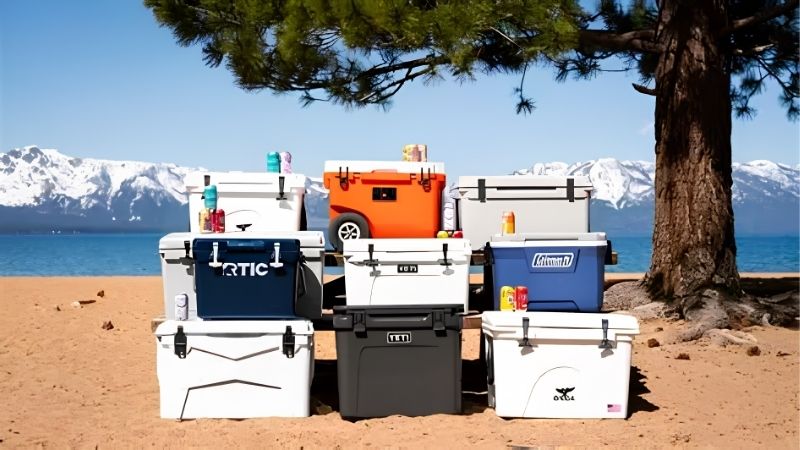
The best ice cooler for camping wins on retention, and retention comes from construction, sealing and how you pack it. These criteria explain what drives the day count on a spec sheet.
Ice Life by Cooler Tier
The best ice cooler for camping is defined by tier. Budget coolers hold ice 3 to 5 days, mid-range 5 to 8 days, premium rotomolded models 10-plus days, and soft coolers just 2 to 3 days. These ranges assume 70 to 80 degree weather, so hot desert trips will land at the low end and alpine trips at the high end.
Conditions matter as much as the cooler. The same box that holds ice 10 days in cool mountains may manage far less in direct desert sun, so read tested numbers as a ceiling you protect with good habits.
Insulation and Wall Thickness
Rotomolded coolers are molded as one piece with thick polyurethane foam walls, which is why models like the Yeti Tundra and RTIC top retention charts. More foam and fewer seams mean slower heat transfer and longer ice life.
Interestingly, thick rotomolding is not the only path: the Yeti Roadie 48 is not rotomolded yet out-insulated several rotomolded rivals in testing, taking 10 days for its ice to melt. Design and sealing can rival raw wall thickness.
Gaskets, Latches and Lid Seal
A cooler is only as cold as its seal. Boxes without gaskets, latches or a tight lid, like some Coleman Xtreme and Classic models, leak cold air and trail sealed designs even at similar capacity. A freezer-grade gasket is worth looking for.
Every lid opening dumps cold, so latch quality and how often you get into the cooler both shape real-world retention. A well-sealed lid you open sparingly beats a bigger box you rummage through constantly.
Packing Technique
You can add days for free. Pre-chill the empty cooler overnight, then pack a 2:1 ice-to-food ratio, block ice on the bottom, and keep the box out of direct sun. These steps make a bigger difference than a marginally pricier model.
Drainage helps too, up to a point: melted ice water actually keeps contents cold, so resist draining a cooler you want to run long unless you are refreshing the ice entirely.
Top Picks for the Best Ice Cooler for Camping
These six coolers are ranked with ice life front of mind, all currently on Amazon. The table leads with tested retention so you can scan by days.
| Cooler | Tested Ice Life | Construction | Notes | Best For |
|---|---|---|---|---|
| Yeti Tundra 45 | ~10 days (full test) | Rotomolded | Top of retention charts | Max cold, mid-size |
| Yeti Roadie 48 | ~10 days to melt | Non-rotomolded | 11-12 days to 40-50F | Best insulator, wheeled |
| RTIC 65 | ~10 days | Rotomolded | ~$125 less than Yeti | Value long-hold |
| Pelican Elite | ~8 days | Rotomolded | Drop-tested tough | Rugged multi-day |
| RTIC 52 Ultra-Light | ~8 days usable | Injection-molded | Light at ~21 lb | Weekend value |
| Igloo BMX 52 | ~5 days | Blow-molded | Budget-rugged | Shorter trips |
Yeti Tundra 45
The Tundra 45 sits at the top of ice-retention testing, holding ice the full 10 days in a head-to-head field test. Its rotomolded body and thick foam make it the benchmark when maximum cold in a mid-size box is the goal.
It is premium-priced and heavy for its capacity, so budget or ultralight campers will look elsewhere. For anyone whose trips live or die by day-five ice, it delivers exactly that.
Yeti Roadie 48
The Roadie 48 is the surprise: not rotomolded, yet it out-insulated rotomolded rivals in testing, taking 10 days for ice to fully melt and 11 to 12 days to reach 40 and 50 degrees. A wheeled, tote-style design makes it easy to move.
It costs more than its capacity alone suggests, and the upright shape suits some packing styles better than others. If retention plus easy transport is your priority, few coolers match it.
RTIC 65
The RTIC 65 is the value route to premium ice life. Using the same rotomolded process and polyurethane foam as pricier rivals, it confirms roughly 10 days of ice retention while costing about $125 less and adding 20 quarts of capacity.
You give up brand prestige and official bear-proof certification, and latches can feel stretchy. For campers who want long-hold performance per dollar, that is an easy trade.
Pelican Elite
The Pelican Elite pairs strong retention with expedition durability. It held ice about 8 days in field testing and survived repeated drops with no structural damage, so it keeps cold and keeps working when the cooler takes a beating.
Priced near Yeti, it is not a budget choice. For rugged multi-day trips where impact resistance matters as much as ice life, it is the most reliable pick here.
RTIC 52 Ultra-Light
The 52 Ultra-Light proves you can get strong retention without hauling a boat anchor. At around 21 pounds it retained usable ice for roughly 8 days, with interior temperatures near 29 to 31 degrees two days in, all in a trunk-friendly footprint.
Injection-molded construction places it a step below rotomolded boxes on pure toughness. For weekend campers who want long ice life and light weight, it is a standout.
Igloo BMX 52
The BMX 52 is the honest budget option. This blow-molded box holds ice about 5 days, plenty for a weekend, and adds cup holders and rugged side handles at a price far below rotomolded models.
It will not match a Tundra on day six, and its plastic is less durable long term. For shorter trips where 5 days of ice is enough, it is excellent value.
What Tariffs and Camping Season Mean for Buyers
Ice life is the whole point of these boxes, and 2026 pricing shifts the timing math on buying the best ice cooler for camping.
Foam Costs Are Climbing
Retention comes from foam, and specialty foams have risen 10 to 15% under new tariffs, inside a roughly 7.7% overall cost increase reported by an Outdoor Industry Association survey. Brands increasingly call future prices estimates as the supply chain shifts.
Since a high-retention cooler is a long-term buy, locking in a strong model now is safer than waiting for a discount that tariffs may erase. The best-insulated boxes are exactly the ones most exposed to foam pricing.
Buy for the Trips Ahead
Late summer and fall camping still demand real ice life, and inventory on premium coolers is deepest before peak-season sellouts. Buying ahead means the retention champion you want is in stock in the size you need.
Watch October Prime Big Deal Days and Black Friday for the sharpest markdowns on rotomolded boxes. For trips coming up soon, though, buy now rather than risk a sold-out favorite.
Prices May Keep Climbing
Brands increasingly describe future prices as estimates, since tariffs and freight remain unsettled. With retention leaning hardest on foam, the safe move is to lock in the best ice cooler for camping now rather than bet on a lower price later.
An early buy also lets you pre-chill and test the cooler before a trip, so you head out knowing exactly how many days of ice to expect.
Frequently Asked Questions
Here are the questions campers ask most about ice retention.
Which cooler holds ice the longest?
In testing, the best ice cooler for camping on pure retention was the Yeti Tundra 45, holding ice the full 10 days, with the Yeti Roadie 48 and RTIC 65 close behind. Premium rotomolded boxes lead, while budget models typically top out at 3 to 5 days.
How can I make ice last longer for free?
Pre-chill the empty cooler overnight, pack a 2:1 ice-to-food ratio, use block ice on the bottom, keep it shaded, and limit lid openings. These habits add days to any cooler at no cost.
Should I drain the melted water?
Not usually. Cold melt water helps keep contents chilled, so leave it unless you are fully refreshing the ice. Only drain if warm water is displacing space you need for fresh ice.
Are budget coolers enough for a weekend?
Yes, for shorter trips. A budget box like the Igloo BMX 52 holds ice about 5 days, which covers most weekends. Step up to rotomolded only if you need cold past day five or camp in real heat.
See More:
- Best rolling cooler
- Best roller cooler
- Best wheeled cooler
- Best water bottle insulated
- Best cooling cooler
Final Thoughts
The best ice cooler for camping is the one whose tested retention matches your trip length, then holds that cold with smart packing. Choose the Yeti Tundra 45 or Roadie 48 for maximum ice life, the RTIC 65 to reach 10 days for less, or the Igloo BMX 52 for weekend value, and buy ahead given rising foam costs. Pack it well and your ice will outlast the trip.
Write Your Review
No reviews yet. Be the first to share your experience!