
Key takeaways
What's inside
Best trekking poles take pressure off your knees on descents, add balance on loose ground, and let you cover more miles with less fatigue. This guide compares five trail-tested pairs across every budget — from cheap carbon to bombproof aluminum and ultralight folding designs — with real specs so you can match a set to your terrain and hiking style.
As an Amazon Associate we earn from qualifying purchases at no extra cost to you. Product prices and availability are accurate as of the date shown and are subject to change.


As an Amazon Associate we earn from qualifying purchases at no extra cost to you. Product prices and availability are accurate as of the date shown and are subject to change.
🛒 Best Price Today on Amazon
Prime members get fast, free shipping on everything above, plus member-only deals. New members get a 30-day free trial — cancel anytime.
Start 30-Day Prime Free Trial →See Today’s Amazon DealsHow to Choose the Right Trekking Poles
Choosing from the best trekking poles comes down to four things: the shaft material, how the poles lock, the grip material, and how they adjust and pack down. Nail those for your typical hike and the poles become an extension of your arms rather than an afterthought clipped to your pack.
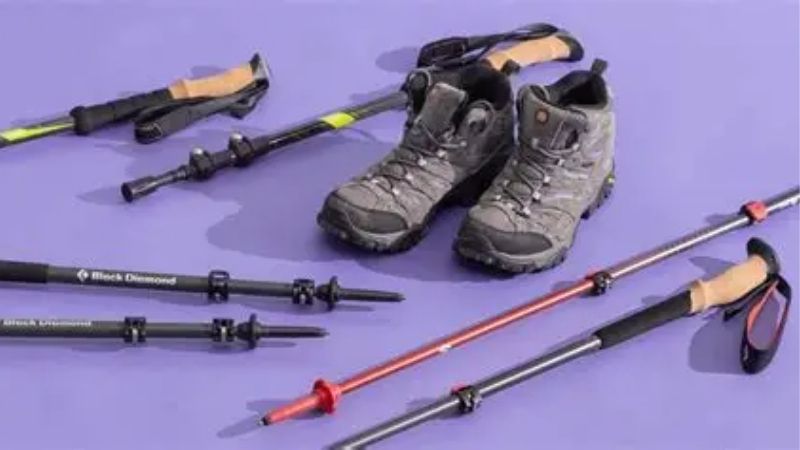
Shaft Material: Aluminum vs Carbon
Aluminum shafts, especially aircraft-grade 7075, bend under extreme force rather than snapping, which makes them the safer bet for rugged, remote hikes where a broken pole is a real problem. They cost less and shrug off abuse, at the price of a few extra ounces per pair.
Carbon shafts are lighter and stiffer, so they feel quicker in the hand over long days. The trade-off is that carbon can crack or fail suddenly if it gets jammed in a rock crevice or torqued hard. For groomed trails and fast hiking, carbon shines; for boulder fields and expeditions, aluminum is more forgiving.
Locking Mechanism
Two systems dominate. External lever locks (FlickLock-style) clamp the shaft from the outside and hold their length setting under load, so they don’t slowly collapse on steep descents. They’re easy to operate with gloves and simple to tension with a small screw.
Twist locks are cheaper but can slip under heavy pressure, which is exactly when you don’t want a pole shortening under you. Among affordable poles, a lever lock is the single feature most worth paying up for.
Grip Material
Cork grips mold to your hands over time, wick sweat, and stay comfortable on long summer hikes, though they add a little weight and cost. Foam (EVA) grips are lighter, soft, and absorb sweat well, making them a popular all-rounder.
Rubber grips insulate best in cold weather but can blister sweaty hands in heat, so they suit winter and shoulder-season use. Extended foam grips are a bonus on steep climbs because you can choke down without adjusting length.
Adjustability and Packability
Telescoping poles slide to any length within a range, which is ideal if you share them, hike varied terrain, or want to shorten them on climbs and lengthen for descents. They pack longer than folding poles but adjust infinitely.
Folding (Z-style) poles collapse into short, tent-pole-like segments that stow inside a daypack for scrambling or air travel. Fixed-length folders are the lightest of all, while folding poles with a small adjustment section offer the best of both worlds.
Top Picks: The Best Trekking Poles for Every Hiker
These five of the best trekking poles span budget carbon to premium folding designs, and each earns its place on real trail merit. The table gives the quick numbers, and the write-ups below cover who each pair suits along with the honest drawbacks worth weighing first.
| Poles | Material | Lock | Best For | Price Tier |
|---|---|---|---|---|
| Cascade Mountain Tech Carbon | Carbon | Lever (quick lock) | First-time buyers | Budget |
| Black Diamond Trail | 7075 aluminum | FlickLock lever | Durable all-round | Mid |
| Black Diamond Distance Carbon Z | Carbon | Folding (fixed) | Ultralight & packable | Premium |
| LEKI Cressida FX Carbon | Carbon | Folding | Women & smaller hands | Premium |
| MSR Dynalock Ascent Carbon | Carbon | Folding (adjustable) | Backpacking & heavy loads | Premium |
Cascade Mountain Tech Carbon Fiber — Best Budget
At roughly a pound per pair and a budget price, the Cascade Mountain Tech carbon poles are the easiest way to find out whether poles change your hiking before committing to a premium pair. You get carbon shafts, external quick-lock levers that hold under load, a choice of cork or foam grips, and a set of mud and snow baskets plus rubber tips in the box. For casual to regular day hikers, the value is hard to beat.
The trade-off is durability. The carbon can crack under hard abuse, and the plastic adjustment hardware doesn’t inspire the same confidence as pricier poles. Treat them with reasonable care and they’ll serve for seasons; abuse them in boulder fields and they’ll show their price. As a first pair or a spare, they’re the smart budget entry.
Black Diamond Trail — Best Durable All-Rounder
If you want poles you rarely have to think about, the Black Diamond Trail is a proven workhorse. The 7075 aluminum shafts are stiff and resist the flex that plagues cheaper poles, and the FlickLock levers are dead simple to adjust and lock solidly. Extended foam grips let you choke up on climbs without changing length, and the whole design has a reputation for surviving years of hard use without bending or lock failure.
Aluminum means it’s a touch heavier than carbon competitors, and the price sits above budget territory. But for hikers who value reliability over shaving grams — and don’t want to baby their gear — this is one of the best value-for-durability buys on the market.
Black Diamond Distance Carbon Z — Best Ultralight and Packable
The Distance Carbon Z is the pole to grab when weight and pack size matter most. The folding Z-pole design collapses into short segments that disappear into a daypack, and the carbon build makes it one of the lightest options here, well under a pound per pair. Runners, fastpackers, and scramblers love how quickly it stows and deploys.
Because it’s a fixed-length folding pole, you choose your size at purchase and can’t fine-tune length on the trail, and it commands a premium price. It’s also less burly than an aluminum pole for heavy-duty abuse. For fast-and-light missions where packability rules, though, nothing on this list beats it.
LEKI Cressida FX Carbon — Best for Women and Smaller Hands
The Cressida FX Carbon is LEKI’s women’s-specific folding pole, built around a slimmer grip diameter and a shorter length range that suits smaller hands and frames. The carbon folding design keeps weight low and packs down small, while LEKI’s secure locking and comfortable grip make it a standout for hikers who find standard poles too bulky in the hand.
It sits at a premium price, and the women’s-specific sizing won’t suit everyone. But for hikers who have struggled to get a comfortable, confident grip on unisex poles, the tailored fit is worth the investment and pays off over long days.
MSR Dynalock Ascent Carbon — Best for Backpacking and Heavy Loads
The Dynalock Ascent Carbon blends folding packability with rock-solid stability under load, which is why it’s a favorite for backpacking and even light mountaineering. The folding-plus-adjustable design lets you dial in length and then stow the poles compactly, and it stays stable even when you’re leaning hard with a heavy pack on rough terrain.
It’s a premium-priced pole, so it’s overkill for casual strolls. But if you carry a full backpacking load, cross variable terrain, or want a pole that can handle four-season conditions, the combination of packability and under-load stability makes it one of the best trekking poles for serious use.
Frequently Asked Questions
A few questions come up again and again when hikers shop for the best trekking poles. Here are straight answers to help you finalize the right pair for your terrain and budget.
Are trekking poles actually worth it?
For most hikers, the best trekking poles are worth it. They reduce load on your knees during descents, improve balance on river crossings and loose scree, and let you set a steadier rhythm on climbs. The benefit grows with pack weight and steepness, so backpackers and those with knee concerns notice the difference most.
Aluminum or carbon poles?
Choose aluminum for durability and remote or rugged terrain, since it bends rather than snapping. Choose carbon for lower weight and a quicker feel on groomed trails. If you’re unsure or hike varied ground, durable aluminum is the safer all-round pick.
What length should my poles be?
With a pole planted, your elbow should form roughly a 90-degree angle. As a rough starting point, that’s often near 120 to 130 cm for average heights. On steep climbs shorten your poles; on long descents lengthen them for better support.
Can I fly with trekking poles?
Poles usually must be checked rather than carried on, so folding designs that pack short are easiest to stow in luggage. Always confirm current airline and security rules before you travel, as policies vary.
See More:
- Best daypacks for hiking
- Best hiking sneakers men
- Best backpack for hike
- Best backpack for carry on
- Best travel backpack for men
Final Thoughts
The best trekking poles are the ones matched to your terrain and budget. Grab the Cascade Mountain Tech carbon to try poles cheaply, the Black Diamond Trail for years of durable service, the Distance Carbon Z or LEKI Cressida FX for ultralight packability, and the MSR Dynalock Ascent Carbon when you carry heavy loads over rough ground — and with gear prices trending upward, locking in the right pair sooner rather than later is the smart move.




Write Your Review
No reviews yet. Be the first to share your experience!