Key takeaways
What's inside
Ankle support hiking boots steady the foot under a heavy pack and on uneven ground, cutting the risk of rolls and late-day fatigue. The ankle support hiking boots in this guide are judged on collar height, heel lock, and midsole stiffness so you can find real stability that still lets you hike comfortably all day.
As an Amazon Associate we earn from qualifying purchases.
By Jake Thompson, outdoor gear writer and long-time trail tester
How to Choose the Right Ankle Support Hiking Boots
Ankle support is not just about a tall collar; it comes from how the whole boot holds your foot. Focus on collar height, the lacing and heel lock, midsole stiffness, and fit. Together these four features decide whether a boot truly stabilizes your ankle.
Collar Height and Cuff Padding
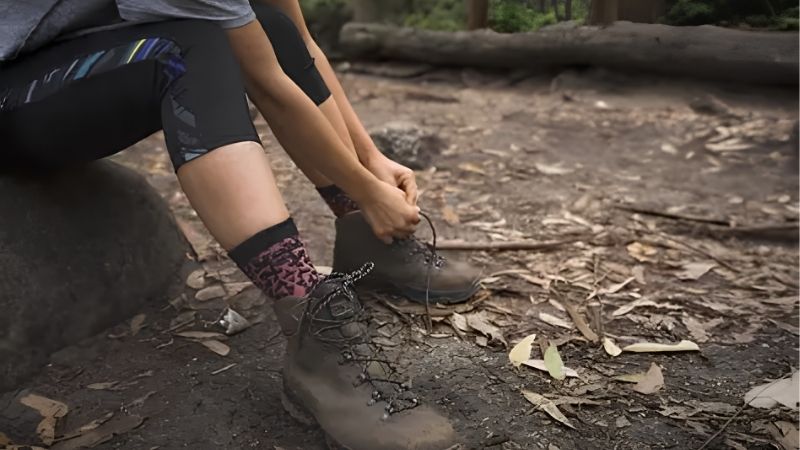
A taller collar wraps the ankle and limits the side-to-side motion that causes rolls, while padding keeps that support comfortable. Mid boots balance protection and mobility; high cuts add stability under heavy loads but run hotter and flex less.
Cuff shape matters as much as height. A well-contoured collar cradles the ankle without digging in, so look for boots praised for a secure yet comfortable cuff rather than just a tall shaft.
Lacing System and Heel Lock
Support fails if your heel lifts, so locking eyelets at the base of the ankle are key. A good heel-lock lacing system pins the heel down on steep descents, stopping the slippage that both undermines stability and causes blisters.
Adjustable lacing lets you tune tension zones, snugging the ankle while leaving the forefoot roomy. Boots with two-zone lacing give the most control over how firmly the ankle is held.
Midsole Stiffness and Shank
A stiffer midsole with a shank resists twisting, which protects the ankle on off-camber and rocky ground. Flexible, soft soles feel nimble but let the foot torque more, reducing the stability that heavy-pack hikers need.
Match stiffness to your load. Carrying a full backpacking pack rewards a firm, supportive platform, while light day hiking lets you drop to a semi-stiff sole for a more natural stride.
Fit, Width, and Break-In
Support only works if the boot fits, since a sloppy fit lets the foot move regardless of collar height. Try width options if needed, and confirm the heel is locked and the toe box has room for downhill descents.
Expect some break-in on supportive boots. Stiffer leather models soften over the first miles, so wear them on short walks first to seat the fit before trusting them on a long, loaded trip.
Top Picks: Ankle Support Hiking Boots
Every one of these ankle support hiking boots combines a supportive cuff with a heel-locking lace system and a stable platform. The table compares weight, collar height, and waterproofing, then each pick gets an honest look at its support and trade-offs.
| Boot | Weight (pair, men’s) | Height | Waterproof | Best For |
|---|---|---|---|---|
| Salomon Quest 4 GTX | ~2 lb 14 oz | High | Gore-Tex | Heavy-load stability |
| Lowa Renegade GTX Mid | ~2 lb 9.6 oz | Mid-high | Gore-Tex | All-round support |
| La Sportiva Nucleo High II GTX | ~2 lb 1.6 oz | High | Gore-Tex Surround | Lightweight high cut |
| Salomon X Ultra 5 Mid GTX | ~1 lb 15 oz | Mid | Gore-Tex | Nimble mid support |
| Keen Targhee IV Mid WP | ~2 lb 8.2 oz | Mid | Keen.Dry | Wide feet, toe protection |
| Merrell Moab 3 Mid WP | ~2 lb 4 oz | Mid | Yes (membrane) | Budget over-ankle support |
Salomon Quest 4 GTX
The Quest 4 sets the bar for ankle support. Its high Gore-Tex collar, ADV-C 4D chassis, and heel-locking lacing pin the foot securely, making it the go-to for carrying a loaded pack across steep, technical terrain where stability matters most.
That support comes at nearly three pounds a pair, it runs warm in summer, and it needs a real break-in. For heavy backpacking and rough ground, though, few boots hold the ankle as confidently.
Lowa Renegade GTX Mid
The Renegade delivers excellent support with out-of-box comfort thanks to a supportive monowrap frame and Gore-Tex build. Its Vibram outsole grips steep granite and loose dirt, and the mid-high cuff steadies the ankle without feeling like a brick.
It runs a touch narrow and costs more than budget rivals. As a classic-leather do-everything supportive boot for a wide range of terrain, it is one of the safest choices here.
La Sportiva Nucleo High II GTX
The Nucleo High II proves a high-cut boot can be light. At around 2 lb 1.6 oz it offers genuine ankle coverage with a nimble feel, plus a sticky Vibram Nano outsole and a Gore-Tex Surround lining that vents heat from underfoot.
The supple upper gives less lateral structure than a burly boot, and its thin laces can snap, so carry spares. For hikers who want high-cut support without the weight penalty, it is exceptional.
Salomon X Ultra 5 Mid GTX
The X Ultra 5 Mid is the pick for support in a light, athletic package. Its mid collar and heel-hugging fit add stability over a nimble platform, while Gore-Tex and Contagrip keep feet dry and planted on technical dirt and light loads.
It offers less protection than a heavy boot and runs narrow, so wide feet should try first. For hikers who want mid support without sacrificing speed, it is a standout.
Keen Targhee IV Mid WP
The Targhee IV pairs a comfortable mid collar with Keen’s protective wraparound toe cap and a roomy fit that finally welcomes wide feet. Its durable leather upper and Keen.Dry membrane hold up to abuse on easy-to-moderate trails and light backpacking.
Its 6.5-inch collar shields less than taller boots, and it feels a bit heavy and less nimble. For wide-footed hikers wanting solid support and toe protection at a fair price, it is a durable value.
Merrell Moab 3 Mid WP
The budget pick, the Moab 3 Mid provides real over-ankle support with a padded collar, molded nylon shank, and Vibram TC5+ outsole, all well below premium prices. It is comfortable out of the box and famously durable across hundreds of miles.
Its support and stability trail the premium boots here, and the lugs skate on slick rock. For hikers who want dependable ankle support on a budget for day hikes and moderate loads, it is the value leader.
Market Context: Prices, Tariffs and Timing in 2026
Supportive boots sit across every price tier, so timing your purchase pays off when buying ankle support hiking boots in 2026. Tariff uncertainty on imported footwear and the seasonal deal calendar both shape when each tier hits its best price.
Why Boot Prices Are Uncertain
Nearly all hiking boots are imported, and 2026 tariff policy has stayed in flux even after legal challenges, keeping costs elevated. Premium brands have raised prices using pricing power, while mid-tier makers pass costs straight to shoppers, widening the gap between tiers.
Because policy keeps shifting, brands call future pricing guesswork. That is a fair reason to buy a supportive model you trust while it is in stock and correctly sized rather than waiting on a lower price.
Finding Support for Less
Closeout stock is the buyer’s advantage this year. Retailers are clearing pre-tariff inventory through late 2026, so last-season versions of proven supportive boots are the best place to find real markdowns, especially in the mid-premium band.
Quality barely changes year to year, so a discounted prior-year Renegade or Quest usually matches the current one. That makes last season’s model the smartest value move in this category.
When to Buy
Back-to-school demand firms up early-fall prices, but Amazon’s fall sale event in early October and the late-November Black Friday and Cyber Monday windows bring the deepest cuts. Build a wishlist and let price tracking flag the low.
If a loaded trip is coming, prioritize fit and break-in over a small saving. A supportive boot broken in at home outperforms a discounted pair that arrives too late to trust on rough ground.
Frequently Asked Questions
These are the questions hikers ask most about ankle support hiking boots.
Do I need high-cut boots for ankle support?
Not always. Mid boots offer solid support for most hiking, while high cuts add stability under heavy loads. Match collar height to your pack weight and terrain rather than assuming taller is always better.
Do supportive boots prevent sprains?
They reduce the side-to-side motion that leads to rolls, especially under load, but they cannot guarantee against sprains. Strong ankles, careful footing, and a locked heel matter just as much as the boot.
Why does heel lock matter for support?
If your heel lifts, the boot cannot stabilize the ankle and blisters form. Locking eyelets and heel-lock lacing pin the heel down on descents, which is central to how a supportive boot actually works.
Are supportive boots heavier?
Often, since support usually comes from stiffer, taller construction. But lighter designs like the Nucleo High II and X Ultra 5 Mid deliver real support at lower weights, so you need not accept a heavy boot for stability.
See More:
- Best boots for rocky trails
- Best boots for snow hiking
- Budget hiking shoes
- Premium hiking boots
- Hiking shoe comparison chart
Final Thoughts
The best ankle support hiking boots pair a supportive cuff with a locked heel and a stable platform, tuned to your load. Heavy-pack hikers should look at the Quest 4 or Renegade, weight-conscious hikers at the Nucleo High II or X Ultra 5 Mid, and budget shoppers at the Moab 3. Get the fit dialed, break them in, and your ankles will stay steady mile after mile.