Key takeaways
What's inside
Best hiking sandals keep your feet cool and quick-drying on hot trails and water crossings, but the right pair still needs real grip and support. This guide compares six top sandals for 2026, weighing traction, arch support, weight, and water performance so you can hike comfortably through summer.
As an Amazon Associate we earn from qualifying purchases.
By Jake Thompson
How to Choose the Best Hiking Sandals
A hiking sandal is not a flip-flop; it needs traction, a secure fit, and enough support for real miles. The best hiking sandals balance grip, arch support, weight, and water performance for your trails. The criteria below sort the field before you buy.
Support and Footbed
Footbed material shapes the ride. Firmer PU midsoles, like Chaco’s, deliver the most arch support and stability for long distances, while softer EVA footbeds, like Teva’s, feel plush out of the box but offer less structure over big miles.
Match support to your feet and mileage. Hikers with arch needs or long days want a supportive, stiffer sandal, while casual walkers and camp users prefer soft, instant comfort. Be honest about how far you actually hike in sandals.
Traction and Terrain
Outsole grip matters as much as in any hiking shoe. Deeper lugs and sticky rubber, like Vibram or Teva’s Durabrasion, bite on wet rock and loose dirt, while minimal outsoles feel slick on technical ground. Match the tread to your surfaces.
Consider water, too. Many hiking sandals see stream crossings, so wet grip is essential. Sandals with siping and aggressive lugs stay confident on slick rock, while flatter soles can slide on wet logs and boulders.
Fit, Straps, and Weight
Adjustable straps lock your foot in place and prevent blisters. Most sandals use three or four straps across the foot and heel, and a secure system matters more than any single feature. A loose sandal rubs and slips on descents.
Weight and closure round it out. Minimalist sandals save ounces for packing as a second pair, while sturdier models add support and durability. Closed-toe designs protect against stubbed toes but trap more heat than open styles.
Top Picks: The Best Hiking Sandals
These are our favorite hiking sandals for 2026, spanning plush to minimalist and open to closed-toe designs. The table gives a fast overview; the write-ups explain who each sandal suits and the honest compromise behind each pick.
| Model | Type | Weight (pair) | Support | Best For |
|---|---|---|---|---|
| Teva Hurricane XLT2 | Open, versatile | ~1 lb 4 oz | Moderate | Best overall value |
| Chaco Z/Cloud | Open, supportive | ~1 lb 14 oz | High arch | Long distances |
| Keen Newport H2 | Closed-toe | ~1 lb 5 oz | Moderate | Toe protection, water |
| Bedrock Cairn Evo | Minimalist | ~15.6 oz | Low, ground feel | Technical trails |
| Xero Z-Trail EV | Ultralight | ~8 oz | Minimal | Packing and camp |
| Teva Original Universal | Budget | ~13 oz | Light | Casual and value |
Teva Hurricane XLT2
The Hurricane XLT2 is the best-overall value, near 1 lb 4 oz with a Durabrasion rubber outsole, lugged traction, and a three-point hook-and-loop adjustment that locks the foot down. A molded EVA footbed gives instant, zero-break-in comfort for all-day wear.
It offers less arch support and stability than a stiff Chaco, so hikers with arch needs may want more. But for balanced features at a friendly price, it does everything well, making it the easiest of the best hiking sandals to recommend.
Chaco Z/Cloud
The Z/Cloud is the long-distance support pick, near 1 lb 14 oz with a firm PU midsole, the most arch support on our list, and an adjustable Z-strap with a secure buckle. Its durable build and stable platform excel at covering real trail miles.
It is the heaviest sandal here, and the stiff footbed can need a short break-in that some find clunky. For hikers who want maximum support and stability over long distances, though, few sandals match its planted, durable ride.
Keen Newport H2
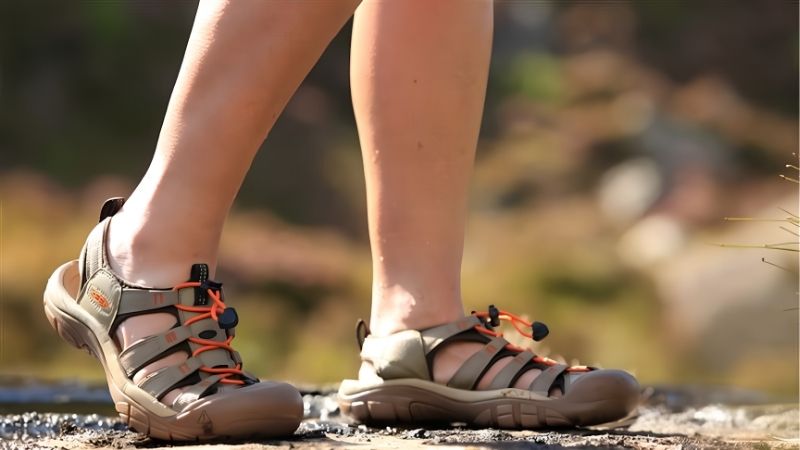
The Newport H2 is the closed-toe protector, near 1 lb 5 oz with Keen’s signature toe bumper, quick-dry polyester webbing, and a comfortable metatomical EVA footbed. It shields toes from trail rocks while handling creek crossings and wet terrain beautifully.
The closed-toe design traps more heat than open sandals and dries slower once soaked. For rocky terrain and water hiking where toe protection matters most, though, it delivers boot-like security with sandal breathability.
Bedrock Cairn Evo
The Cairn Evo is the minimalist trail pick, near 15.6 oz with a zero-drop platform, a legendary Vibram XS Trek Evo outsole, and a low-profile design built for ground feel and agility. It packs small and excels on technical trails.
The thin, flexible platform offers little cushion or arch support, so wide or finicky feet can get sore over long miles. For minimalist hikers who want agility and durable ground feel, though, it is a superb technical sandal.
Xero Z-Trail EV
The Z-Trail EV is the ultralight champion, a mere 8 ounces per pair with a thin, flexible foam sole and a barefoot-style feel. It packs down to nearly nothing, making it an ideal second pair for camp, water sections, or travel.
The minimal sole offers little protection or cushioning, so it is not built for rugged, long-mile hiking. For gram-counters who want a featherweight camp and crossing sandal, though, nothing else packs as small or light.
Teva Original Universal
The Original Universal is the budget-and-casual pick, near 13 oz with a molded EVA midsole, moderate arch support, and Microban anti-odor treatment. It is a versatile, do-anything sandal with a next-to-zero break-in period and a friendly price.
It lacks the rugged outsole and durability of dedicated trail sandals, so it is better for light activity than technical terrain. For casual hikes, travel, and everyday wear on a budget, though, it is comfortable and hard to beat.
What Tariffs and Timing Mean for Sandal Buyers in 2026
With the best hiking sandals, 2026 pricing is shaped by trade policy and the calendar as much as by the sandal itself. Footwear is heavily imported, so reading the market helps you buy a good pair for less.
Import Tariffs and Footwear Prices
Nearly all hiking sandals are made overseas, and 2026 tariff policy remains unsettled after shifting court rulings and new investigations. Footwear prices sit in the storm as a result, and many brands admit future pricing is only a best guess.
That uncertainty favors buying a sandal you want when it is in stock at a fair price, rather than waiting for a drop that may never arrive. For imported footwear, locking in a good deal today is smart.
End-of-Season Clearance
Sandals follow the season, which works in your favor. As summer winds down, retailers discount warm-weather footwear to clear shelves for fall boots, so late-season sandal deals cluster in late August and September just as your hiking continues.
Pre-tariff inventory adds to the savings, since a previous-year sandal performs identically to this year’s model. Buying a proven pair on end-of-summer clearance is one of the most reliable ways to save on hiking sandals.
Sale-Event Timing
Major sales help too. Amazon’s fall Prime event, expected in early October, and Black Friday and Cyber Monday in late November bring the year’s deepest cuts, and sandals often appear at steep off-season prices during these windows.
Buy early in a sale, since popular sizes and colors sell out fast once discounts go live. Planning your purchase around these events lets you lock in next summer’s sandals for the lowest price of the year.
Frequently Asked Questions
A few questions come up whenever hikers shop for the best hiking sandals. Here are quick, practical answers to help you choose the right warm-weather pair.
Are hiking sandals good for real trails?
Yes, with the right pair. Trail-specific sandals have grippy, lugged outsoles and secure straps that handle uneven terrain and water crossings well. Flip-flops and casual sandals lack the traction and support needed for safe, comfortable hiking.
Open-toe or closed-toe sandals?
It depends on your terrain. Open sandals breathe better and dry faster, while closed-toe designs like the Newport H2 protect against stubbed toes and trail debris. Rocky trails favor closed toes; hot, smooth trails favor open styles.
Do hiking sandals cause blisters?
They can if straps are loose or feet stay wet. A secure, adjustable fit and a break-in period reduce rubbing, and drying feet during breaks helps. Most quality sandals with molded footbeds cause few issues once dialed in.
Can I backpack in hiking sandals?
For light loads and warm weather, some hikers do. Supportive sandals like the Chaco handle real miles, but sandals offer less protection than shoes. Many backpackers carry a light pair as a second option for camp and water crossings.
See More:
Final Thoughts
There is no single winner among the best hiking sandals, because the right pair depends on your terrain, support needs, and how far you hike. Casual hikers love the Hurricane XLT2, long distances call for the Chaco Z/Cloud, and rocky trails reward the closed-toe Newport H2. Whichever you pick, buy when stock and pricing align, since tariff uncertainty on imported footwear makes waiting a gamble in 2026.