Key takeaways
What's inside
Backpacking boots review shoppers need support that holds up under a loaded pack, so this backpacking boots review tests six of the best boots for 2026. From nimble leather hikers to burly mountaineering-bred builds, we compare real weights, waterproofing, and support so you can carry weight over rough terrain in comfort.
As an Amazon Associate we earn from qualifying purchases.
By Jake Thompson
How to Choose Backpacking Boots
A backpacking boot has one core job: to support your foot under a heavy load on rough ground. This backpacking boots review groups picks by stiffness, waterproofing, and fit so you can weigh support against weight. The criteria below narrow the field.
Support and Stiffness
Backpacking boots run stiffer than day hikers to carry 30-plus pounds without fatigue. A rigid chassis, supportive shank, and taller cuff keep your foot stable on off-camber ground, while a softer boot bends underfoot and tires your feet under weight.
Match stiffness to your load and terrain. Big loads and technical, rocky trails reward a stiff, protective boot, while lighter loads on smooth ground let you go softer. Too much boot, though, feels clunky and slows you on easy miles.
Waterproofing and Weather
Most backpacking boots use GORE-TEX or a proprietary membrane to keep feet dry across multi-day trips. That protection helps in wet grass, mud, and snow, but it traps heat, so summer backpackers in dry country may prefer more breathability.
Consider the seasons you hike. Shoulder-season and alpine trips reward a warm, waterproof boot, while hot summer treks favor airflow. No boot is both fully sealed and breathable, so choose the trade-off that fits your typical conditions.
Fit, Weight, and Durability
Fit and durability matter most on long trips. Salomon and La Sportiva run narrow, while Keen and Oboz run wide, and European lasts often run small, so size accordingly. Leather boots last longest but weigh more and need break-in before a big trip.
Weigh durability against weight honestly. A resoleable leather boot can last years of heavy use, while lighter synthetic builds save ounces but wear faster. Match the boot to how many loaded miles you actually log each season.
Top Picks: Backpacking Boots Tested
The heart of this backpacking boots review is the shortlist below, spanning lightweight leather to burly, technical builds. The table gives a fast overview; the write-ups explain who each boot suits and the honest compromise that comes with it.
| Model | Type | Weight (pair) | Fit | Best For |
|---|---|---|---|---|
| Salomon Quest 5 GTX | Supportive backpacking | Heavier | Medium | Heavy loads, all-round |
| La Sportiva Nucleo High II GTX | Light leather | ~2 lb 2 oz | Narrow | Nimble backpacking |
| Scarpa Zodiac Plus GTX | Technical, burly | ~2 lb 6 oz | Medium | Rough, technical terrain |
| Lowa Renegade GTX Mid | Classic leather | ~2 lb | Medium | All-day durability |
| Hoka Kaha 3 GTX | Cushioned backpacking | ~3 lb | Medium | Max cushion |
| Oboz Bridger Mid B-DRY | Value backpacking | Heavier | Medium | Support and value |
Salomon Quest 5 GTX
The Quest 5 is the all-round heavy-load benchmark, with a rigid GORE-TEX chassis, tall supportive cuff, and grippy outsole that keep you stable under a loaded pack on rough, off-camber terrain. It offers a cushioned ride that reduces fatigue on long days.
It is heavier, stiffer, and pricier than lighter boots, so it feels like overkill on easy day hikes. For backpackers who carry real weight over demanding terrain, though, it is one of the most trusted picks in this backpacking boots review.
La Sportiva Nucleo High II GTX
The Nucleo High II is the nimble leather pick, near 2 lb 2 oz with a GORE-TEX Surround system that breathes better than most membranes. A higher cuff, Vibram Nano outsole, and 3D Flex ankle deliver support and precision for fast-moving backpackers.
It runs narrow and small, so most hikers should size up, and some report durability quirks over hard use. For backpackers who value light weight and nimble footwork on rough terrain, though, it is a well-rounded, capable boot.
Scarpa Zodiac Plus GTX
The Zodiac Plus is the burly technical pick, near 2 lb 6 oz with a full rubber rand, stiff Vibram Drumlin outsole, and GORE-TEX liner drawn from Scarpa’s mountaineering heritage. A dual-density midsole absorbs shock under heavy packs while edging on ledges.
It weighs more, costs more, and feels stiff on easy trails. For seasoned backpackers tackling scree, boulder scrambles, and shoulder-season snow with a heavy load, though, its stability and durability are hard to match anywhere.
Lowa Renegade GTX Mid
The Renegade is the durable all-day classic, near 2 lb with a nubuck upper, GORE-TEX lining, and stable Vibram outsole. Trusted for supportive comfort on moderate terrain, it can be re-soled by Lowa to last many seasons of loaded miles.
It costs a premium and needs some break-in versus softer synthetics, and it is less protective than burly technical boots. But for backpackers who want a durable, comfortable leather boot for moderate loads, it remains a reliable staple.
Hoka Kaha 3 GTX
The Kaha 3 is the max-cushion pick, near 3 lb with a plush, rockered midsole and a supportive, waterproof leather upper. It soaks up hardpack and long descents while still carrying a loaded pack, making it a comfortable big-mileage hauler.
The tall, cushioned stack feels less precise on technical, off-camber ground, and it carries a premium price. For backpackers who want maximum underfoot comfort under a pack on maintained trails, though, few boots feel as forgiving.
Oboz Bridger Mid B-DRY
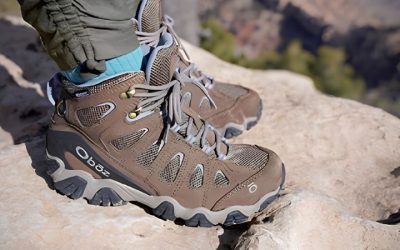
The Bridger is the value standout, with a stiff, supportive chassis and Oboz’s excellent O-Fit insole that many hikers love out of the box, saving the cost of aftermarket arch support. Its B-DRY membrane seals out water for confident backpacking.
It is heavier and stiffer than lighter boots, so it feels like a lot underfoot on easy trails. For entry-level and budget-conscious backpackers who want strong support and arch comfort under a pack, though, it delivers outstanding value.
What Tariffs and Timing Mean for Boot Buyers in 2026
Beyond specs, this backpacking boots review has a budget angle for 2026, since footwear is heavily imported and prices move with trade policy and the calendar. Reading the market helps you buy the right boot for less.
Import Tariffs and Footwear Prices
Most backpacking boots are made overseas, and 2026 tariff policy remains unsettled after shifting court rulings and new investigations. Footwear prices sit in the storm as a result, and many brands admit future pricing is only a best guess.
That uncertainty argues for buying a boot you want when it is in stock at a fair price. Because backpacking boots are a long-term investment, locking in a good deal on a durable pair is especially worthwhile.
A Split Market and Closeout Deals
The 2026 market is bifurcated: premium brands raise prices, while mid-tier makers pass costs straight to buyers. That squeezes value shoppers, but it also opens deals in the gap between the tiers for patient hikers.
Retailers are clearing pre-tariff inventory through late 2026, so last season’s colorways appear at real markdowns. A previous-year boot performs identically to this year’s model, making those closeouts the most dependable way to save.
Seasonal Timing
Timing rewards planning. Late August into September brings pre-sale pricing with full size runs, while Amazon’s fall Prime event, expected in early October, is a strong window to grab boots before the holiday rush.
For the deepest cuts, Black Friday and Cyber Monday in late November lead the year. Buy early in a sale, since boot sizes sell out fast and popular models disappear before the event is over.
Frequently Asked Questions
A few questions come up constantly whenever hikers read a backpacking boots review. Here are quick, practical answers to help you choose the right boot for heavy loads.
Do I need boots for backpacking?
It depends on your load and terrain. Heavy packs on rough ground reward the support and stability of a boot, while lighter loads on smooth trails can be handled in trail runners. Match the footwear to how much weight you carry.
How stiff should a backpacking boot be?
Stiff enough to support your load without flexing underfoot, but not so rigid it feels clunky. Bigger loads and rockier terrain call for more stiffness, while lighter trips let you choose a softer, more comfortable boot.
How long do backpacking boots last?
Quality leather boots often last several seasons and can be re-soled, while synthetic models wear faster. Watch for a packed-out midsole and worn lugs, which signal that support and traction have degraded and it is time to replace them.
Should I size up in backpacking boots?
Often by a half size, especially in narrow European lasts that run small. Feet swell on long days, and you want a thumb’s width at the toe for descents. Try boots late in the day with hiking socks.
See More:
Final Thoughts
The takeaway from this backpacking boots review is that the right boot tracks your load, terrain, and foot shape. Choose the Quest 5 for all-round heavy loads, the Zodiac Plus for technical ground, and the Bridger for value support. Match the boot to your trips, and buy when stock and pricing align, since tariff uncertainty on imported footwear makes waiting a gamble in 2026.