What's inside
NEMO tent review shoppers keep hearing about OSMO fabric, so this NEMO tent review cuts through the hype with six current shelters for 2026. From the ultralight Hornet to the livable Dagger, we compare real weights, floor space, headroom, and storm performance so you can pick the right NEMO tent for your trips.
As an Amazon Associate we earn from qualifying purchases.
By Jake Thompson
How to Choose the Right NEMO Tent
NEMO builds several distinct tent families, so knowing the range saves money. This NEMO tent review sorts them by weight, livability, and durability, plus the OSMO fabric that shows up across the line. The four factors below help you match a model to your camping style.
OSMO Fabric and Weather
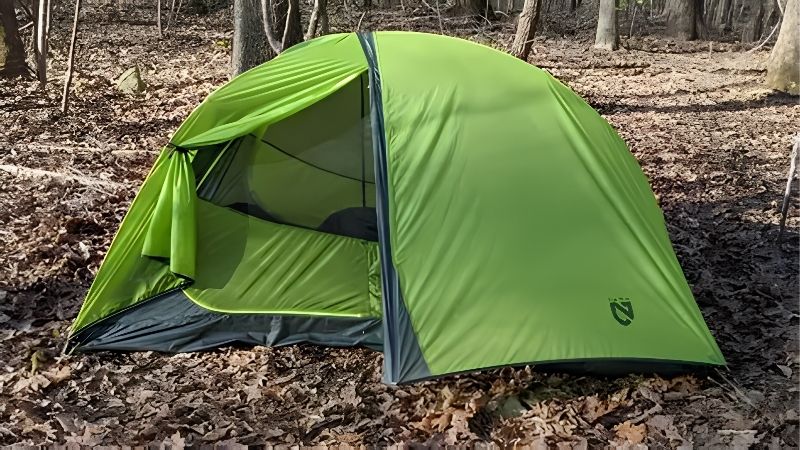
OSMO is NEMO’s poly-nylon blend, engineered to resist sag and stretch when wet and to repel water far better than plain nylon. It is also PFAS-free. In practice that means less midnight re-tensioning after rain and a fly that holds its shape through a wet night.
Weather protection still depends on the model. Ultralight tents like the Hornet use thinner fabrics and smaller flies, while the crossover Aurora runs heavier, tougher materials. Decide how much storm margin you need before you chase the lowest weight.
Weight vs. Headroom
The spread is wide. The Hornet OSMO 2P sits near 2 lb 8 oz, the Dragonfly OSMO around 3 lb 2 oz, and the Dagger OSMO near 3 lb 15 oz. Extra weight generally buys taller peaks and steeper walls, and the Dagger’s 43-plus-inch peak is among the best in the lightweight class.
If you fastpack or thru-hike, the tapered Hornet keeps grams low. If you want to sit up, spread out, and share space without walls closing in, the Dagger’s near-vertical sides and symmetrical floor feel far roomier for the modest weight penalty.
Freestanding vs. Semi-Freestanding
The Dagger and Aurora are freestanding, so they pitch almost anywhere, including rocky or hard-packed sites where stakes struggle. That makes setup quick and forgiving for newer campers who value a taut pitch without fuss.
The Hornet and Dragonfly are semi-freestanding, trimming weight but requiring you to stake the ends to tension the floor. That is fine on soft ground but trickier on granite slabs. Factor in where you actually camp before choosing.
Durability and Footprints
Lightweight NEMO tents use thin floors that reward a footprint, which the Dagger and Hornet do not include. The heavier Aurora ships with one and uses thicker fabric, so it survives kids, dogs, and gritty campgrounds with less babying.
Match durability to use. A careful backpacker can run a Hornet for years with a groundsheet, while a family that camps hard will get more life from the Aurora. Buying the tougher tent up front often costs less than replacing a fragile one.
Top Picks: The Best NEMO Tents Right Now
The heart of this NEMO tent review is the shortlist below. Every pick is a current model, spread across weights, prices, and trip styles. The table offers a fast side-by-side, and each write-up explains who that NEMO tent actually fits.
| Model | Type | Weight (2P) | Floor / Peak | Best For |
|---|---|---|---|---|
| Hornet OSMO 2P | Semi-freestanding UL | ~2 lb 8 oz | ~27.7 sq ft / 39 in | Thru-hikers, fastpackers |
| Dragonfly OSMO 2P | Semi-freestanding | ~3 lb 2 oz | Roomier than Hornet | UL with more livability |
| Dagger OSMO 2P | Freestanding | ~3 lb 15 oz | ~30.6 sq ft / 43 in | Comfort-first backpacking |
| Dagger OSMO 3P | Freestanding | ~4 lb 7 oz | ~42.8 sq ft / 44 in | Trios, roomy pairs |
| Aurora 2P/3P | Freestanding crossover | Heavier, durable | Footprint included | Car camping + overnights |
| Hornet Elite OSMO 2P | Semi-freestanding UL | Lightest Hornet | Tight interior | Extreme gram counters |
NEMO Hornet OSMO 2P
Best for thru-hikers and fastpackers, the Hornet OSMO 2P weighs about 2 lb 8 oz yet keeps two doors and two vestibules. It packs remarkably small, uses DAC Featherlite poles, and its OSMO fly resists sag through wet nights, a real edge over standard nylon shelters.
Compromises come with the low weight: the vestibules are small, the walls taper inward, and the thin floor benefits from a footprint. For solo trips or two close friends counting ounces, though, it remains one of the smartest ultralight buys.
NEMO Dragonfly OSMO 2P
The Dragonfly splits the difference at around 3 lb 2 oz, adding livability the Hornet lacks while staying light. Steeper walls, roomier vestibules, and a comfortable two-door layout make it a friendlier long-trip tent for backpackers who still care about weight.
It is not the lightest or the roomiest option, so dedicated ounce-counters and comfort-first campers may drift to the Hornet or Dagger. As a middle path, however, the Dragonfly is an easy tent to live with mile after mile.
NEMO Dagger OSMO 2P
Comfort-first backpackers should look hard at the Dagger OSMO 2P. Its symmetrical 88-by-50-inch floor avoids the usual foot-end taper, the 43-inch peak is class-leading, and dual-hub prebent poles create genuinely upright space with two large 12.1-square-foot vestibules.
At about 3 lb 15 oz it is heavier than rivals, it runs near 600 dollars, and no footprint is included. But for backpackers who prize headroom and usable space over shaving grams, the Dagger is one of the most livable tents in its class.
NEMO Dagger OSMO 3P
Need room for three, or a palace for two? The Dagger OSMO 3P delivers roughly 42.8 sq ft, a 44-inch peak, and two 12.1-square-foot vestibules at around 4 lb 7 oz all in. It keeps the 2P’s freestanding ease and upright walls, just scaled up.
The extra fabric adds weight and cost, and it is still a thin premium tent that wants careful handling. For trios, or couples who refuse to touch elbows, the space-to-weight ratio is hard to beat.
NEMO Aurora 2P/3P
The Aurora is the durable crossover in this NEMO tent review, built for campers who split time between car camping and short backcountry trips. It ships with a footprint, uses thicker fabrics than the Dagger, and includes thoughtful pockets and a color-coded, beginner-friendly pitch.
That toughness makes it noticeably heavier, so it is not a long-mileage backpacking tent. For weekend campgrounds, canoe trips, and occasional overnights where durability beats grams, though, the Aurora is a reassuring, do-it-all shelter.
NEMO Hornet Elite OSMO 2P
For extreme gram counters, the Hornet Elite OSMO trims even more from the standard Hornet using lighter fabrics and a minimalist build, all while keeping OSMO’s water-repellent, sag-resistant fly and a workable two-door layout.
The price climbs and the interior shrinks, and the delicate materials demand a footprint and gentle care. But for ultralight purists chasing the lowest base weight without going fully to a tarp, the Elite is NEMO’s most extreme freestanding-style option.
What Tariffs and Timing Mean for NEMO Tent Buyers in 2026
NEMO’s prices in 2026 are shaped by more than fabric and design. Trade policy and the shopping calendar both move the number on the tag, and NEMO’s aluminum-pole tents feel the pressure directly. No NEMO tent review is complete without this, so here is how to read the market before buying.
Metal Tariffs and Pole Costs
Section 232 steel-and-aluminum tariffs of around 50% remain in force and were not affected by this year’s rulings on other duties. Because NEMO uses DAC aluminum poles and metal hardware, those tariffs raise component costs directly, and brands warn that future pricing is hard to forecast.
The practical response is to buy when the tent you want is in stock at a fair price rather than waiting for a dip tariffs may cancel. Pole-heavy gear like tents is where this cost pressure lands earliest.
A Split Market and Closeout Deals
Pricing in 2026 has split. Premium brands are leaning on pricing power to raise tags, while mid-tier makers simply pass costs along, squeezing the middle of the market where many popular tents sit.
The upside for buyers: retailers are clearing pre-tariff inventory through late 2026, so closeout deals concentrate between premium and mid-range gear. Chasing those markdowns is the surest way to save on a NEMO tent right now.
Seasonal Timing
The calendar matters as well. Late August into September offers full sizes and colors before peak demand, and Amazon’s fall Prime event is expected in early October, so a wishlist now sets you up for early deals.
The biggest discounts still land on Black Friday and Cyber Monday in late November, when tents also make popular gifts. For a must-have model, buy early in a sale to avoid the stockouts that hit favorites first.
Frequently Asked Questions
These questions come up constantly whenever readers dig into a NEMO tent review, so here are short, useful answers to help you commit.
What makes OSMO fabric special?
OSMO is a poly-nylon blend that resists stretching and sagging when wet and repels water better than standard nylon, all without PFAS chemicals. In the field it means a fly that stays taut overnight and needs less fiddling after rain.
Hornet or Dagger?
Pick the Hornet if you want the lowest weight and smallest pack size and accept tapered walls and small vestibules. Pick the Dagger if you want a taller peak, roomier symmetrical floor, and a freestanding pitch, at the cost of about a pound more.
Are NEMO tents good for beginners?
Yes, especially the Aurora. Its freestanding, color-coded pitch, thicker fabrics, and included footprint forgive rookie mistakes and campground abuse. The ultralight Hornet and Dagger reward careful handling and a groundsheet, as this NEMO tent review notes throughout.
Do NEMO ultralight tents need a footprint?
For the Hornet, Dragonfly, and Dagger, a footprint is strongly advised because the floors are thin and none are included. It protects against punctures, speeds cleanup, and meaningfully extends the life of the tent.
See More:
Final Thoughts
There is no universal winner in this NEMO tent review, because the right NEMO tent depends on how you camp. Gram counters should grab the Hornet, comfort-seekers will love the Dagger, and campers who value durability over weight should choose the Aurora. Whichever you pick, buy when stock and pricing align, since tariff pressure on aluminum poles makes holding out a gamble.