
Key takeaways
What's inside
Oahu best hiking trails range from a rainforest waterfall to a crater rim high above Waikiki, all within a short drive. This guide to the Oahu best hiking trails walks through five must-do hikes, the reservations and parking you need, and the gear that handles island heat, mud, and exposed ridges without slowing you down.
As an Amazon Associate we earn from qualifying purchases at no extra cost to you. Product prices and availability are accurate as of the date shown and are subject to change.


As an Amazon Associate we earn from qualifying purchases at no extra cost to you. Product prices and availability are accurate as of the date shown and are subject to change.
By Jake Thompson, gear writer at Roger Bacon Outdoors
🛒 Best Price Today on Amazon
Prime members get fast, free shipping on everything above, plus member-only deals. New members get a 30-day free trial — cancel anytime.
Oahu Best Hiking Trails to Know
Oahu packs remarkable variety into a small island, from paved coastal paths to lung-busting stairs. These five are the trails first-time visitors ask about most, and each rewards you differently. Here is what each hike actually involves before you lace up.
Diamond Head (Lēʻahi)
Diamond Head is the island’s signature hike, a 1.6-mile round trip up the inside of a volcanic crater to a summit with panoramic views over Waikiki and the south shore. The trail climbs through switchbacks, stairs, and old military tunnels, gaining about 560 feet, and it is busy, hot, and exposed for most of the way up.
Plan the logistics ahead. As of 2026, out-of-state visitors must make advance reservations, and entry costs about five dollars per person plus ten dollars to park. Go early to beat the heat and crowds, since the open crater bowl offers almost no shade once the sun climbs.
Koko Head Crater Trail
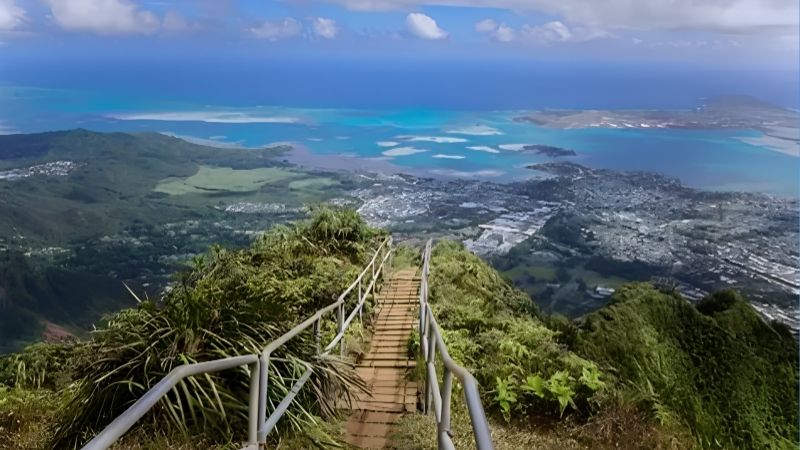
Koko Head is the island’s toughest popular hike, climbing 1,048 old railroad-tie steps straight up the side of the crater with no switchbacks and no mercy. Most hikers take 30 to 45 minutes to reach the top, breathing hard by the halfway point, and are rewarded with 360-degree views from Diamond Head to Hanauma Bay.
Respect the conditions. The trail has almost no shade, and heat reflecting off the railroad ties makes a midday climb brutal, so start early. There is a short bridge section over a gap that some find intimidating, though a bypass trail routes around it for anyone uneasy with the exposure.
Manoa Falls
Manoa Falls is the easy rainforest classic, a 1.6-mile round trip through lush jungle to a 150-foot waterfall, just 15 minutes from downtown Honolulu. Scenes from Jurassic Park were filmed nearby, and the shaded, tropical setting makes it one of the most accessible and rewarding hikes on the island for almost any fitness level.
Two things to know: the trail is muddy year-round, so wear grippy shoes rather than sandals, and parking runs about seven dollars at the lot. Do not swim in the pool at the base, since freshwater here carries a real leptospirosis risk, and watch for rockfall near the falls.
More Must-Do Oahu Best Hiking Trails
Beyond the big three, these trails round out the Oahu best hiking trails with a sunrise ridge, an easy coastal walk, and a rare swimmable waterfall. Each adds a different flavor to an island hiking trip. Here is what to expect from three more favorites.
Lanikai Pillbox
The Lanikai Pillbox hike, on the Kaʻiwa Ridge, is a short but steep 1.6-mile round trip to two WWII bunkers with jaw-dropping views of the Mokulua Islands and turquoise Lanikai Beach. It is legendary at sunrise, drawing hikers before dawn who come for the golden light spilling across the water.
The climb is rocky and exposed with no guardrails, so watch your footing on the steep sections. Parking is limited to residential streets where neighbors are weary of trail traffic, so arrive early, keep noise down, and pair the hike with a Lanikai Beach visit afterward.
Makapuʻu Point Lighthouse
The Makapuʻu Point Lighthouse Trail is the easy coastal counterpoint, a paved, roughly two-mile round trip and the only wheelchair-accessible trail on Oahu. It climbs gently to a historic lighthouse with sweeping Pacific views, making it ideal for families, strollers, and anyone wanting a low-effort payoff.
It doubles as a top sunrise walk and, in winter, a prime humpback whale-watching spot from the overlooks. The open coastal path has little shade, so bring a hat and water, and consider going early for cooler air and the best light over the ocean.
Waimea Falls
Waimea Falls on the North Shore rounds out the list with a rare swimmable waterfall, a paved, gentle 1.5-mile round trip through a botanical garden to a 45-foot cascade. Unlike most Oahu falls, its pool is lifeguarded, so you can actually swim beneath the water on a hot day.
It is a paid attraction rather than a free trail, with admission covering the garden, cultural sites, and the lifeguarded pool. The easy, stroller-friendly path makes it a family favorite and a refreshing contrast to the island’s tougher, drier ridge climbs.
What to Pack for Oahu Best Hiking Trails
Island hiking mixes heat, mud, and exposure, so the right kit matters even on short trails. These five essentials cover the Oahu best hiking trails, all real and widely available.
| Item | Why It Matters on Oahu |
|---|---|
| Grippy trail shoes | Muddy jungle and slick rock |
| Water / hydration | Hot, exposed climbs with no shade |
| Sun protection | Intense tropical sun on ridges |
| Daypack | Carry water, snacks, first aid |
| Light rain shell | Sudden windward and valley showers |
Grippy Trail Shoes
Traction is the single most useful thing on Oahu’s trails. Manoa’s mud and the slick rock on ridge hikes turn smooth-soled shoes or flip-flops into a real hazard, so wear trail shoes with an aggressive, grippy outsole that bites into wet roots, red dirt, and the worn railroad ties on Koko Head.
Closed-toe shoes also guard against stubbed toes and scrapes on rocky scrambles like Lanikai Pillbox. If you pack one pair for island hiking, make it a sturdy trail shoe or light hiker with deep lugs, since it does more for your safety here than any other single item in your bag.
Water and Sun Protection
Water is critical on exposed climbs like Koko Head and Diamond Head, which bake in the tropical sun with no shade at all. Carry at least a liter or two per person, more on hot days, and a hydration reservoir so you can sip on the steep sections without stopping to dig out a bottle each time.
Sun protection is equally non-negotiable. A wide-brim hat, sunglasses, a sun shirt, and reef-safe sunscreen guard against intense tropical UV, which is stronger than many mainland visitors expect. It reflects off rock and water to burn you faster, so reapply on longer trails and open crater rims.
Daypack and Rain Shell
A comfortable daypack of around 15 to 20 liters carries your water, snacks, and a small first-aid kit without weighing you down on short island trails. Look for a breathable back panel, since the humidity and heat make a sweaty, non-ventilated pack uncomfortable fast on a climb like Diamond Head.
Finally, stash a packable rain shell. Windward and valley trails like Manoa can get sudden showers even on a sunny day, and a light shell keeps you dry without real weight or bulk. It doubles as a windbreaker on breezy ridges and lighthouse overlooks when the trade winds pick up in the afternoon.
Skip cotton for these humid trails, since it holds sweat and rain and chafes badly on a long climb. Quick-drying synthetics or merino keep you comfortable whether you are grinding up the Koko Head stairs or strolling the paved Makapuʻu path in the sun.
Frequently Asked Questions
These are the questions visitors ask most about the Oahu best hiking trails. Short answers follow.
Do I need a reservation to hike on Oahu?
Only for a few trails. Diamond Head requires advance reservations for out-of-state visitors, at about five dollars per person plus parking, as of 2026. Most Oahu trails are free and need no reservation, though some Waianae Range or state-land trails require access permits from Hawaii’s DLNR.
What is the hardest of these hikes?
Koko Head Crater is the toughest of the popular trails, sending you straight up 1,048 railroad-tie steps with no switchbacks and no shade. It is a genuine leg-burner. Manoa Falls and Makapuʻu Lighthouse sit at the easy end, while Diamond Head and Lanikai Pillbox fall in between.
When is the best time to hike?
Early morning is ideal year-round. It beats the heat on exposed trails, secures parking at busy trailheads, and delivers legendary sunrises at spots like Lanikai Pillbox and Makapuʻu. Afternoons bring stronger sun and, on windward and valley trails, a higher chance of passing showers.
Can I swim at Manoa Falls?
No. Swimming in the pool at the base of Manoa Falls is discouraged because freshwater pools on Oahu carry a real leptospirosis risk, and rockfall is possible near the falls. If you want a waterfall you can swim under, Waimea Falls on the North Shore is a lifeguarded, paid alternative.
See More:
- best travel backpack for females
- best backpack for laptops
- best hydrogen water bottle
- best headlight restoration kit
Final Thoughts
The Oahu best hiking trails deliver crater rims, jungle waterfalls, and sunrise ridges, if you plan around reservations, parking, heat, and mud. Reserve Diamond Head ahead, start early to beat the sun and crowds, and keep an easy option like Makapuʻu handy. Wear grippy shoes, carry water and sun protection, and pack your gear before you fly.






Write Your Review
No reviews yet. Be the first to share your experience!