
Key takeaways
What's inside
Best hiking Zion delivers ranges from airy sandstone fins to a river winding through a slot canyon. This guide to the best hiking Zion offers walks you through the park’s top trails, the permits and shuttle you need, and the gear that keeps desert heat and cold water from ruining your day on the trail.
As an Amazon Associate we earn from qualifying purchases at no extra cost to you. Product prices and availability are accurate as of the date shown and are subject to change.



As an Amazon Associate we earn from qualifying purchases at no extra cost to you. Product prices and availability are accurate as of the date shown and are subject to change.
By Jake Thompson, gear writer at Roger Bacon Outdoors
🛒 Best Price Today on Amazon
Prime members get fast, free shipping on everything above, plus member-only deals. New members get a 30-day free trial — cancel anytime.
The Best Hiking Zion Offers, Trail by Trail
Zion packs a remarkable range of hikes into one canyon, from flat river walks to exposed scrambles. Choosing among them comes down to your comfort with heights, cold water, and crowds. Here are the trails behind the best hiking Zion offers and what each actually asks of you.
Angels Landing
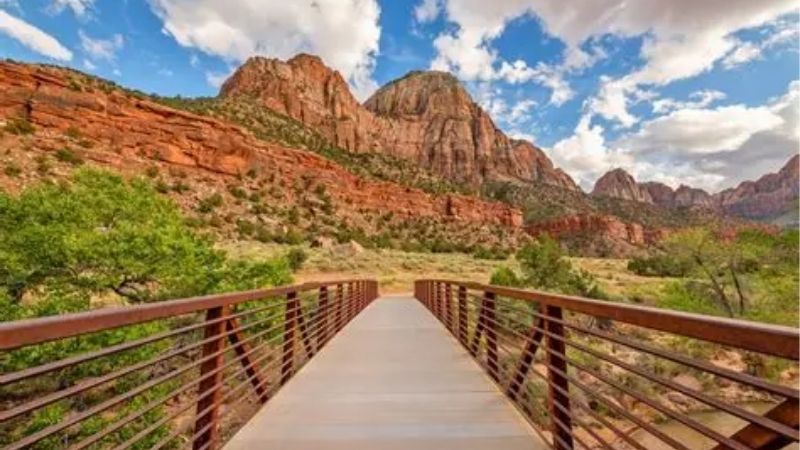
Angels Landing is Zion’s most famous hike, a 5.4-mile round trip with about 1,488 feet of climbing that ends on a narrow fin with chains and steep drop-offs. The final section beyond Scout Lookout requires a permit through a Recreation.gov lottery, and rangers check for it, so plan and apply well ahead of your trip.
The exposure is real: the last half-mile is less than three feet wide in places, which makes it unsuitable for anyone uneasy with heights. If you do not win a permit, Scout Lookout is the same trail up to the chains and still delivers an enormous canyon view without the exposure.
If you do win a permit, hike early to beat the heat and the crowds inching along the chains, and take the descent slowly. Loose footing and two-way traffic on the exposed section cause most of the trouble, so wait for a safe spot before you pass another hiker.
The Narrows
The Narrows is a hike up the Virgin River through a towering slot canyon, and it is unlike anything else in the park. The bottom-up route from the end of the Riverside Walk needs no permit, and you simply wade upstream as far as you like, turning around whenever you choose to head back.
Cold water and safety define this one. The river closes to hikers when flows exceed 150 cubic feet per second, flash floods are a genuine danger, and the water is not drinkable due to toxic cyanobacteria. Your feet will get wet, so proper footwear and a check of the flood forecast are essential.
Most bottom-up hikers turn around near Wall Street or Big Spring, roughly four to five miles upstream, though you can stop far sooner and still get the full slot-canyon effect. Go as far as your legs, the water temperature, and the daylight comfortably allow, then leave plenty of time to wade back.
Emerald Pools and Riverside Walk
For a gentler day, the Emerald Pools trails and the Riverside Walk deliver scenery without the strain. The Lower Emerald Pool Trail is a short 1.2-mile loop past pools and seasonal waterfalls, while the paved, nearly flat 2.2-mile Riverside Walk leads to the mouth of The Narrows and suits almost every fitness level.
These trails shine when high routes are closed or crowded, and they are ideal for families, early mornings, or a recovery day. They also share the canyon’s dramatic walls, so you get classic Zion views for a fraction of the effort the marquee hikes demand.
Observation Point and Canyon Overlook
For big views with less exposure, these two deliver. Observation Point via the East Mesa Trail is a roughly 6.5-mile, mostly flat round trip that needs no permit and finishes looking down on Angels Landing from 700 feet higher, the move many locals make when permits run out.
The Canyon Overlook Trail, near the park’s east side, is a short one-mile round trip to a dramatic viewpoint over the main canyon. It is a quick, rewarding hike that fits easily into an afternoon and offers some of the best payoff-to-effort scenery in Zion.
Watchman Trail
The Watchman Trail is an underrated moderate option that starts right near the visitor center, so it needs no shuttle ride. The roughly 3.3-mile round trip climbs a few hundred feet to a bench with sweeping views over the lower canyon, Springdale, and the Watchman peak itself, and it stays open year-round.
Because it sits at the busy south end, it is an easy hike to fit in early or late in the day, when the light is best and the crowds thin. It also makes a strong warm-up on your first afternoon while you get a feel for the desert heat before tackling a marquee trail.
What to Pack for the Best Hiking Zion Offers
Zion’s desert heat and cold river demand specific gear, and the right kit makes the best hiking Zion offers safe and comfortable. These five items cover the essentials, all real and widely available.
| Item | Why It Matters in Zion |
|---|---|
| Hydration reservoir | Carry a gallon a day in desert heat |
| Neoprene socks / water shoes | Cold Virgin River in The Narrows |
| Trekking poles | Current in The Narrows, steep grades |
| Sun protection | Intense high-desert sun exposure |
| Daypack | Carry water, layers, and safety gear |
Hydration Reservoir
Water is the single most important thing you carry in Zion, where the recommendation is about one gallon per person per day in summer. A 3-liter reservoir like a CamelBak Crux lets you sip constantly on exposed climbs without stopping to dig out a bottle, which matters when trailside water is either absent or unsafe to drink.
Fill up before you board the shuttle and top off at trailhead stations where available. On big days like Angels Landing or a long Narrows wade, running low on water in the heat is the fastest way to turn a great hike into a dangerous one, so carry more than you think you need.
In cooler months you will drink less, but the sun and dry air still dehydrate you faster than you expect, so keep sipping steadily. A bite-valve reservoir makes that easy and keeps your hands free for scrambling and poles on the rougher trails.
Neoprene Socks and Water Shoes
The Narrows means hiking in the river, so your feet will be wet and cold for hours. Neoprene socks paired with sturdy, grippy water or canyoneering shoes keep your feet warmer and protected from slick, ankle-rolling rocks underfoot, and they make the difference between a fun wade and a miserable, numb one.
Many hikers rent a Narrows package in Springdale, but if you plan to return, buying neoprene socks and a solid pair of closed-toe water shoes pays off. Skip flimsy sandals; the riverbed is uneven and the current is real, so foot protection and traction matter more than style here.
Trekking Poles and Sun Protection
A trekking pole or two is invaluable in The Narrows, where a third point of contact steadies you against the current and probes for footing in murky water. Poles also ease the strain on steep grades like the switchbacks below Scout Lookout, saving your knees on the descent.
Sun protection is not optional in the high desert. A wide-brim hat, a sun hoodie or long sleeves, sunglasses, and high-SPF sunscreen guard against intense exposure on open trails, where shade is scarce and the reflected canyon light adds to the burn. Pair these with a comfortable daypack to carry it all.
Frequently Asked Questions
These are the questions hikers ask most when planning the best hiking Zion offers. Short answers follow.
Do I need a permit to hike in Zion?
Only for specific hikes. Angels Landing’s chained section requires a permit through a Recreation.gov lottery, and the top-down Narrows and The Subway need permits too. Most trails, including the bottom-up Narrows, Emerald Pools, Riverside Walk, and Observation Point via East Mesa, need no permit at all.
Should I rent or buy Narrows gear?
Rent if you are visiting once and want neoprene socks, canyoneering shoes, and a walking stick without the cost of owning them. Buy your own if you plan to return or hike other cold-water canyons, since quality neoprene socks and grippy water shoes pay off over multiple trips.
When is the best time to hike Zion?
Spring and fall offer the most comfortable temperatures and reliable trail access. Summer brings intense heat, so start by dawn and finish before midday. The Narrows depends on river flow and can close in spring snowmelt or after storms, so always check current conditions before you go.
Do I have to use the shuttle?
Yes, for most of the year. From roughly March through November, private vehicles cannot drive the Zion Canyon Scenic Drive, so you must use the free park shuttle to reach the main trailheads. Arrive early, since shuttle lines grow long fast and parking near the entrance fills quickly.
See More:
- best travel backpack for females
- best backpack for laptops
- best hydrogen water bottle
- best headlight restoration kit
Final Thoughts
The best hiking Zion offers rewards hikers who plan around permits, cold water, heat, and crowds, and who pack for all four. Chase an Angels Landing permit if heights suit you, wade The Narrows with the right footwear, and keep easier trails like Riverside Walk handy. Carry plenty of water, protect against the sun, and buy your gear before your trip.





Write Your Review
No reviews yet. Be the first to share your experience!