
Key takeaways
Best hammock for backpacking comes down to a balance most beginners miss: cutting ounces without cutting the comfort and weather protection you need to actually sleep. A trail hammock has to pack small, hang fast, and hold your weight safely, then still let you rest after a long-mileage day. Here are the real numbers.
Our top picks


As an Amazon Associate we earn from qualifying purchases at no extra cost to you.
As an Amazon Associate we earn from qualifying purchases.
🛒 Best Price Today on Amazon
Prime members get fast, free shipping on everything above, plus member-only deals. New members get a 30-day free trial — cancel anytime.
Start 30-Day Prime Free Trial →See Today’s Amazon DealsHow to Choose the Right Best Hammock for Backpacking
The best hammock for backpacking is judged on a handful of numbers rather than looks: packed weight, weight capacity and fabric denier, usable length, and how much bug and weather protection it includes. Match those to your body and your trips before you compare prices.
Weight and Packed Size
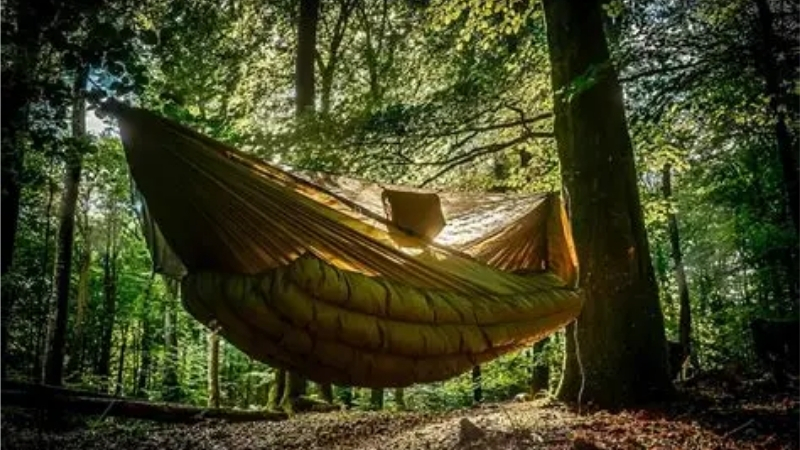
For trail use, the sling itself should sit well under a pound if you value ultralight carry, with dedicated ultralight models landing near 5 to 6 ounces and packing to about the size of a softball. All-in-one hammock tents that bundle net and fly weigh more, often around two pounds, in exchange for a complete shelter.
Remember the hidden weight: straps, and for cold nights an underquilt, are rarely included and add real ounces. When you compare a bare sling to a full kit, add suspension and insulation to both so you are weighing the whole sleep system, not just the fabric.
Weight Capacity and Fabric Denier
Capacity ratings run from about 250 pounds on lightweight shelters to 400 or 500 pounds on burlier double slings. Treat the number as real, not aspirational, because thin ultralight ripstop will let you know when you exceed it. Account for your body weight plus any gear you hang inside.
Fabric denier tells the durability story. A 20D ripstop saves weight but is more delicate; 70D nylon is heavier and tougher, better for frequent use or casual lounging. Ultralight backpackers accept the fragility for the ounces saved, while weekend campers usually prefer the sturdier weave.
Length, Dimensions, and a Flat Lay
Comfort in a hammock comes from lying diagonally, which flattens your body and eases back strain. That only works if the hammock is long enough for your height, so taller sleepers should look for longer bodies, roughly eleven feet or more, rather than compact single slings sized for lounging.
Width and a structural ridgeline also shape the lay. A ridgeline sets a repeatable sag so you get the same comfortable angle every night, while extra width gives side sleepers room. Too small a hammock forces a banana-shaped lay that leaves you sore by morning.
Bug Net, Weather, and Suspension
Three-season trails often mean mosquitoes, so an integrated bug net or an all-in-one tent design earns its weight fast. For rain and wind you add a tarp or rainfly, and for temperatures below the mid-60s Fahrenheit an underquilt matters more than any top layer, because your back compresses insulation flat.
Suspension is the quiet essential. Most hammocks ship without straps, and tree-friendly webbing with multiple adjustment points protects bark and dials in your hang. Aluminum and steel hardware such as carabiners and stakes has also seen tariff-driven cost increases, another reason to buy a complete, quality kit once rather than repeatedly.
Top Picks for the Best Hammock for Backpacking
Our picks for the best hammock for backpacking span the full range, from sub-six-ounce ultralight slings to a complete knotless hammock tent, plus a spacious double for luxury or two-person lounging. Weights and capacities below reflect current manufacturer figures.
| Model | Weight | Capacity | Type | Best For |
|---|---|---|---|---|
| ENO Sub6 Ultralight | ~5.8 oz | 300 lb | Bare sling | Ultralight carry |
| Kammok Roo Single UL | ~5.6 oz | 300 lb | Bare sling | Lightest all-round |
| Warbonnet Blackbird | ~16 oz (body) | 350 lb | Sling + asym net + shelf | Trail sleeping |
| Kammok Mantis UL | ~2 lb 3 oz | ~250 lb | All-in-one tent | Complete shelter |
| ENO JungleNest | ~1 lb 3 oz | 300 lb | Integrated bug net | Buggy three-season |
| ENO DoubleNest | ~19 oz | 400 lb | Double sling | Lounging / two-up |
ENO Sub6 Ultralight
At roughly 5.8 ounces with a 300-pound capacity, the Sub6 is built for hikers counting every gram. It packs to a tiny bundle, uses a simple clip-and-tension setup, and disappears in a pack until camp. For a bare sling to lounge or sleep in mild, bug-free conditions, it is about as light as practical gets.
The compromises are the usual ultralight ones: straps are not included, the thin ripstop is less forgiving of rough handling, and the single size feels tight for taller or larger users. Pair it with quality tree straps and treat the fabric with care, and it rewards the weight savings.
Kammok Roo Single Ultralight
The Roo Single UL matches the featherweight class at about 5.6 ounces and 300 pounds, packing down to roughly the size of a softball with an attached stuff sack so you never lose it. A water-repellent, UV-resistant finish helps it survive season after season of trail abuse better than most ultralight slings.
Being a single, it lies snug, so taller sleepers may want more length for a true diagonal lay, and like nearly every hammock here it ships without straps. As a do-most, ultralight lounging and mild-weather sleep option, it is one of the easiest picks to recommend.
Warbonnet Blackbird
The Blackbird is the trail-sleeping specialist, with roughly a 16-ounce body, an integrated asymmetric bug net, a genuinely useful built-in gear shelf, and a 350-pound limit you can trust. The asym design flattens your lay and the shelf keeps a headlamp and phone off the ground, which matters on multi-night trips.
It costs more, has a mild learning curve on the asymmetric lay and single-side entry, and still needs straps and a tarp bought separately. For backpackers who plan to actually sleep in the hammock night after night rather than just lounge, it is the most complete-feeling core.
Kammok Mantis Ultralight (All-in-One)
The Mantis UL bundles a knotless suspension, an integrated bug net, a rainfly, and a roll-back stargazer panel into one shelter around two pounds three ounces. The knotless system gets you hung and ready in under a minute, which is a real gift after a long day, and the soft ripstop is genuinely comfortable.
It is the priciest option here, the interior is on the snug side, and the roughly 250-pound rating on light ripstop should be respected rather than pushed. For a single-purchase, do-everything hammock shelter with no kit-building, it is the standout all-in-one.
ENO JungleNest
The JungleNest brings ENO’s casual-hammock pedigree to a bug-season design, with an integrated net, a 300-pound capacity, and a packed weight near a pound and a quarter including stuff sack and guylines. It lands in the sensible middle: not the lightest, not the most feature-rich, but balanced and dependable.
That balance is also the critique, since it finishes mid-pack on weight, comfort, and features, and the sewn-in net adds a little bulk over a bare sling. For three-season trails where mosquitoes are the main concern, it is a straightforward, no-drama choice.
ENO DoubleNest
The DoubleNest is the luxury and two-person option, roughly 19 ounces of durable 70D nylon rated to 400 pounds and praised for its spacious, comfortable lay. It is tough enough to double as a kids’ swing at camp and roomy enough for two to relax, which is why many carry it as a deliberate comfort item.
At that weight it is heavy for solo ultralight backpacking, and there have been occasional reports of body seams splitting, generally covered by the two-year warranty. Think of it as best for car camping, festivals, and lounging rather than long thru-hikes where every ounce counts.
Frequently Asked Questions
Short answers to the questions new buyers of the best hammock for backpacking ask most, from cold-weather comfort to whether straps are included and how current gear pricing affects timing.
Do I need an underquilt for backpacking in a hammock?
Below roughly the mid-60s Fahrenheit, yes. Your body flattens any sleeping bag or pad beneath you, so cold air steals heat from your back all night. An underquilt hangs outside the hammock and stays lofted, which is the single biggest comfort upgrade for cool-weather hammock sleeping.
Are straps included with backpacking hammocks?
Usually not. Nearly every hammock listed here ships as the body only, and you must add tree-friendly webbing straps separately. Budget for wide, low-stretch straps with multiple adjustment loops; they protect bark, meet many park regulations, and make dialing in the right sag far easier.
What weight capacity do I actually need?
Take your body weight, add any gear you plan to hang inside, and choose the best hammock for backpacking rated comfortably above that total. Ratings are real limits, not suggestions, especially on thin ultralight ripstop, so leave a margin rather than buying right at your number.
Is now a good time to buy, or should I wait for a sale?
Prices on technical nylon and on aluminum and steel hardware have risen with recent tariffs, and brands describe future pricing as uncertain. Buying a complete kit before peak summer and fall demand protects both availability and budget, though watching major fall sale events can still pay off for planned purchases.
See More:
- Best hiking boots for wide feet women
- Best summer hiking boots
- Best hiking boots flat feet
- Best affordable hiking boots
- Best minimal hiking boots
Final Thoughts
The best hammock for backpacking is the one whose weight, capacity, length, and weather protection fit your trips and your body, then paired with quality straps and, for cool nights, an underquilt. Weigh the whole system rather than the sling alone, respect the capacity rating, and buy the complete kit once to sleep well on every trail.





Write Your Review
No reviews yet. Be the first to share your experience!