
Key takeaways
What's inside
Best tent stakes aren’t a single product but a small kit, because the anchor that grips rocky alpine soil is useless on a loose sand dune. The best tent stakes are chosen by terrain, so this guide sorts them by ground type, hard, soft, sand, and snow, helping you assemble a set that keeps your shelter locked down wherever you pitch it.
As an Amazon Associate we earn from qualifying purchases at no extra cost to you. Product prices and availability are accurate as of the date shown and are subject to change.




As an Amazon Associate we earn from qualifying purchases at no extra cost to you. Product prices and availability are accurate as of the date shown and are subject to change.
🛒 Best Price Today on Amazon
Prime members get fast, free shipping on everything above, plus member-only deals. New members get a 30-day free trial — cancel anytime.
Start 30-Day Prime Free Trial →See Today’s Amazon DealsHow to Choose the Right Best Tent Stakes
Choosing the best tent stakes means thinking in terrain, not just picking one design. The four factors below help you build a kit matched to the ground you camp on, the weight you’ll carry, and how many stakes your setup actually needs.
Match Stakes to Your Terrain
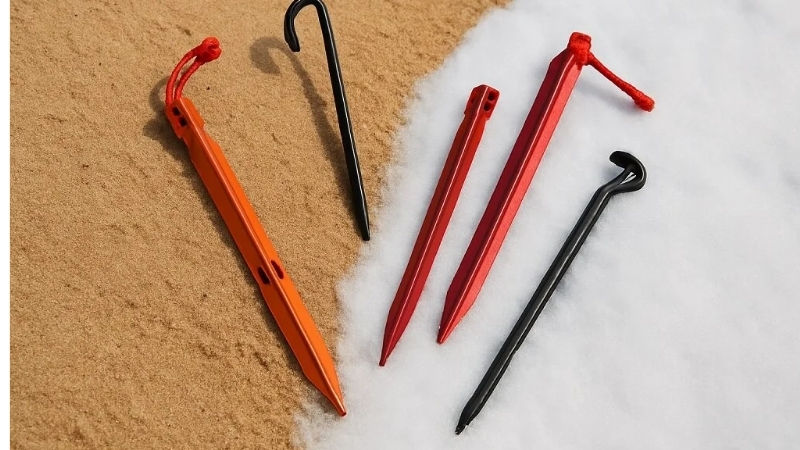
Terrain is the deciding factor. Hard and rocky ground needs narrow steel or titanium nails that penetrate without bending, mixed soil suits versatile Y-beam aluminum, loose sand demands wide or screw stakes, and snow calls for curved anchors or deadman setups.
Most campers face more than one surface across a season, so a smart kit mixes types. A base of reliable Y-stakes plus a few specialized anchors for sand, snow, or rock covers nearly any site you’ll pitch on so you’re never caught with the wrong tool when the terrain changes, which is lighter and more reliable than hoping one stake works everywhere.
Backpacking vs Car Camping Weight
How you travel sets your weight budget. Backpackers want lightweight aluminum or titanium stakes like the MSR Mini Groundhog to protect base weight, while car campers can carry heavy, near-indestructible steel stakes that shrug off any abuse.
The gap is real. A steel car-camping stake is far too heavy for a 20-mile trek, while a delicate ultralight pin may bend in hardpack, so match the stake’s weight class to how far you’ll carry it and the ground you’ll drive it into, since a mismatch means dead weight or a bent, useless stake.
How Many Stakes to Carry
Coverage matters as much as choice. Most tents need one stake per corner plus extras for guylines, typically six to ten, and it’s wise to carry spares since stakes bend or vanish in tall grass at dawn.
Building a mixed kit pays off here. Pack a core set of Y-stakes for most nights, then add a couple of specialized stakes, sand or snow anchors, for trips where you know the terrain, so you’re never caught with the wrong tool for the ground.
Buying In-Season While Stock Lasts
Timing rewards planning this year. Tent stakes are made from aluminum, steel, and titanium, and tariffs on those metals have lifted the wider outdoor category roughly 7.7% on average, with brands calling future pricing an estimate as supply chains stay unsettled.
Stock is the other pressure. Camping season empties shelves of popular stakes, so early-season buying means the sets and specialized anchors you want are available, and you have time to test them at home. Assembling your kit before peak summer is the simplest way to ensure you’re anchored on every single trip you take.
Top Picks for the Best Tent Stakes
Sorted by terrain, these best tent stakes help you build a kit that anchors anywhere. Each entry names a genuine drawback so you know the trade-off before you buy.
| Product | Terrain | Material | Weight (each) | Best For |
|---|---|---|---|---|
| MSR Groundhog | Mixed/all-around | 7075 aluminum | ~0.49 oz | Everyday base kit |
| Snow Peak Solid Stake #20 | Hard/rocky | Forged steel | Heavy | Hardpack sites |
| MSR Mini Groundhog | Trail/varied | 7075 aluminum | Ultralight | Backpacking |
| Big Agnes Dirt Dagger | Sand/beach | Aluminum | Light | Coastal camping |
| MSR Blizzard | Snow | Aluminum | Light | Winter camping |
| Eurmax Galvanized Steel | Compact dirt | Steel | Heavy | Budget car camping |
MSR Groundhog (Best Everyday Base Kit)
The MSR Groundhog is the backbone of any stake kit. Its Y-beam 7075 aluminum design delivers excellent holding power across most terrain, resists bending, weighs just 0.49 ounces each, and its high-visibility pull cord makes stakes easy to find and remove at dawn, even in tall grass or leaf litter.
It’s heavier than ultralight hooks and its Y-shape can catch on buried rocks. As the versatile core of a mixed kit that handles the majority of sites, though, it’s the trusted standard, and the one stake most campers should own before adding specialists.
Snow Peak Solid Stake #20 (Best for Hard and Rocky Ground)
For sites that bend ordinary stakes, the forged-steel Snow Peak Solid Stake #20 is the answer. It takes repeated hammer blows without flinching, drives into compact soil and gravel where aluminum fails, and its exceptional durability makes it a lifetime addition to a car-camping kit.
It’s heavy and impractical for backpacking. For rocky and hardpack sites where nothing else will go in, though, its brute strength is exactly what you need, driving home where aluminum would fold on the first swing.
MSR Mini Groundhog (Best for Backpacking)
The MSR Mini Groundhog is the ultralight backpacker’s core stake, trimming weight from the full-size Groundhog while keeping Y-beam holding power. Its shorter length reduces leverage, making it less likely to bend when you hit a submerged rock at an angle on varied trails, which saves you a bent, useless stake far from any resupply.
It holds less in loose soil and high wind than the full-size version. For thru-hikers obsessing over base weight who still want reliable grip, though, it’s the best balance of strength and ounces, and thru-hikers swear by it across varied trail terrain.
Big Agnes Dirt Dagger (Best for Sand and Beach)
For coastal trips, the Big Agnes Dirt Dagger cuts through loose surface sand down to the compacted layer below, finding grip where short pins slide straight out. It’s a light aluminum stake that also handles soft, mixed ground on the way to the beach.
On a pure sand dune it still struggles, and it’s not for rock or frozen ground. For beaches and soft coastal soil, though, it’s the right tool to keep your shelter down, reaching the firmer sand a short pin never touches.
MSR Blizzard (Best for Winter Camping)
The MSR Blizzard is the snow-camping anchor, its curved aluminum design burying to hold in snow where straight stakes pull free, and it doubles for loose sand. It’s the stake winter and shoulder-season campers add to their kit for reliable cold-weather anchoring.
It’s a specialist that performs poorly in hard ground and adds niche weight. For snow and deep sand, though, it’s the anchor that keeps your tent standing through a storm, burying deep to hold where a straight stake would lift out.
Eurmax Galvanized Steel (Best Budget for Car Camping)
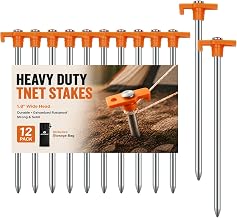
The Eurmax Galvanized Steel stakes round out a budget car-camping kit, performing well in compact dirt and hard campsites at a low price. Their galvanized steel resists rust and takes a hammer without bending, making them a durable, affordable workhorse.
They’re heavy and unsuitable for the trail. For a rugged, low-cost set that lives in the car for weekend trips, though, they deliver serious value, a set that lives in the trunk and never lets you down.
Frequently Asked Questions
Quick answers to the questions campers ask most when choosing the best tent stakes for their terrain.
Should I carry different tent stakes for different ground?
Ideally yes. No single stake excels everywhere, so a smart kit mixes a core of versatile Y-stakes with a few specialized anchors for sand, snow, or rock. Carrying two or three specialized stakes alongside your base set means you’re never caught with the wrong tool when the terrain changes at your next site.
What are the best tent stakes for backpacking?
Lightweight aluminum and titanium stakes win for backpacking. The MSR Mini Groundhog balances Y-beam holding power with minimal weight, while titanium hooks trim ounces further for gram counters. Avoid heavy steel stakes on the trail, and consider mixing a couple of titanium stakes as durable backups for tough, rocky terrain.
How do I stake a tent in sand or snow?
Use wide or curved stakes designed for loose ground. In sand, stakes like the Big Agnes Dirt Dagger reach compacted layers below the surface, or a buried sandbag works as a deadman anchor. In snow, curved stakes like the MSR Blizzard or a buried deadman hold where straight pins pull straight out.
How many spare tent stakes should I pack?
Carry at least two or three spares beyond what your tent needs. Stakes bend in hard ground, get lost in tall grass, or stay behind at a site, so extras prevent a compromised pitch. Mixing in a few specialized stakes for expected terrain is smarter than packing spares of just one design.
See More:
- best wine cooler drinks
- best cooler for boat
- best cooler for boating
- best lunch box cooler
- best cooler for boats
Final Thoughts
The best tent stakes are a terrain-matched kit, not a single pick: a core of MSR Groundhogs for most sites, steel spikes for hardpack, a sand stake for the beach, and a snow anchor for winter. Build your set around the ground you camp on, and with metal prices climbing on tariffs, assembling a proven kit now keeps you anchored anywhere.




Write Your Review
No reviews yet. Be the first to share your experience!