
Key takeaways
What's inside
Best four season tent shopping goes wrong when buyers grab an expedition fortress for trips that never leave the treeline. The best four season tent is the one matched to your actual objectives, so this guide sorts winter shelters into mountaineering, basecamp, and treeline types so you buy exactly the right amount of tent.
As an Amazon Associate we earn from qualifying purchases.
As an Amazon Associate we earn from qualifying purchases at no extra cost to you. Product prices and availability are accurate as of the date shown and are subject to change.


🛒 Best Price Today on Amazon
Prime members get fast, free shipping on everything above, plus member-only deals. New members get a 30-day free trial — cancel anytime.
Start 30-Day Prime Free Trial →See Today’s Amazon DealsHow to Choose the Right Best Four Season Tent
Choosing the best four season tent starts with an honest look at where and how you camp in winter, then points you to the right category. The four factors below walk through whether you even need one, and which of the three winter tent types fits your trips.
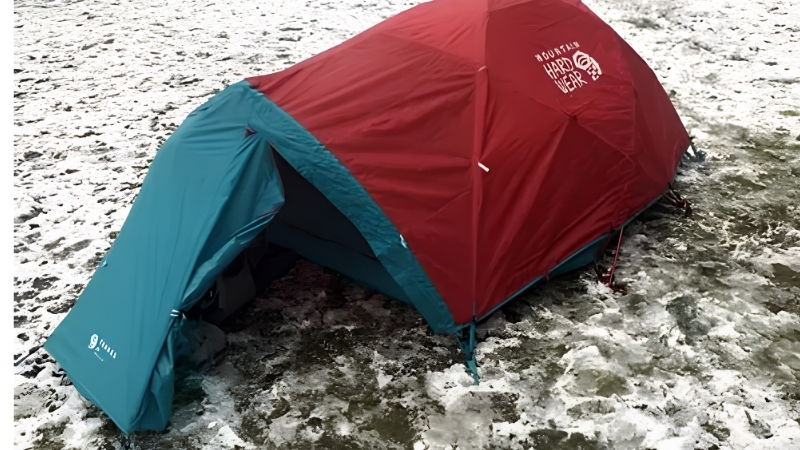
Do You Actually Need One?
The first question is whether a four-season tent is overkill for you. For occasional winter camping below treeline in sheltered forest, a sturdy three-season tent often suffices, and you’ll save weight and money by skipping the specialized build.
Above treeline or in serious storm exposure, though, the investment becomes non-negotiable. When snow load and 50-mph wind are on the table, only a four-season tent’s pole strength and full-coverage fly will keep you sheltered and safe through the night, which is exactly when a cut corner becomes dangerous.
Mountaineering vs Basecamp vs Treeline
Winter tents fall into three broad camps. Mountaineering tents are trimmed for fast, light summit pushes; basecamp tents like the Mountain Hardwear Trango 2 are larger, heavier, and better ventilated for pitching once and staying put; and treeline tents such as the MSR Access are winter-capable but not built for heavy high-mountain exposure.
Match the category to your objective. Fast alpine missions reward a light mountaineering or single-wall tent, expeditions demand a stormproof basecamp fortress, and most winter backpackers below serious exposure are best served by a versatile treeline crossover that handles winter without expedition weight.
Weight for Your Objective
Weight should follow the mission, not the other way around. For ski mountaineering and alpine climbing where you carry the tent on approach, aim for roughly 5 pounds or less, where light designs like the Black Diamond Eldorado at 4 pounds 8 ounces excel.
For basecamp and expedition use where you pitch once and stay put, weight matters far less than livability and storm resistance. There, accepting the MSR Remote 2’s 7-pound-4-ounce minimum buys 33 square feet of floor and a 44-inch peak, room to sit out a long storm without going stir-crazy.
Timing Your Purchase in 2026
There is a real reason to buy sooner this year. Winter shelters are premium products built from aluminum DAC poles and technical coated fabrics, exactly the materials most exposed to tariffs, which have lifted the wider category roughly 7.7 percent, with technical components climbing 10 to 15 percent.
Because tariffs and supply chains remain unsettled, brands now describe future pricing as an estimate rather than a promise. Four-season tents already run into the hundreds or thousands, so even a modest rise is meaningful, and securing yours before the winter season is the practical move.
Stock is the other pressure. Popular winter models sell through as the cold approaches, so buying early means the type and size you need are available, with time to practice pitching before it counts. Getting your tent before peak demand, rather than after, is the smartest way to be ready.
Top Picks for the Best Four Season Tent
Sorted by type, these best four season tent picks help you buy for your objective rather than by spec alone. Each entry names a genuine drawback so the fit is clear before you commit.
| Product | Type | Weight | Wall | Best For |
|---|---|---|---|---|
| Black Diamond Eldorado | Mountaineering | ~4 lb 8 oz | Single | Fast summit pushes |
| MSR Access 2 | Treeline | ~4 lbs | Double | Winter backpacking |
| NEMO Kunai 2P | Treeline crossover | ~3 lb 14 oz | Double | Budget/ski touring |
| MSR Remote 2 | Mountaineering | ~7 lb 4 oz | Double | Alpine basecamp value |
| Mountain Hardwear Trango 2 | Basecamp | Heavy | Double | Expedition storms |
| The North Face Mountain 25 | Basecamp/expedition | ~9 lb 13 oz | Double | Maximum security |
Black Diamond Eldorado (Best Mountaineering)
For fast, weight-critical summit pushes, the single-wall Eldorado is the pick. Its one waterproof-breathable layer keeps weight near 4 pounds 8 ounces, and its simple, robust design pitches fast in exposed terrain where minimal weight above treeline is the priority.
Single-wall construction means more condensation and less breathability than a double-wall tent. For difficult alpine climbs where every ounce matters, though, its light, no-fuss shelter is exactly right when speed decides whether you make the summit window.
MSR Access 2 (Best Treeline Backpacking)
The Access 2 is the versatile treeline tent for winter backpacking and ski touring, its double-wall design delivering good ventilation and livability at just over 4 pounds while shedding snow and pitching easily in cold, windy conditions.
It could be stronger for extreme high-altitude wind, where a mountaineering tent serves better. For shoulder-season and moderate winter trips below severe exposure, though, it’s a lightweight standout and one of the easiest four-season tents to live in.
NEMO Kunai 2P (Best Budget Crossover)
The Kunai 2P is the affordable entry to winter shelters, using a DAC pole frame, a brow pole, and a tapered wind-shedding profile to withstand rain, snow, and high wind at a minimum weight around 3 pounds 14 ounces.
It suits moderate winter and shoulder-season use rather than full high-mountain exposure. For lightweight mountaineering and ski touring on a budget, though, it delivers real four-season capability for less, the crossover many first-time winter campers choose.
MSR Remote 2 (Best Alpine Value)
The Remote 2 bridges mountaineering and basecamp use, offering genuine alpine geometry, excellent ventilation, 33 square feet of floor, and a 44-inch peak at a price well short of expedition tier, making it the value pick for two-person winter trips where you want alpine capability without paying expedition money.
Its 7-pound-4-ounce minimum weight is a real load on long approaches. For weekend winter campers and occasional alpine users who want performance and value, though, it’s the recommendation, balancing real mountaineering ability with a sensible price.
Mountain Hardwear Trango 2 (Best Basecamp)
The Trango 2 is the expedition basecamp fortress, built to shoulder a 24-inch storm with maximum interior volume, structural rigidity, and storm resistance for extended trips where you pitch once and ride out whatever comes.
That durability comes with serious weight. For basecamps and expeditions in extreme conditions, though, its stormproof structure leaves little to worry about when you plan to stay put while the storm rages.
The North Face Mountain 25 (Best Maximum Security)
The Mountain 25 is the ultimate storm shelter, its two-pole geodesic design and thick 9mm DAC poles proven on Denali across decades, with a ground-reaching fly, eight guyout points, and a vestibule that stores a loaded pack and boots.
At 9 pounds 13 ounces it’s a heavy carry even split between two. When the forecast looks ugly and sleep is non-negotiable, though, it’s the tent you trust most, with a pedigree earned on real expeditions rather than marketing.
Frequently Asked Questions
Quick answers to the questions winter campers ask most about the best four season tent.
What’s the difference between mountaineering, basecamp, and treeline tents?
Mountaineering tents are trimmed light for fast summit pushes; basecamp tents are larger, heavier, and better ventilated for pitching once and staying put on expeditions; and treeline tents are winter-capable crossovers for camping below serious high-mountain exposure. Matching the category to your objective is the key to buying the right amount of tent.
Is a 4-season tent worth it if I only camp in winter occasionally?
It depends on where. For occasional winter camping below treeline in sheltered forest, a strong three-season tent often suffices and saves money. But if you venture above treeline or into storm exposure even occasionally, the pole strength and full-coverage fly of a proper four-season tent are non-negotiable for safety.
Can I use a 4-season tent in summer?
You can, but it’s usually too warm and heavy. Four-season tents use less mesh and heavier fabrics to retain warmth and block spindrift, which limits summer ventilation. A treeline crossover like the NEMO Kunai is the most summer-tolerant, but for warm-weather backpacking a dedicated three-season tent is far more comfortable.
How much should I spend on a four season tent?
Budget crossovers like the NEMO Kunai start lower, mountaineering and basecamp tents run into the hundreds, and premium expedition shelters reach four figures. Spend according to your objectives: a treeline tent for moderate winter trips, or a stormproof basecamp tent if you face serious exposure. Buying the right type matters more than buying the priciest.
See More:
- best wine cooler drinks
- best cooler for boat
- best cooler for boating
- best lunch box cooler
- best cooler for boats
Final Thoughts
The best four season tent is the one matched to your objective: a light single-wall Eldorado for summit pushes, a versatile MSR Access for treeline backpacking, or a stormproof North Face Mountain 25 for expeditions. Decide which type your trips demand, and with premium tent prices climbing on tariffs, buying before winter keeps you sheltered, in stock, and ahead of the next price hike.




Write Your Review
No reviews yet. Be the first to share your experience!