
Key takeaways
Best image stabilized binoculars solve the one problem that ruins high-power viewing: hand shake that turns a crisp bird into a jittery blur. The best image stabilized binoculars cancel that wobble electronically or with a gyro, giving rock-steady, tripod-free views at magnifications no ordinary handheld pair can hold.
As an Amazon Associate we earn from qualifying purchases.
🛒 Best Price Today on Amazon
Prime members get fast, free shipping on everything above, plus member-only deals. New members get a 30-day free trial — cancel anytime.
Start 30-Day Prime Free Trial →See Today’s Amazon DealsHow to Choose the Right Best Image Stabilized Binoculars
Picking the best image stabilized binoculars means weighing magnification, brightness, stabilization strength, and weatherproofing against how you’ll actually use them. The four factors below cut through the spec sheets so you match the right pair to your viewing rather than overpaying for reach you won’t use.
Magnification and the 12-14x Sweet Spot
The first number is how much closer subjects appear, and stabilization changes the math on how high you can go. Reviewers consistently place the sweet spot at 12 to 14x, where the benefit becomes transformative; below 12x the payoff is marginal, and above 18x you enter specialized astronomy and long-range territory.
Higher isn’t automatically better. An 18x pair like the Canon 18×50 IS delivers stunning reach but a narrow exit pupil that struggles in low light, so most buyers are happier with a steady 10x to 14x that stays bright and usable across more conditions.
Objective Lens and Brightness
The second number is the objective diameter in millimeters, which controls how much light enters. Around 30 to 32mm is plenty for daytime use and keeps weight down, 42mm shines for birding and hunting at golden hour, and 50mm gathers the most light for astronomy and marine spotting at dusk.
Bigger objectives mean brighter images but heavier bodies. The Canon 10×42 L IS WP balances a generous 42mm objective and a bright 4.2mm exit pupil against a real 853-gram weight, so you trade some portability for those luminous low-light views.
Stabilization Strength and Weatherproofing
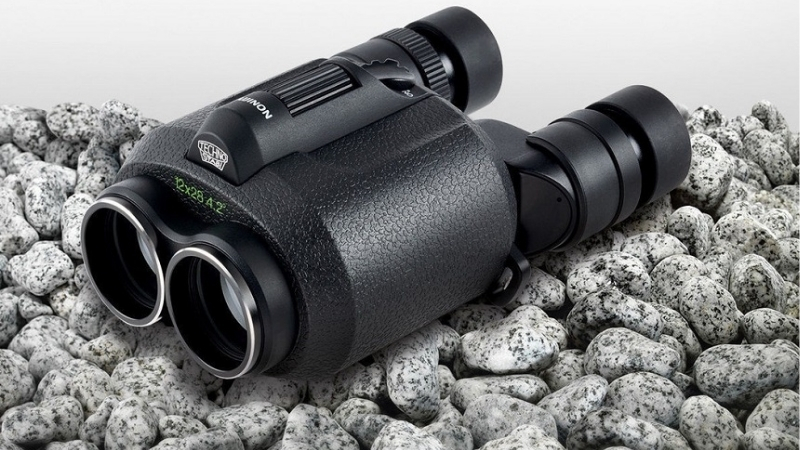
Correction angle tells you how much shake a pair can cancel. Canon’s optical Vari-Angle Prism system is smooth and precise, while Fujinon’s gyro gimbal offers a class-leading 5 to 6 degrees of correction for heaving boat decks, far beyond what electronic systems manage.
Weather sealing matters outdoors. Fully waterproof IPX7 models like the Fujinon Techno-Stabi and Sig Sauer Zulu6 survive submersion, while several Canon models are only water-resistant and the 10×30 IS II has no water protection, so match the rating to your environment.
Timing Your Purchase in 2026
There is a real reason to buy sooner this year. Image stabilized binoculars pack precision optics, gyro sensors, microprocessors, and metal alloy bodies, and most are imported, so new tariffs on electronics and materials hit them directly. The wider outdoor category has seen roughly a 7.7% average price increase, with technical components up more.
Most brands now describe future pricing as an estimate rather than a promise, because supply chains and tariffs remain unsettled. On premium optics that already cost hundreds or thousands, even a single-digit percentage bump is real money, so locking in the pair you want now can beat the next round of increases.
Demand timing helps too. Binoculars are popular gifts and hunting-season buys, so the deepest discounts cluster around October deal events and late-November sales, when the model you want is still in stock. Watching those windows, rather than buying at peak seasonal demand, is the smartest way to get steady glass without overpaying.
Top Picks for the Best Image Stabilized Binoculars
These six best image stabilized binoculars span featherweight travel pairs to marine-grade gyro units, so there’s a match for every kind of viewing. Each entry names a genuine drawback so you know the trade-off before you buy.
| Product | Magnification | Objective | Stabilization | Best For |
|---|---|---|---|---|
| Canon 10×42 L IS WP | 10x | 42mm | Optical (prism) | Best overall |
| Canon 10×30 IS II | 10x | 30mm | Optical (prism) | All-day value |
| Fujinon Techno-Stabi TS-X 1440 | 14x | 40mm | Gyro ±5-6° | Marine use |
| Sig Sauer Zulu6 16×42 | 16x | 42mm | Optical (OIS) | Long-range |
| Kite APC 12×42 | 12x | 42mm | Optical ±2° | Best battery |
| Nikon STABILIZED 12×25 | 12x | 25mm | Optical | Travel/light |
Canon 10×42 L IS WP (Best Overall)
The Canon 10×42 L IS WP is widely considered the class benchmark, pairing L-series optics that rival premium European glass with an effective Vari-Angle Prism stabilization system. It’s fully waterproof with O-ring sealing, offers 16mm eye relief and a bright 4.2mm exit pupil, and delivers steady, vivid views from dawn birding to evening stargazing.
The honest catch is weight and price: at 853 grams it’s heavy for all-day carry, its closest focus is a distant 5 meters, and battery life plummets in deep cold. For a do-everything premium pair, though, nothing here matches it.
Canon 10×30 IS II (Best All-Day Value)
For most buyers, the 10×30 IS II is the smart-money pick. Its proven Vari-Angle Prism stabilization delivers edge-to-edge sharpness, the 30mm objective keeps it light for genuine all-day use, and it runs 9 to 12 hours on a single AA at a far friendlier price than the L-series.
The trade-off is that it has no water resistance at all, so it’s a fair-weather pair. If you view mostly in dry conditions and want proven stabilization without the premium weight or cost, it’s the everyday winner.
Fujinon Techno-Stabi TS-X 1440 (Best for Marine Use)
When the deck is heaving, the Fujinon TS-X 1440 is unmatched. Its dual-gimbal gyro system driven by piezo sensors delivers a class-leading 5 to 6 degrees of correction, holds a subject steady in rough seas, and its IPX7 waterproof body shrugs off spray and brief submersion.
It’s a heavy pair that needs four AA batteries and runs only about 8 to 10 hours, so pack spares. For serious boaters and anyone who needs the widest correction angle available, it’s the gold standard.
Sig Sauer Zulu6 16×42 (Best Long-Range)
The Zulu6 16×42 brings serious reach to hunters and long-range spotters, using Sig’s optical image stabilization to tame the shake that makes 16x unusable handheld. It offers a wide field of view for the magnification, an IPX7 waterproof body, and around 40 hours of battery on two AA cells.
At 16x the exit pupil narrows, so it’s less forgiving in dim light than lower-power pairs, and it sits at the premium end of the range. For reaching distant game or landscapes, it’s a standout.
Kite APC 12×42 (Best Battery Life)
The Kite APC 12×42 is the endurance champion, running an exceptional 60 hours on two AA batteries, roughly double most rivals. Independent reviewers judged its fast, smooth 2-degree correction comparable in effect to Canon’s high-end system, and its IPX7 sealing handles any weather you’ll meet.
It lacks the brand cachet and optical pedigree of Canon’s L-series, and it’s a mid-to-premium purchase. For hunters and all-day observers who hate swapping batteries, though, it’s hard to beat.
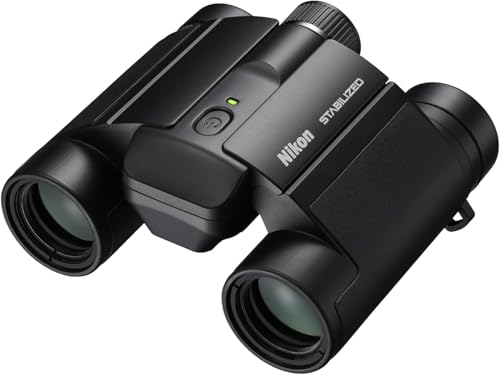
Nikon STABILIZED 12×25 (Best for Travel)
The Nikon STABILIZED 12×25 is the ultralight pick, weighing just 13.9 ounces so it slips into a jacket pocket for travel and hiking. It delivers 12x stabilized reach, a generous 17.5mm eye relief that suits eyeglass wearers, and up to 12 hours of runtime on a single AA.
Its small 25mm objective gathers less light, so it’s weaker at dusk, and it isn’t fully waterproof. For travelers who want steady magnification without the bulk, it’s the easiest pair to carry.
Frequently Asked Questions
Quick answers to the questions buyers ask most when shopping for the best image stabilized binoculars.
Are image stabilized binoculars worth the money?
For high-power viewing, yes. Above roughly 10x, hand shake blurs detail that stabilization instantly restores, letting you handhold 12 to 18x pairs that would need a tripod otherwise. They’re pricier and need batteries, but for birding, marine use, astronomy, or anyone with hand tremors, the steady view is genuinely transformative.
Do stabilized binoculars need batteries?
Yes, every stabilized pair requires power for its system, and battery life varies widely. Kite’s APC leads at around 60 hours on two AA, Sig’s Zulu6 manages about 40, while Canon models run 9 to 12 hours on one AA and gyro Fujinons about 8 to 10 on four. Always carry spares on longer trips.
What magnification should I choose?
Most buyers are best served by 12 to 14x, where stabilization becomes genuinely transformative while views stay bright. Below 12x the benefit is marginal, so a standard pair may suffice. Above 18x you gain reach for astronomy and long-range work but sacrifice low-light performance as the exit pupil narrows considerably, and buying more magnification than your activity needs just adds weight and cost.
Can I use stabilized binoculars on a boat?
Absolutely, and it’s where they shine. On a moving deck, stabilization is the difference between a usable view and seasickness-inducing blur. For heavy seas, prioritize a wide correction angle like Fujinon’s 5 to 6 degrees, and insist on an IPX7 waterproof rating so spray and brief submersion won’t harm the optics.
See More:
- best wine cooler drinks
- best cooler for boat
- best cooler for boating
- best lunch box cooler
- best cooler for boats
Final Thoughts
The best image stabilized binoculars match magnification, brightness, and correction strength to your viewing, from the do-it-all Canon 10×42 L IS WP to the marine-grade Fujinon TS-X 1440 and the ultralight Nikon 12×25. With imported-optics prices climbing on tariffs, choosing a proven stabilized pair now is the surest way to enjoy steady, tripod-free views for years to come.
Our top picks


As an Amazon Associate we earn from qualifying purchases at no extra cost to you.




Write Your Review
No reviews yet. Be the first to share your experience!