Key takeaways
- Clean between crops. Empty and wash the reservoir, pump cover, planting deck, and growing baskets. A diluted, manufacturer-approved cleaning method helps remove biofilm and mineral deposits.
- Inspect the pump first when circulation slows. Roots, sediment, and mineral scale commonly restrict small pumps. Never run a pump dry.
- Expect the light or pump to be the wear point. LEDs usually last much longer than mechanical pumps, seals, and small fans. Confirm that replacement pumps, light panels, and power supplies are available before buying.
- Do not fill every site automatically. One fast-growing basil plant can shade neighboring lettuce. Start fewer plants if the garden has limited light coverage.
- Keep foliage dry and provide airflow. Dense, constantly wet leaves encourage problems. A small room fan on a gentle setting can improve air movement without drying plants excessively.
- Harvest little and often. Pinching herbs above a leaf pair encourages branching; allowing one plant to dominate the light reduces the output of the whole system.
The best indoor garden kits depend on what you want to grow: choose a compact six- to nine-pod countertop system for herbs, a larger column garden for frequent harvests, or a simple passive planter if you want low cost and little technology.
Best indoor garden kits by situation
| Best for | Recommended type | Why it fits | Main compromise |
|---|---|---|---|
| Small kitchen or apartment | Six-pod countertop garden | About 12–18 inches wide, built-in light, easy reservoir access | Limited harvest volume and plant height |
| Several herbs for regular cooking | Nine-pod countertop garden | More variety without taking up floor space | More frequent pruning and refilling |
| Leafy greens for a household | Vertical 20–30-plant garden | Greater growing capacity and better use of floor area | Higher price, electricity use, and cleaning workload |
| Lowest ongoing cost | Soil or passive hydroponic planter with a separate grow light | Seeds and generic nutrients are inexpensive and flexible | Less automation and more hands-on monitoring |
| Frequent travel | System with a large reservoir and app alerts | More warning before water or light problems become serious | Connectivity does not replace maintenance |
Top picks compared
AeroGarden Harvest: best compact starter
The AeroGarden Harvest is a sensible entry point for a windowsill or kitchen counter. It grows up to six plants, uses a height-adjustable LED light, and has a small reservoir suited to herbs and compact greens. Its controls are simple enough for a first indoor garden, while the light timer and water-level reminders remove much of the guesswork.

Ahopegarden Indoor Garden Hydroponics Growing System: 10 Pods Kit with LED
Included for 'Best Indoor Garden Kits for Growing at Home' as a relevant option in this category; details come from the product listing.
View on Amazon
Ahopegarden Hydroponics Growing System Kit: 12 Pods with LCD Control Panel
Included for 'Best Indoor Garden Kits for Growing at Home' as a relevant option in this category; details come from the product listing.
View on Amazon
LETPOT LPH-SE Hydroponics Growing System, 12 Pods Smart Herb Garden Kit Indoor, Indoor Garden, APP & WiFi Controlled, with 24W Growing LED, 5.5L Water Tank, Pump System, Automatic Timer
Included for 'Best Indoor Garden Kits for Growing at Home' because the listing specifies 12 Pods Smart Herb Garden Kit Indoor and Indoor Garden, details this guide uses to compare options.
View on Amazon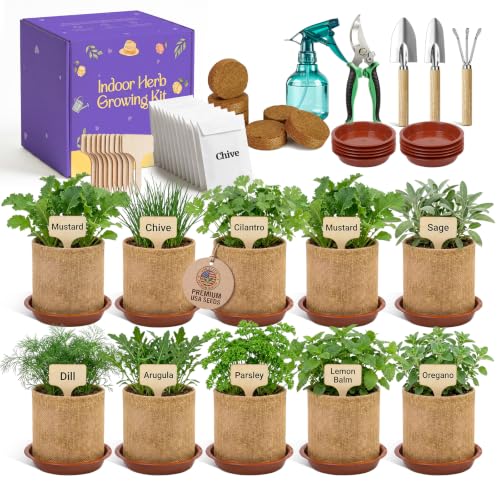
Floraxa 10-Herb Indoor Garden Kit, Complete Kitchen Herb Starter Set
Included for 'Best Indoor Garden Kits for Growing at Home' because the listing specifies Complete Kitchen Herb Starter Set, details this guide uses to compare options.
View on AmazonChoose it when your priority is fresh basil, parsley, dill, lettuce, or similar plants rather than a large weekly harvest. The light covers the planting area reasonably well, but the compact hood is not intended for tall tomatoes or mature peppers. Its small reservoir also means warm rooms and thirsty plants can require refilling every few days.
Click & Grow Smart Garden 9: best for variety with minimal setup
The Click & Grow Smart Garden 9 holds nine pre-seeded plant capsules and uses a built-in LED light with an automatic schedule. The system is designed around convenience: insert a capsule, add water, and let the garden run. It is particularly attractive to people who want predictable results and do not want to measure nutrient concentrates.
The trade-off is the replacement-capsule system. A typical three-pack or multi-pack of branded pods can cost roughly $10–$25, depending on the plant and seller, so recurring costs are materially higher than buying a packet of seeds. Reusable or third-party-compatible growing media may reduce cost, but compatibility and germination rates vary. The Smart Garden 9 is best where a tidy, self-contained countertop appliance matters more than maximum yield per dollar.
AeroGarden Bounty: best countertop capacity
A nine-plant AeroGarden Bounty-style system gives herbs and leafy greens more room than a six-pod model while retaining a relatively small footprint. Its stronger light and taller adjustable hood are useful for plants that outgrow compact starter gardens. The larger reservoir reduces refill frequency, although a full canopy can consume water quickly.
This is the better choice for cooks who want several herbs available at once or for households that regularly harvest salad greens. Leave clearance above the light and around the sides: crowded plants shade one another, trap humidity, and make pruning difficult. A nine-pod garden can produce more than a six-pod unit, but only if you actively thin and harvest it.
Gardyn Home: best for maximum harvest in limited floor space
Gardyn’s vertical format is aimed at growing a larger number of plants without spreading across a countertop. Current Home systems use two vertical columns and approximately 30 plant sites, with a lower reservoir, overhead lighting, camera-based monitoring, and app controls. The design makes better use of vertical space than a conventional tray, making it appealing for a bright corner of a kitchen, dining area, or small room.
It is a substantial appliance rather than a countertop gadget. Check the exact model’s height, width, depth, and clearance before buying; vertical gardens commonly stand around 5 feet tall and need access to a power outlet and reservoir. The greater capacity also means more pruning, cleaning, and replacement plants. Subscription or proprietary pod costs can become the dominant ownership expense over time.
What matters more than the plant count
Growing capacity and light coverage
Pod count is not the same as usable growing capacity. Six mature basil plants may need more light and airflow than six young lettuce seedlings. Look for the light’s coverage area, height adjustment, and timer rather than relying only on the number of planting holes. A light that covers 1–2 square feet evenly is appropriate for a countertop garden; a vertical system needs multiple light levels or a broad panel to prevent lower plants from stretching toward the top.
Leafy greens and herbs usually suit indoor kits better than fruiting crops. Tomatoes and peppers need stronger light, more root space, support, and pollination assistance. If the light cannot be raised well above the canopy, tall plants will quickly become a maintenance problem.
Reservoir size and refill frequency
A small countertop unit may hold roughly 2–3 liters of water, while larger countertop systems often hold about 3–5 liters. Vertical systems may hold 15–25 liters or more. Actual runtime depends on temperature, plant size, humidity, and how much light the plants receive.
For example, if a mature countertop garden uses 0.5 liter per day, a 2.5-liter reservoir provides about five days of theoretical capacity. You should not wait until it is empty: keeping the pump running without sufficient water can damage it, and plants become stressed before the reminder appears. A larger reservoir is valuable for travel, but it also holds more stagnant water if you neglect cleaning.
Automation versus control
Automatic lights and pumps are useful because consistency matters more than complicated settings. App alerts can tell you about low water or light schedules, but they cannot remove dead leaves, clean algae, or fix a blocked pump. Wi-Fi is a convenience, not a crop guarantee.
For most beginners, a timer, water-level indicator, and quiet pump provide more practical value than elaborate analytics. Choose app control when you want remote reminders; choose physical controls when reliability and simplicity matter most.
Pod cost and seed flexibility
Proprietary pods are convenient but can cost approximately $2–$6 per planting site. A nine-site refill could therefore cost $18–$54 before nutrients or shipping. If a pod produces useful harvests for eight weeks, the planting material alone works out to roughly $0.32–$0.96 per site per week.
Open baskets or refillable grow sponges generally have a lower long-term cost, especially when you grow the same herbs repeatedly from seed. They require more decisions: selecting seed, adding nutrients at the correct concentration, and preventing algae around exposed growing media. Check whether a system accepts standard baskets before assuming it is easy to convert.
Ownership realities: cleaning, wear, and common mistakes
- Clean between crops. Empty and wash the reservoir, pump cover, planting deck, and growing baskets. A diluted, manufacturer-approved cleaning method helps remove biofilm and mineral deposits.
- Inspect the pump first when circulation slows. Roots, sediment, and mineral scale commonly restrict small pumps. Never run a pump dry.
- Expect the light or pump to be the wear point. LEDs usually last much longer than mechanical pumps, seals, and small fans. Confirm that replacement pumps, light panels, and power supplies are available before buying.
- Do not fill every site automatically. One fast-growing basil plant can shade neighboring lettuce. Start fewer plants if the garden has limited light coverage.
- Keep foliage dry and provide airflow. Dense, constantly wet leaves encourage problems. A small room fan on a gentle setting can improve air movement without drying plants excessively.
- Harvest little and often. Pinching herbs above a leaf pair encourages branching; allowing one plant to dominate the light reduces the output of the whole system.
How to choose the right size
Measure the available space before comparing features. Allow at least 2–4 inches of side clearance for access and enough vertical clearance to raise the light above the expected plant height. A 12-inch-wide garden can fit many kitchens, but its light and reservoir may be too small for a household wanting daily salad greens. Conversely, a 30-plant vertical garden can be efficient in floor area while still requiring a tall, visible section of wall and regular access to the tank.
As a practical rule, choose six sites for occasional garnish herbs, nine sites for a cook who wants a rotating selection, and 20–30 sites only when you will harvest frequently and maintain the canopy. If your budget is tight, a passive planter plus a properly sized timer-controlled LED can provide more growing area for the same money, though with less automation.
Bottom line
The AeroGarden Harvest is the easiest compact starting point; the Click & Grow Smart Garden 9 is appealing when pre-seeded convenience matters most; a nine-plant AeroGarden Bounty-style unit offers a stronger countertop harvest; and Gardyn is the better fit for maximum capacity in a small footprint. Compare reservoir volume, light coverage, replacement-pod pricing, and access for cleaning—not just the headline plant count. The best indoor garden kits are the ones whose maintenance, consumable costs, and physical size match how often you will actually cook with the harvest.