
Key takeaways
What's inside
Best rated beach tent listings are dominated by reviews written after one calm afternoon, which tells you almost nothing about how a shelter survives a season. This guide explains what a rating actually captures, which failure points genuinely matter over time, and five shelters that hold up across seasons of repeated use.
As an Amazon Associate we earn from qualifying purchases at no extra cost to you. Product prices and availability are accurate as of the date shown and are subject to change.


As an Amazon Associate we earn from qualifying purchases at no extra cost to you. Product prices and availability are accurate as of the date shown and are subject to change.
🛒 Best Price Today on Amazon
Prime members get fast, free shipping on everything above, plus member-only deals. New members get a 30-day free trial — cancel anytime.
How to Judge the Best Rated Beach Tent
A high average score usually reflects how easy something was to open on day one, not whether it survived August. Reading past that to find the best rated beach tent means understanding which components actually fail, how sand behaves over a season, and which specifications are verified rather than claimed.
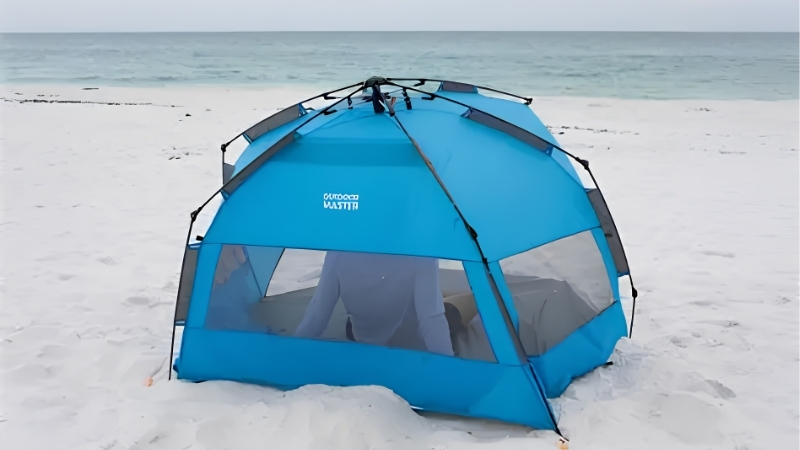
Know Which Components Actually Fail First
Zippers fail before fabric on almost every beach shelter, because sand grinds into the teeth every single visit. Look for oversized coil zippers rather than fine ones, and treat a shelter with a full perimeter zip as carrying more risk than a canopy design with no zippers at all.
Poles are the second failure point. Fibreglass splinters after repeated flexing and eventually punches through its sleeve, while aluminium bends and can often be straightened. Steel components rust in salt air within a season or two. The pole material tells you more about longevity than any review score.
Sand and Salt Do the Real Damage
Salt residue left on fabric attracts moisture and degrades coatings over time, which is why shelters stored damp after a beach day fade and stiffen faster than the sun alone explains. Rinsing with fresh water and drying fully before packing extends usable life more than any purchase decision does.
Sand works into every hinge, seam and sleeve. Shelters with simple mechanisms and few moving parts survive that better than clever folding designs with pivots. When comparing similar scores, favour the simpler construction, because it has fewer places for grit to accumulate and eventually seize.
Separate Verified Specifications From Claims
UPF 50 plus is a testable standard, and reputable manufacturers state it plainly. Vague phrases such as sun blocking or UV protective without a number usually mean the fabric was never tested. That distinction matters far more for a shelter used with children than the difference between four and five stars.
Similarly, treat wind claims with caution, since no beach shelter is tested to a published wind rating. What you can verify is the anchoring design: how many sand bags, how large, and whether guy lines are included. Those details predict real performance better than any marketing description.
Top Picks for the Best Rated Beach Tent
The best rated beach tent options below were chosen for construction that survives repeat use rather than for headline scores alone. The table compares anchoring, pole material and format, then each entry explains where that particular design holds up and the compromise that comes with it.
| Shelter | Format | Poles | Anchoring | Best for |
|---|---|---|---|---|
| Neso Grande | Canopy | Aluminium | Corner sand bags | Wind resistance |
| Shibumi Shade | Wind canopy | Flexible pole | Single buried anchor | Breezy beaches |
| Otentik Beach Sunshade | Stretch canopy | Adjustable poles | Sand-filled bags | Adjustable coverage |
| Pacific Breeze Easy Setup XL | Pop-up with floor | Fibreglass | Pockets and stakes | Families |
| Sport-Brella XL | Umbrella | Steel and fibreglass | Stakes and tethers | Solo carry |
Neso Grande
The Neso earns its reputation through geometry rather than materials. Four corner bags fill with sand and two adjustable aluminium poles tension the fabric into a curve that sheds wind instead of catching it, which is why it remains standing on days that send pop-up shelters cartwheeling down the beach.
There is no floor and no walls, so it offers shade without privacy or any windbreak at ground level. Filling and emptying four bags takes real effort at both ends of a visit. As a shelter judged on whether it is still usable after three seasons, the simplicity works strongly in its favour.
Shibumi Shade
The Shibumi takes an unusual approach, using the wind itself to hold a large fabric canopy aloft from a single flexible pole and one buried anchor. Setup takes a couple of minutes, the covered area is generous, and there is almost nothing mechanical that sand can work into and jam.
It genuinely requires a breeze to function, so on still days the canopy simply drapes rather than lifting. It is also expensive relative to a conventional canopy. On consistently breezy coastline, the design turns the usual problem into the thing that makes the shelter work at all.
Otentik Beach Sunshade
The Otentik uses stretchy fabric anchored by sand-filled bags with poles that adjust for height, so the same shelter can be pitched low against wind or high for headroom. That adjustability is unusual and genuinely useful when conditions change through an afternoon on an exposed stretch of coast.
The stretch fabric requires proper tension to look and perform right, which takes a little practice. Coverage is shade only, with no floor or walls. For a shelter that adapts to conditions rather than fighting them, and packs down remarkably small, it deserves the scores it attracts.
Pacific Breeze Easy Setup Beach Tent XL
This is the highest-volume family shelter for good reason. It opens in under a minute, the extended floor gives a clean area for bags and children, and the combination of sand pockets and stakes holds steady through ordinary onshore breeze without needing anything added to the corners.
The fibreglass poles are the long-term weak point, since repeated flexing eventually splinters them, and the open front catches wind badly in stronger conditions unless properly guyed. For families prioritising a sheltered floor area and instant setup, the compromises are worth accepting.
Sport-Brella XL
The Sport-Brella is the easiest shelter here for one person to carry and deploy, opening like a heavy umbrella and tilting to follow the sun. Zippered side panels and wind vents let you close it down against a breeze or open it out, which is more adaptability than most umbrellas offer.
Steel components in the frame are vulnerable to corrosion in salt air if it is stored damp, and the single central pole depends entirely on stakes and tethers that need help in dry sand. Coverage suits two rather than a family. Rinsed and dried properly, it lasts several seasons.
Costs and Late Season Timing
Shelters combine coated fabric with metal or composite poles, so the best rated beach tent options have absorbed cost increases from two directions at once. The points below cover the pricing picture and how the remaining season affects both availability and what you will pay.
Two Separate Cost Pressures Are Stacking
Industry reporting puts the average tariff-driven cost increase across outdoor goods at roughly 7.7 percent, with technical fabrics rising ten to fifteen percent. Duties on aluminium and steel land separately on poles and frames, which means a shelter faces increases on both of its main components.
Brands have described forward pricing as provisional while conditions settle, and inflation near 4.2 percent is tightening spending on seasonal purchases. Realistically that points to stable-to-rising prices through the rest of the season rather than any return to earlier levels.
Buy Between Heatwaves, Not During One
Stock disappears within days of a hot spell, and the popular sizes go first. Shopping between hot weeks rather than during one means choosing from a full range at normal pricing instead of settling for whatever colour and configuration remains after everyone else has already bought.
Buying now also leaves enough season to test it properly. Whether you can fold it, whether the anchors hold on your particular beach and whether the zip already grinds with sand are all things worth discovering while an exchange is straightforward rather than in the following June.
Clearance Is Genuine but Arrives Late
Seasonal shelters are discounted heavily from September as retailers clear stock, so waiting does produce real savings. The cost is losing this summer’s use, which only makes sense if your beach days are effectively finished. Sizes and colours will also be limited by the time prices drop.
Amazon runs early promotions ahead of its October event, though seasonal lines are often thin by then. Track one specific model rather than browsing, because clearance concentrates on discontinued variants rather than the shelter that actually suited your beach and your group.
Frequently Asked Questions
Questions about the best rated beach tent usually come down to how much a rating can be trusted, how long a shelter should last and what maintenance actually extends that. The answers below reflect repeated seasonal use on public beaches rather than a single trial afternoon.
How long should a beach shelter last?
A well-made canopy rinsed and dried after use commonly lasts three or more seasons, while a budget pop-up often gives one or two before poles or zips fail. Storage habits matter more than price. Packing it away damp and sandy will halve the life of almost any shelter regardless of construction.
Are high review scores reliable here?
Only partly, because most reviews are written within days of purchase and reflect first impressions rather than durability. Filter to the lowest scores and read those instead, since they describe the failures. Repeated mentions of splintered poles or jammed zips are the signal worth acting on.
How do I clean sand and salt off properly?
Shake out loose sand at the beach, then rinse with fresh water at home and let the shelter dry completely open before folding. Salt left in the fabric attracts moisture and degrades coatings, and any shelter packed damp will develop mildew and a permanent smell within a fortnight.
Is a canopy or a pop-up better?
Canopies handle wind better and have fewer parts to fail, while pop-ups give a floor, some privacy and much faster setup. If your beach is exposed, choose the canopy. If you are managing small children and want somewhere clean to put belongings, the pop-up floor earns its place.
Related Guides
Final Thoughts
The best rated beach tent for your coast is the one whose failure points match your conditions rather than the one with the highest average score. Aluminium poles and sand-bag anchoring for wind, a floored pop-up for families, simple construction everywhere. Rinse it, dry it, and it lasts seasons.




Write Your Review
No reviews yet. Be the first to share your experience!