Walking into the bouldering market with a vague idea of what you need is a recipe for buying a pad that either leaves you feeling every rock on the landing or breaks your back on the trail. As crash pad technology has continued to advance, manufacturers have introduced clever foam blends and suspension systems, but the core physics of falling safely remain unchanged. Whether you are projecting highballs or heading out for a casual afternoon on local sandstone, understanding the mechanics of a good fall protection system will save you money and protect your joints.
Choosing the right bouldering pad is ultimately about balancing impact absorption, transport comfort, and durability against abrasive terrain. Too many climbers buy based purely on surface area or brand loyalty, only to realize the foam bottoms out too easily or the backpack straps dig uncomfortably into their shoulders during a mile-long approach. This guide cuts through the marketing noise to highlight the exact specifications, design choices, and practical considerations that actually matter when selecting your next pad.
As an Amazon Associate we earn from qualifying purchases at no extra cost to you.
Understanding Foam Construction: Open-Cell and Closed-Cell Layers
The most critical element of any crash pad is what is happening inside the shell. High-quality pads use a multi-layer foam sandwich, typically combining open-cell and closed-cell foams. Closed-cell foam is the stiff, denser layer that distributes the initial energy of a fall across a wider surface area, preventing you from punching straight through to the ground. Open-cell foam is the softer, spongier layer that cushions the deceleration, making the impact much more forgiving on your ankles and spine. When evaluating a pad, press your thumb firmly into the surface; you should feel resistance that gradually yields, rather than a bottoming-out sensation against a hard floor.
Hinge Versus Taco Style: Landing Integrity Versus Portability
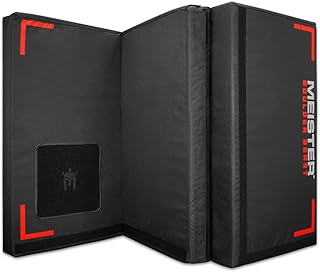
One of the first major design choices you will face is whether to buy a hinged pad or a taco-style (continuous foam) pad. Hinged pads fold cleanly in half, making them easier to pack into smaller car trunks or store in a closet, and they often double as a convenient carrying bag for your shoes, chalk, and layers. However, the crease in a hinge can create a dangerous dead spot where a falling foot can slip through and strike the ground beneath. Taco-style pads feature a continuous sheet of foam that eliminates this hazard entirely, offering a seamless landing zone, though they are bulkier to transport and less efficient for stuffing gear inside.
Thickness and Sizing: Matching the Pad to Your Project Height
Crash pads generally range in thickness from three inches for lightweight sit-start pads up to five inches or more for heavy-duty highball protectors. If you primarily climb low-angle problems or need an auxiliary pad to cover outlying rocks, a thinner model might suffice. However, for standard bouldering and moderate heights, a four-inch thickness represents the sweet spot between adequate impact absorption and manageable weight. Larger surface areas provide peace of mind on wandering lines, but keep in mind that massive pads can be unwieldy in high winds or when navigating narrow, boulder-choked trails.
Suspension and Carry Systems: Conquering the Approach
A pad is only as good as its carry system, especially if your favorite boulder field involves a grueling uphill hike. Look for pads equipped with padded, adjustable shoulder straps, a supportive hip belt, and a sturdy load-lifter system that keeps the bulk of the weight close to your spine. Cheap webbing straps will bite into your shoulders and cause the pad to sag awkwardly as you walk. Additionally, check for a durable bottom flap or integrated shield that prevents the suspension system from dragging in the dirt, mud, or snow when you set the pad down.
Durability and Outer Shell Materials
Your crash pad will be dragged across sharp granite, dropped on jagged talus, and exposed to relentless UV radiation. The outer shell material must be rugged enough to withstand this abuse without tearing or fraying prematurely. Ballistic nylon and high-denier Cordura fabrics are the gold standards for shell durability, offering exceptional resistance to abrasions and punctures. Pay close attention to the stitching and zipper quality as well, since failure at the seams will quickly allow foam to absorb moisture and degrade over time.
When to Spend More on Premium Pads
Entry-level pads are great for casual weekend warriors, but premium price points usually buy you significantly better foam longevity, superior suspension, and clever modular features like interlocking Velcro flaps or built-in carpet mats for cleaning your climbing shoes. If you climb multiple times a week, a cheap pad’s foam will pack out within a couple of seasons, requiring an early replacement. Investing in a high-end pad with memory foam blends or specialized compression layers ensures that your landing zone stays protective and resilient for years of heavy use.
Related Guides
To dive deeper into specific product recommendations and gear comparisons, check out our expert roundups. For a comprehensive overview of top-tier options, read our Best Bouldering Pads in 2026: Compared and Ranked. If you are specifically looking for heavy-duty impact protection, explore our Best Bouldering Crash Pads in 2026: Compared and Ranked to find the right model for your climbing style.
FAQ
How often should I replace my bouldering pad?
A typical crash pad lasts between three to five years depending on frequency of use and storage conditions. If you notice the foam has permanently compressed, bottoms out easily during a fall, or if the outer shell has large tears, it is time for a replacement.
Can I store gear inside my folded crash pad?
Yes, hinged pads are specifically designed to swallow your climbing shoes, chalk bag, and extra layers during the approach. However, avoid storing excessively bulky or sharp items that could warp the foam or puncture the inner lining over time.
How do I clean and maintain my crash pad?
Brush off loose dirt after every session and spot-clean the outer shell using mild soap, warm water, and a stiff brush. Never submerge the foam core in water, and always store your pad in a dry, well-ventilated area out of direct sunlight to prevent mold and UV degradation.
Are larger pads always better than smaller ones?
Not necessarily, as larger pads are significantly heavier, harder to carry on long approaches, and more difficult to fit into smaller vehicles. It is often better to use a medium-sized primary pad paired with a smaller supplementary pad for maximum versatility.