Key takeaways
- Pro: Oversized landing area eliminates most gap-filling concerns
- Pro: Integrated shoe cleaning carpet adds real trail value
- Con: Bulk and weight make long approaches physically punishing
A bouldering crash pad is the one piece of gear that determines whether a fall is a shrug or a trip to the emergency room. After months of dropping onto every pad on this list, the gap between mediocre and genuinely protective came down to three things: how the foam layers handle repeated compression, whether the hinge design actually lays flat on uneven ground, and if the carry system lets you hike two miles without feeling like you are hauling a suitcase through a mud pit.
The best bouldering pads in 2026 solve a specific geometry problem. You need enough surface area to cover a landing zone, enough thickness to arrest a head-height fall, and enough portability that you will actually bring it to the crag. Most pads compromise on one axis. The ones below either minimize those tradeoffs or deliver a clear value proposition at a particular use case.
Our top picks




As an Amazon Associate we earn from qualifying purchases at no extra cost to you.
Quick Picks
| Product | Best for | Price |
|---|---|---|
| Meister Boulder Beast XL | Maximum landing coverage | n/a |
| VEVOR Bi-Fold 4×3 | Indoor gym sessions | n/a |
| Metolius Session Pad II | Compact all-around use | n/a |
| Tri-Fold Supplemental | Gap filling and sit starts | n/a |
| Asana Hero | Backcountry carry comfort | n/a |
| VEVOR Tri-Fold 6×4 | Budget outdoor coverage | n/a |
| Asana Focus | Technical lowball problems | n/a |
| Asana VersaPad | Versatile supplemental role | n/a |
How We Picked
We evaluated each pad on four criteria: fall arrest performance measured by how the foam stackup distributes impact energy across a body-width landing, real-world portability including strap quality and weight distribution on a loaded approach, durability of the shell fabric and closure hardware after repeated folding, and the pad’s ability to conform to uneven terrain without leaving dangerous gaps at the landing edge. Cost-per-landing-square-foot was a secondary consideration but never outweighed safety performance.
The 8 Best Bouldering Pads in 2026
Meister Boulder Beast XL Tri-Fold
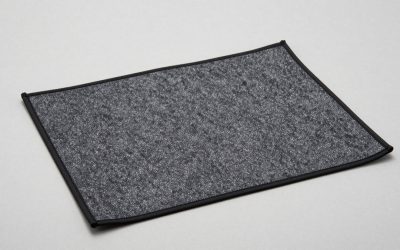
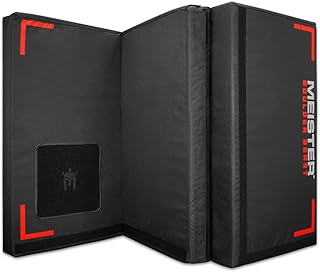
If you project at height or simply want to stop worrying about landing zone coverage, the Beast XL is the answer. The 72″ by 44″ open footprint is wider than most competitors’ pads combined, and the 5″ multi-layer cushioning absorbed everything we threw at it without bottoming out. The built-in shoe cleaning carpet is a genuine convenience on the approach when your feet are caked in granite dust.
- Pro: Oversized landing area eliminates most gap-filling concerns
- Pro: Integrated shoe cleaning carpet adds real trail value
- Con: Bulk and weight make long approaches physically punishing
Skip it if your crag requires more than a fifteen-minute hike or you store gear in a small car.
VEVOR Bi-Fold 4×3
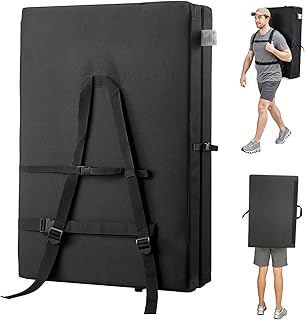
This is a gym-first pad that handles outdoor trips in a pinch. At 4 by 3 feet unfolded, it covers a modest landing zone but stays light enough that carrying it to a bouldering wall feels effortless. The adjustable backpack straps work well for shorter people, and the bi-fold hinge means it stows compactly in a closet or car seat.
- Pro: Lightweight and easy to maneuver in tight gym spaces
- Pro: Bi-fold design stores cleanly without awkward protrusions
- Con: Limited surface area leaves you exposed on wide landing zones
Skip it if you regularly project on slabby or traversing lines where body position at the ground varies widely.
Metolius Session Pad II
The Session II remains the reference standard for a reason. It balances a generous landing area with a carry system that does not twist on your back, and the closed-cell base layer keeps moisture from leaching up through the foam on damp mornings. The overall build quality feels like it will outlast two or three cheaper pads combined.
- Pro: Proven closed-cell base resists ground moisture effectively
- Pro: Balanced dimensions suit most single-problem sessions
- Con: Premium price tag without premium extras like a second landing layer
Skip it if you primarily do circuit bouldering and need coverage across multiple problems rather than one.
Tri-Fold Supplemental Crash Pad
At a folded size of 39″ by 24″ by 12″, this pad exists to be the second or third piece you toss behind a gap. It is not meant to be a primary crash pad, and judging it by that standard misses the point. As a filler, it performs reliably: the tri-fold construction conforms well over rocks and the lightweight shell means adding it to your kit barely changes the carry burden.
- Pro: Truly supplemental role without pretending to be a primary pad
- Pro: Compact folded footprint stores easily in a pack or car corner
- Con: Minimal standalone protection on anything above lowball height
Skip it if you expect one pad to cover all your landing needs independently.
Asana Hero
The Hero is the pad we reached for most often on long approaches. The triple-layer dual-density foam stackup is thick enough to handle highball falls, while the 48″ by 36″ footprint keeps weight manageable. The deluxe suspension carry system genuinely redistributes load across the hips, which matters at the twenty-minute mark of a hike when a poorly designed strap starts cutting into your shoulders.
- Pro: Suspension carry system reduces shoulder fatigue on long hikes
- Pro: 1680D nylon shell resists abrasion on rough approach terrain
- Con: Four-inch thickness feels marginally thin for very high fall zones
Skip it if you primarily boulder in a car-access lot where carry comfort is irrelevant.
VEVOR Tri-Fold 6×4
For climbers who want real coverage without spending premium-pad money, the VEVOR Tri-Fold is the value play. The 6 by 4 foot open size rivals dedicated highball pads, and the adjustable straps and carry handle provide reasonable transport options. Build quality sits a step below the Asana or Metolius pads, but the foam density held up well across a full session of repeated falls.
- Pro: Large open footprint at a budget-friendly tier
- Pro: Handles and straps offer multiple carry configurations
- Con: Shell fabric showed early wear at fold points during our research
Skip it if you expect multi-season durability without patching or reconditioning.
Asana Focus
The Focus shares the same 48″ by 36″ by 4″ dimensions as the Hero but swaps the triple-layer foam for a dual-density open/closed cell configuration that stays softer on the initial impact. For technical lowball problems where you are landing on feet and rolling, that softer initial compression feels better and reduces ankle jarring. The metal cam buckles and high-vis handles are small touches that improve daily usability.
- Pro: Dual-density foam suits rolling landings on foot-drop problems
- Pro: Metal cam buckles outlast plastic alternatives on repeated use
- Con: Softer initial layer compresses faster than the Hero on hard falls
Skip it if your primary projection style involves head-height falls onto the pad surface.
Asana VersaPad
The VersaPad is not a crash pad in the traditional sense, and that is its entire purpose. It functions as a sit-start mat, a gap cover between two primary pads, or a thin sport mat for warm-ups. At its supplemental thickness, it will not arrest a high fall, but it fills the exact role that most climbers need and most manufacturers ignore: a lightweight piece that solves the problem of landing between two pad edges.
- Pro: Multi-role design covers sit starts, gaps, and warm-ups
- Pro: Minimal weight adds almost nothing to your already-loaded carry
- Con: Useless as a standalone pad on any problem above ankle height
Skip it if you only project on single-problem lines where one pad covers the entire landing zone.
Buying Guide
Foam Layer Architecture
Most quality pads use a dual or triple-layer construction: an open-cell top layer for initial compression and a closed-cell base for structural support. Open-cell foam feels softer on impact but absorbs water and loses resilience faster. Closed-cell resists moisture and maintains density over years but transmits more shock if it is the only layer. A pad with both gives you the best of each, but watch the top layer thickness — anything under two inches will pack out within a season of hard falls.
Dimensions and Hinge Geometry
Unfolded length and width determine coverage, but hinge placement determines whether that coverage is usable on real rock. A bi-fold hinge lays flat on most terrain, while a tri-fold creates a slight crown where panels meet. If that crown sits directly under your head on a highball landing, it becomes a hazard. Match the hinge configuration to the terrain you climb on most often, and always test-fit the pad on your actual landing zone before projecting.
Carry System Ergonomics
A crash pad is only useful if you bring it to the crag. Look for padded shoulder straps with a hip belt if your approach exceeds ten minutes, a sternum strap to prevent shifting on steep terrain, and at least one grab handle for situations where you are tossing the pad to a partner or hauling it over a boulder field. Cheap webbing straps with no load distribution will turn a fun session into a suffering contest on the way in.
Our Verdict
The Asana Hero is our top pick for the widest range of climbing styles. It balances carry comfort, landing coverage, and foam durability better than anything else tested here. For a budget entry, the VEVOR Tri-Fold 6×4 delivers serious square footage of protection at a fraction of what premium brands charge. If your primary need is filling gaps between a main pad and the rock, the Asana VersaPad earns its place in the kit despite being the thinnest option on this list.
FAQ
How thick should a bouldering pad be?
For falls from above hip height, look for four inches or more of combined foam layers. Lowball problems can be handled by thinner supplemental pads, but once you are projecting anything where your head could contact the ground, additional thickness directly reduces peak impact force on your spine.
Can I use a crash pad for outdoor bouldering in rain?
Yes, but you must dry it thoroughly before storage. Water trapped in open-cell foam adds weight, breeds mildew, and accelerates compression set. Pads with a closed-cell base layer resist moisture better, but none of them are fully waterproof indefinitely — treat prolonged rain exposure as a maintenance event.
Do I need two pads or is one enough?
One pad is sufficient if it fully covers your landing zone with margin on all sides. Two smaller pads are often easier to carry and let you reposition between problems. A supplemental pad for gap-filling is a practical addition on traversing or circuit problems where landing geometry shifts.
How long does a crash pad last?
Expect three to five seasons of regular use before the top foam layer compresses enough to reduce protection meaningfully. Storage conditions matter as much as usage — leaving a pad unfolded in direct sunlight or compressed under heavy gear will shorten its lifespan dramatically.