Our Top Picks
 CXEZSIK Garden Hose 50FT Lightweight Non-Expanding Leak-Proof No-Knot50FT600 x 0.6 x 0.1 inches3 poundsCheck on Amazon
 Best OverallFlexzilla Garden Hose 5/8 in. x 100 ft.100ft14.5 x 14.5 x 8.5 inches6.83 poundsCheck on Amazon
The best garden hoses that do not kink are the 5/8 inch hybrid and rubber hoses, and for most yards the Flexzilla 5/8 inch hose is the best overall pick, with the Giraffe Tools 100 foot hybrid hose as the runner-up when you want a long reach for less. This guide goes beyond a simple list. It starts from the two choices that decide whether a hose works for you, length and inner diameter, and then matches seven real kink-resistant hoses to camp sites, cabins, backyard beds and wash-down jobs.
If you are comparing garden hoses for the first time, the short version is this: pick the shortest length that reaches your farthest tap point with a few feet spare, pick 5/8 inch for general use or 3/4 inch if you need maximum flow, and pick a rubber or hybrid build over cheap vinyl if kinks are your complaint. The details below explain why. This guide is research-based, using maker specifications, listing details and published reviews. We did not personally use these hoses, and any spec we could not confirm is marked “not listed”.
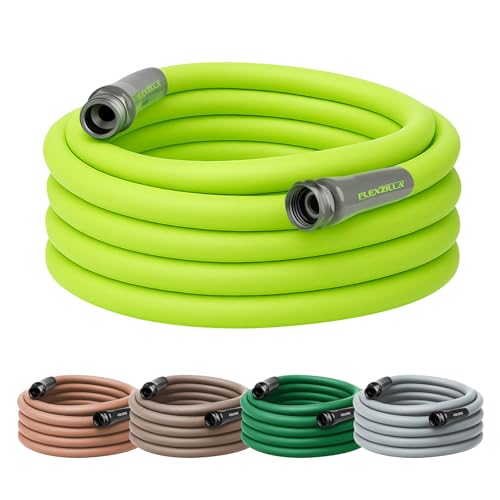
Flexzilla Garden Hose 5/8 in. x 50 ft., Lightweight All-Weather Water Hose, Durable and Flexible, Leak-Free Connections
Chosen because it specifies Lightweight All-Weather Water Hose and Durable and Flexible.
View on AmazonCXEZSIK Garden Hose 50FT Lightweight Non-Expanding Leak-Proof No-Knot | Easy to Store and Carry Hose No-Knot No-Tangle, Metal Connector, Wear-Resistant Flexible Water Hose for Yard Garden Outdoor
Chosen because it specifies Easy to Store and Carry Hose No-Knot No-Tangle and Metal Connector.
View on AmazonFlexzilla Garden Hose 5/8 in. x 100 ft., Lightweight All-Weather Water Hose, Durable and Flexible, Leak-Free Connections
Chosen because it specifies Lightweight All-Weather Water Hose and Durable and Flexible.
View on Amazon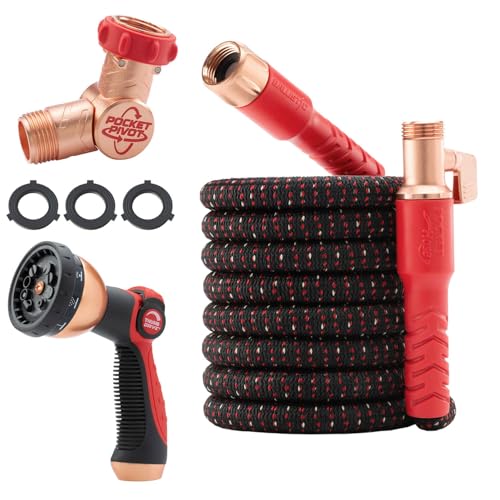
Pocket Hose Ballistic 50 FT Expandable Garden Hose, No-Kink, As Seen on TV | Anti-burst sleeve reinforced with bulletproof fiber, 360° swiveling pocket pivot connector, lightweight compact design
Chosen because it specifies No-Kink and As Seen on TV.
View on AmazonTop Picks at a Glance
- Best Overall: Flexzilla 5/8 in. x 100 ft, a lightweight hybrid polymer hose built to stay flexible in all weather.
- Best Value 100 Footer: Giraffe Tools 5/8 in. x 100 ft hybrid hose, listed at 600 PSI burst.
- Best Budget Hybrid: Sunifier Hybrid Rubber Garden Hose, 5/8 in., 100 ft, three-layer reinforced.
- Best Heavy-Duty Rubber: Guitrees 100 ft 5/8 in. rubber hose with a five-layer braid, listed at 300 PSI working and 1000 PSI burst.
- Best Classic Pro-Grade: Continental Premium garden hose, 5/8 in. x 100 ft, for cold water use.
- Best Performance Rubber: Flexon Flextreme Pro 5/8 in. x 100 ft, marketed as kink-resistant and all-weather.
- Best Kink-Proof Metal Option: BIONIC STEEL 75 ft stainless steel hose for rough ground and heavy abrasion.
Quick Comparison Table
| Product | Best for | Key specs (as listed) | Watch for | Price tier |
|---|---|---|---|---|
| Flexzilla 5/8 in. x 100 ft | All-round yard and camp use | Hybrid polymer, 5/8 in., 100 ft, leak-free connections | Weight with 100 ft; coil it with care | Premium |
| Giraffe Tools 5/8 in. x 100 ft | Long reach on a budget | Hybrid, 600 PSI burst, swivel handle | Burst rating is not working pressure | Mid-range |
| Sunifier Hybrid Rubber 100 ft | Occasional use, lowest cost | 5/8 in., 3-layer reinforced, 600 PSI burst | Less known brand; check the fittings | Budget |
| Guitrees 100 ft rubber | Heavy daily use | 5/8 in., five-layer braid, 300 PSI working, 1000 PSI burst | Heavier than hybrids | Mid-range to premium |
| Continental Premium 100 ft | Farms, workshops, hot sun | 5/8 in. ID, 100 ft, cold water | Heavy; not for hot water | Premium |
| Flexon Flextreme Pro 100 ft | Cold-weather flexibility | 5/8 in., rubber, kink-resistant (listing) | Verify warranty and coupling quality | Mid-range |
| BIONIC STEEL 75 ft | Rough ground, abrasion | 304 stainless steel, 75 ft | Hot in sun; no hot-water use on skin | Mid-range |
Length and Diameter: The Decision That Matters Most
Length first. Every extra foot of hose adds friction and weight, so buy the shortest hose that reaches. A common rule is to measure from the tap to the farthest point you need to water, wash or fill, then add 10 to 15 feet for bends around obstacles and to avoid tension at the tap. For many yards that is 50 or 75 feet. A 100 foot hose is useful for large properties, campsite pump-ups and farm yards, but it is heavy, harder to drain and store, and loses a little pressure at the nozzle.
Diameter next. Inner diameter sets how much water the hose can carry. The cross-section area scales with the square of the diameter, so a simple calculation shows the difference:
| Inner diameter | Relative flow area vs 1/2 in. | Typical use |
|---|---|---|
| 1/2 in. | 1.00x | Light watering, short runs |
| 5/8 in. | 1.56x | General yard use, most households |
| 3/4 in. | 2.25x | High flow, sprinklers, wash-down, longer runs |
That means a 5/8 inch hose can carry about 56 percent more water than a 1/2 inch hose at the same pressure, and a 3/4 inch hose about 44 percent more than 5/8 inch. Your tap, hose length, nozzle and fittings also limit flow, so these are relative guides, not exact gallons per minute. If you run a sprinkler or fill a trough, 5/8 is the sensible default. If you need serious volume over 100 feet, 3/4 inch is worth looking for.
1. Flexzilla 5/8 in. x 100 ft: Best Overall
- 5/8 inch inner diameter, 100 foot length (also sold in 25, 50 and 75 foot lengths)
- Hybrid polymer construction marketed as lightweight and all-weather
- Listed with leak-free connections
- Maximum pressure shown by retailers as 150 PSI working pressure; burst pressure: not listed
Best for: households and camp sites that want a hose that lies flat, coils neatly and stays flexible in cold. Skip if: you need the lowest possible cost or the highest burst rating.
Flexzilla became a reference product because its hybrid polymer material resists the memory that makes cheap vinyl hose twist into coils. The maker states that the hose will not kink under pressure, and that matches the common experience reported in independent reviews: even when you tug it around corners, it relaxes back into shape. For the money you get a hose that handles heat and cold better than basic vinyl, and the swivel-free couplings are simple and standard.
A note about numbers: the 150 PSI figure is a working-pressure rating, while many competing hoses advertise a burst pressure like 600 PSI. These are not comparable. Household water usually sits at 40 to 80 PSI, so both are above what the tap provides. Choose on flexibility, coupling quality and build, not on burst ratings alone.
Pros: flexible in cold; resists coil memory; lightweight for its class; available in many lengths. Cons: premium cost; 100 feet is still heavy when full of water.
2. Giraffe Tools 5/8 in. x 100 ft Hybrid Hose: Best Value Long Hose
- 5/8 inch hybrid hose, 100 foot length (custom lengths are also sold)
- Listed as lightweight, heavy duty and no-kink, with a swivel handle in some versions
- 600 PSI burst rating per the listing title
- Fitting material: see the specific listing
Best for: owners of larger lawns who want a long hose without paying for the top brand. Skip if: you want a brand with decades of proven field history.
Giraffe Tools sits in the popular middle of the hybrid hose market. The listed burst rating of 600 PSI is a headroom figure: it tells you how much margin exists above household pressure, not a number you should ever approach. The hybrid construction aims to give a rubber-like feel without the full weight of rubber, and the swivel handle on some versions makes it easier to avoid twisting.
Because it is sold in many lengths, you can buy 25 foot or 50 foot sections for specific zones instead of one long hose. That also helps with the length guidance above: a 100 footer is not always the right buy.
Pros: long reach at moderate cost; multiple lengths; light feel. Cons: burst rating is not working pressure; confirm the coupling material and swivel on the exact listing.
3. Sunifier Hybrid Rubber 5/8 in. 100 ft: Best Budget Pick
- 5/8 inch hybrid rubber, 100 foot
- Three-layer reinforced construction per the listing
- 600 PSI burst rating per the listing
Best for: light-duty yards and seasonal use where you want a decent hybrid hose for less. Skip if: you leave hoses under pressure all day or in direct sun all summer.
The Sunifier is a lesser-known brand with the same spec profile as pricier hoses on paper: 5/8 inch, 100 feet, hybrid rubber and a 600 PSI burst figure. What we cannot verify is long-term durability or fitting quality, so treat it as the budget option. Spend the saved money on a hose reel or a spare washer set so the connections stay leak-free.
Pros: lowest cost in the 100 foot group; 3-layer reinforced; decent flexibility. Cons: limited track record; coupling quality not confirmed.
4. Guitrees 100 ft Heavy Duty Rubber: Best for Daily Heavy Use
- 5/8 inch, 100 foot rubber hose
- Five-layer braiding per the listing
- 300 PSI working pressure and 1000 PSI burst per the listing; hot and cold water rated per the listing
Best for: wash-down, farm and workshop jobs where the hose is dragged and stepped on. Skip if: you want the lightest hose for casual lawn use.
This is a heavier hose with a thicker wall. Rubber is more resistant to abrasion and heat than most hybrids, and a five-layer braid is designed to resist kinking and bursting. The stated 300 PSI working pressure is high, which suits users who connect a hose to equipment as well as a garden spigot. The trade-off is weight and storage: a full 100 foot rubber hose is a workout to coil.
Pros: tough wall; high stated working pressure; works with hot and cold water as listed. Cons: heavy; bulkier to store.
5. Continental Premium 5/8 in. x 100 ft: Best Classic Pro-Grade
- 5/8 inch inside diameter, 100 foot length
- Heavy duty cold water hose, male by female
- Other specs, such as pressure ratings: not listed in the title
Best for: farm and workshop users who want an old-style, heavy-duty rubber hose that tolerates sun and drag. Skip if: you need hot water use or lightweight handling.
The Continental Premium appeals to buyers who value ruggedness over weight. It is for cold water only per the listing, so do not use it with hot water or steam. Because specs beyond size and use are not in the listing title, check the maker’s page for working pressure and fitting material before buying.
Pros: rugged; classic build; long length. Cons: heavy; cold water only; limited specs in the listing.
6. Flexon Flextreme Pro 5/8 in. x 100 ft: Best Cold-Weather Rubber
- 5/8 inch rubber hose, 100 foot
- Marketed as heavy duty, kink-resistant and flexible in all weather
- Pressure ratings and coupling material: not listed in the title
Best for: owners in cold climates who want a hose that stays pliable in winter use. Skip if: you need confirmed brass couplings and published pressure ratings.
Flexon is a long-standing hose brand, and the Flextreme Pro line targets people who want a more premium feel than discount hybrids. We could not verify its pressure rating from the listing, so check the label for working pressure. Flexibility in cool weather is the selling point.
Pros: flexible in cold; established brand; rubber build. Cons: specs thin in the listing; mid-range cost.
7. BIONIC STEEL 75 ft Stainless Steel Hose: Best Kink-Proof Metal Option
- 75 foot, 304 stainless steel outer
- Marketed as super tough, flexible and lightweight for a metal hose
- Inner diameter and weight: not listed in the title
Best for: rocky or gravelly ground, outbuilding jobs and anywhere a regular hose gets cut or chewed. Skip if: you need the highest flow or a hose that stays cool in direct sun.
Metal hoses resist kinking and abrasion, but they come with trade-offs. The outer steel can get very hot in direct sun, so pass the water through before holding the hose, and they are typically narrower inside than a 5/8 inch rubber hose. They also tend to be stiffer to coil. For a corner of the property where a regular hose gets damaged, they are a useful specialist.
Pros: highly abrasion-resistant; no kinks; durable outer. Cons: heat in sun; flow limits; stiff to coil.
Garden Hoses for Pressure Washers
If you came here wondering which garden hose to use with a pressure washer, the answer is the one your washer’s manual calls for. The garden hose supplies the water inlet, and most electric and gas units want a 5/8 inch hose of at least 25 feet to keep up with their flow. A 3/4 inch hose can help on a long run, and kink-resistant rubber or hybrid hoses prevent starvation of the pump. Kinked inlet hoses can cause the pump to run dry or struggle, so a hose that does not kink matters here. Do not use the garden hose as the high-pressure hose; that is the washer’s own rated hose.
Which Hose for Which Job
| Job | Suggested length | Diameter | Build to favor | Pick from this list |
|---|---|---|---|---|
| Small yard, one tap | 25 to 50 ft | 5/8 in. | Hybrid | Flexzilla in a shorter length |
| Large lawn, front to back | 75 to 100 ft | 5/8 in. | Hybrid or rubber | Giraffe Tools, Sunifier |
| Farm, workshop, wash-down | 50 to 100 ft | 5/8 to 3/4 in. | Rubber | Guitrees, Continental |
| Cold climate, winter use | As needed | 5/8 in. | Flexible hybrid or rubber | Flexzilla, Flexon |
| Rocky or gravel ground | 50 to 75 ft | Not listed | Metal | BIONIC STEEL |
| Pressure washer feed | 25 to 50 ft | 5/8 in. or larger | Kink-resistant rubber or hybrid | Flexzilla, Guitrees |
Use this table as a starting point and then adjust for the layout of your own property. If you need to reach two separate zones, consider two shorter hoses with a quick-connect coupling in place of one very long hose: you will drag less weight, the water travels a shorter distance, and a damaged section can be replaced without scrapping the whole thing. A hose reel or hanger also pays for itself, because most kinks and cracks come from hoses left in a heap or run over by a mower or wheelbarrow.
It also helps to think about how often you will actually use the hose. A hose used a few times a week for sprinkling or filling a bucket can be a lighter hybrid. A hose used every day for stock, wash-down or construction work benefits from the thicker wall and braiding of rubber. If you only need a hose for one or two special tasks each year, the lowest-cost option is usually fine, and you can put the savings toward a good nozzle and a spare washer set.
Also Consider
- Flexzilla 5/8 in. x 25 ft: a short, flexible version for patios, balconies and tap-to-reel runs.
- Gilmour 50 ft flat weeper soaker hose: for bed and border watering, not general use. It lays along the ground and waters slowly along its length. Check the maker’s instructions for run length and pressure.
- Beitopamz 5 ft lead-in hose: a short, flexible connector that takes the stress at the tap and lets you attach a longer hose without bending at the spigot.
How We Chose
We started with kink-resistant rubber and hybrid hoses sold in the retail catalog behind this site. We compared the listing details, manufacturer descriptions and published reviews from home and garden publications. We did not personally use these hoses, and we did not measure flow, weight or burst pressure. Prices and warranties change often, so we used tier words only. For each pick we kept to what the listing states and marked everything else “not listed”. We excluded expandable and coil styles from this list because they are a different category with different trade-offs.
Buying Guide
Material: vinyl, hybrid, rubber or metal
Vinyl is cheap and light but kinks and stiffens in cold. Hybrid polymer, as in Flexzilla and similar, is flexible and lighter than rubber. Rubber is heavy, tough and good for abuse. Metal resists cuts but gets hot and stiff. If kinks are your main problem, a hybrid or rubber hose is the right starting point.
Layers and reinforcement
A reinforcing braid between the layers helps a hose hold its shape under pressure. Listings that mention three-layer or five-layer builds are describing this. More layers can mean more weight, so match the build to the job.
Couplings and washers
Solid brass couplings with crush-resistant collars tend to last longer than thin aluminum or plastic. Many leaks come from a worn washer, not the hose. Keep a few spare rubber washers; they cost little and fix most drips.
Water temperature and drinking water
Many garden hoses are not intended for drinking water unless the label says so. If you want to fill pet bowls or camp containers, look for a drinking-water-safe label and check it, and let water run for a moment before use if the hose has sat in the sun.
Storage and winter care
Drain the hose after use, store it out of the sun, and disconnect it in freezing weather. Hoses left connected to a tap can trap water and damage both the hose and the spigot.
Common Mistakes
- Buying 100 feet when 50 would do.
- Comparing a burst rating to a working pressure.
- Leaving a hose pressurized in the sun with a closed nozzle.
- Grabbing a metal hose in strong sun without checking how hot the outer steel is.
- Ignoring the washer when a connection drips.
Frequently Asked Questions
Which garden hoses that do not kink are worth buying?
Hybrid and rubber hoses with a braided reinforcement, such as the Flexzilla, Giraffe Tools and Guitrees models above, are the most reliable. Avoid thin vinyl hoses if kinking is your problem.
What is the best garden hose length for most yards?
Fifty to seventy-five feet suits most yards. Measure from the tap to your farthest need and add 10 to 15 feet, and only buy 100 feet if you actually need the reach.
Is a 5/8 inch or 3/4 inch hose better?
A 5/8 inch hose is the sensible default. A 3/4 inch hose carries about 44 percent more water by cross-section, which helps for long runs, large sprinklers or wash-down jobs, though it is heavier.
What is the best garden hose under 25 for a tight budget?
Short lengths are the way to stay within a tight budget. A 25 foot hybrid or a short lead-in hose is the affordable route; a 100 foot hose of good quality usually costs more. Check current prices, since they change.
Are flat garden hoses and drip hoses the same?
No. A flat hose collapses when empty and is used for transport, while soaker and drip hoses leak slowly along their length to water beds. A soaker hose is useful for borders, but it is not a general-purpose hose.
What about garden spray hoses?
Hoses sold as spray hoses typically include a built-in nozzle. A standard hose plus a separate adjustable nozzle gives more flexibility and is easier to replace if the nozzle fails.
Can I leave my hose outside in winter?
Drain it and bring it in if you can. Water left inside can freeze, expand and damage the hose, and a hose left connected to a tap can damage the spigot as well.
Which One Should You Buy?
If you want one reliable hose, buy the Flexzilla in the length you actually need. If you want a long, lighter-cost reach, the Giraffe Tools hybrid is the sensible mid-range pick. For heavy daily use, choose the Guitrees rubber hose. For rocky ground, take the BIONIC STEEL. For infrequent use on a tight budget, the Sunifier is a reasonable gamble. Whatever you choose, measure first, pick 5/8 inch unless you need more flow, and keep spare washers handy.
Sources
- Flexzilla Pro by Legacy Manufacturing, garden hose product pages
- Giraffe Tools garden hose product pages
- Continental and Flexon garden hose product information
- BIONIC STEEL metal garden hose product information
- Consumer-facing garden hose buying guides from home and garden publications
Last updated: October 2026