Key takeaways
- Untreated cedar or redwood: Attractive, easy to repair, and naturally more resistant to decay than many softwoods. Expect roughly 5 to 10 years in many climates, though constant contact with wet soil, poor drainage, and humid conditions can shorten that span.
- Pressure-treated lumber: Usually the lowest-cost rigid option and commonly available in long lengths. Modern residential treatment is designed for outdoor use, but use products labeled for the intended application and follow the manufacturer’s handling guidance. The first failures are often warped boards, split ends, or fasteners rather than the entire frame.
- Galvanized steel: Strong, light relative to its capacity, and resistant to rot. Coated steel can last many years, but scratches, cut edges, and continually wet soil lines are the areas to monitor for corrosion. Dark metal may heat the outer soil in hot climates.
- Composite boards: Resist rot and need little staining or sealing. They can cost more and may expand or contract with temperature. A rigid frame and properly supported corners matter more than decorative board texture.
- Masonry or stone: Long-lived and stable, but expensive and difficult to relocate. It is most sensible for a permanent landscape installation.
Best Raised Garden Beds for Every Yard
The best raised garden beds are the ones that fit your available space, hold enough soil for the plants you want to grow, drain reliably, and remain comfortable to use throughout the season.
A compact 2-by-4-foot bed suits a balcony, patio, or first vegetable garden; a 4-by-8-foot bed offers the most practical growing area for a typical yard; and tall metal or framed beds are the better choice when bending, kneeling, or poor native soil makes ground-level gardening difficult. Before choosing a style, compare the bed’s inside dimensions, soil volume, material lifespan, drainage design, and assembly requirements—not just its advertised footprint.
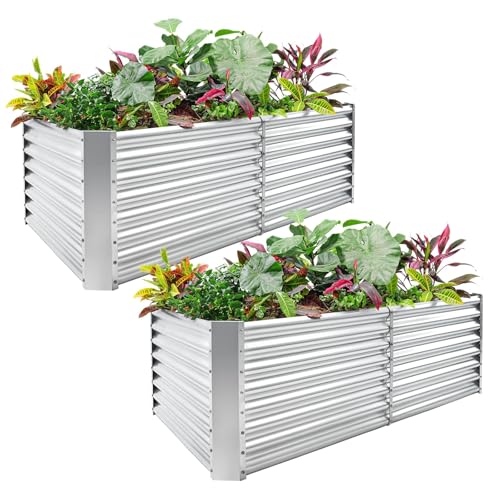
Land Guard 2 Pack 8×4×2ft Galvanized Raised Garden Bed Kit, Galvanized Planter Raised Garden Boxes Outdoor, Large Metal Raised Garden Beds for Vegetables (Silver)
Included for 'Best Raised Garden Beds for Every Yard' because the listing specifies Galvanized Planter Raised Garden Boxes Outdoor and Large Metal Raised Garden Beds for Vegetables (Silver), details this guide uses to compare options.
View on Amazon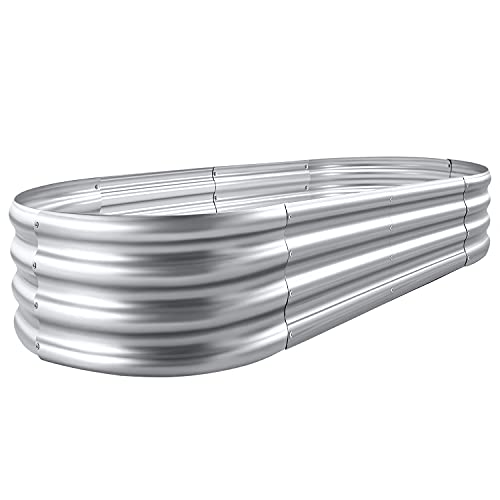
Land Guard Galvanized Raised Garden Bed Kit, Galvanized Planter Garden Boxes Outdoor, Oval Large Metal Raised Garden Beds for Vegetables…………
Included for 'Best Raised Garden Beds for Every Yard' because the listing specifies Galvanized Planter Garden Boxes Outdoor and Oval Large Metal Raised Garden Beds for Vegetables…………, details this guide uses to compare options.
View on Amazon
SnugNiture 3 Pcs 4x2x1.5ft Raised Garden Bed Outdoor, 17" Tall Galvanized Metal Planter Box, Oval Raised Garden Bed Kit for Planting Vegetables Plants Fruits, Brown
Included for 'Best Raised Garden Beds for Every Yard' because the listing specifies 17" Tall Galvanized Metal Planter Box and Brown, details this guide uses to compare options.
View on Amazon
Best Choice Products 72x24x30in Raised Garden Bed, Elevated Wood Planter Box Stand for Backyard, Patio, Balcony w/Divider Panel, 6 Legs, 300lb Capacity - Natural
Included for 'Best Raised Garden Beds for Every Yard' because the listing specifies Elevated Wood Planter Box Stand for Backyard and Patio, details this guide uses to compare options.
View on AmazonQuick comparison: which raised bed fits your yard?
| Bed type | Typical size | Useful soil depth | Approximate soil capacity | Best for | Main trade-off |
|---|---|---|---|---|---|
| Small wood or composite bed | 2 × 4 ft, 6–12 in high | 6–12 in | 4–8 cu. ft. | Herbs, lettuce, flowers, patios | Limited crop variety |
| Standard rectangular bed | 4 × 8 ft, 10–17 in high | 10–17 in | 27–45 cu. ft. | Vegetables for a household | Needs a level, accessible location |
| Tall metal modular bed | 2 × 4 to 4 × 8 ft, 24–32 in high | 18–30 in | 18–80 cu. ft. | Reduced bending and difficult soil | More expensive to fill |
| Tiered or corner bed | 3 × 3 to 4 × 4 ft footprint | 6–18 in, varies by tier | 8–24 cu. ft. | Small yards, balconies, ornamental planting | Uneven watering and less usable area |
| Fabric grow bed | 10–30 gal, or roughly 2–4 ft wide | 10–24 in | 1.3–4 cu. ft. | Renters and temporary gardens | Dries out faster; fabric eventually wears |
Soil capacity is approximate because tapered, tiered, and internally divided beds hold less than a simple rectangular calculation suggests. For a rectangular bed, multiply length by width by soil depth, then divide by 1,728 to convert cubic inches to cubic feet. A 4-by-8-foot bed that is 12 inches deep requires 32 cubic feet of soil before allowing for settling.
Best choices by situation
Best all-around choice: a 4-by-8-foot bed, 12 to 17 inches high
This size offers enough room for tomatoes, peppers, beans, carrots, greens, and herbs without becoming difficult to reach. Keep the width at 4 feet when the bed is accessible from both long sides; a wider bed forces you to step into the soil or stretch across it, which compacts the root zone.
A 12-inch bed works for most annual vegetables, lettuce, herbs, and flowers. Choose 17 inches or more for deeper-rooted crops, extra clearance above poor soil, or easier access. A rectangular bed is usually more productive and easier to water than a collection of tiny compartments.
Best for a small patio or balcony: a 2-by-4-foot bed or fabric grow bed
Compact beds are easier to carry, fill, and position, but they have less thermal and moisture stability than larger beds. A 2-by-4-foot bed with 10 inches of soil holds about 6.7 cubic feet. That is enough for salad greens, basil, parsley, chives, strawberries, or a small selection of flowers.
Check the supporting surface before filling any container. Wet growing media can weigh roughly 40 to 60 pounds per cubic foot, depending on its composition. A 6.7-cubic-foot bed may therefore add several hundred pounds when saturated. On a balcony, confirm the allowable load with the property owner or a qualified building professional.
Best for accessibility: a 24- to 32-inch-high bed
Tall raised beds reduce the need to bend and can be more comfortable for gardeners who prefer seated or standing work. Look for a design with a maximum reach of about 24 inches from an accessible edge. If the bed is against a wall, keep it closer to 2 feet wide; if you can walk around all sides, 3 to 4 feet is more workable.
The extra height comes with a major ownership cost: soil. A 4-by-8-foot bed that is 24 inches deep requires about 64 cubic feet of fill. You can reduce expense and weight by using a purpose-built lower fill layer where appropriate, while reserving quality planting mix for the upper root zone. Do not fill the entire bed with woody material that will settle unpredictably and temporarily draw nitrogen from the soil.
Best for a temporary or rental garden: fabric or lightweight composite
Fabric beds need no complicated assembly and can be emptied or folded at the end of a lease. Their porous sides provide excellent drainage, but they also increase evaporation. They may need more frequent watering in hot, windy locations, and inexpensive fabric can become brittle after repeated exposure to sunlight.
Lightweight composite panels are tidier and more rigid, but inspect the joining system. Thin panels can bow when filled, particularly in beds longer than 6 feet. Cross-bracing, corner posts, or a modular connector system helps keep the walls square.
Material durability: what lasts and what wears first?
- Untreated cedar or redwood: Attractive, easy to repair, and naturally more resistant to decay than many softwoods. Expect roughly 5 to 10 years in many climates, though constant contact with wet soil, poor drainage, and humid conditions can shorten that span.
- Pressure-treated lumber: Usually the lowest-cost rigid option and commonly available in long lengths. Modern residential treatment is designed for outdoor use, but use products labeled for the intended application and follow the manufacturer’s handling guidance. The first failures are often warped boards, split ends, or fasteners rather than the entire frame.
- Galvanized steel: Strong, light relative to its capacity, and resistant to rot. Coated steel can last many years, but scratches, cut edges, and continually wet soil lines are the areas to monitor for corrosion. Dark metal may heat the outer soil in hot climates.
- Composite boards: Resist rot and need little staining or sealing. They can cost more and may expand or contract with temperature. A rigid frame and properly supported corners matter more than decorative board texture.
- Masonry or stone: Long-lived and stable, but expensive and difficult to relocate. It is most sensible for a permanent landscape installation.
Avoid painted, salvaged, or unknown industrial lumber unless you can verify its treatment history. Do not use railroad ties or materials contaminated with oils, solvents, or unknown preservatives around edible crops.
Drainage and soil: the details that determine performance
A raised bed should drain through its bottom unless it is placed on an exceptionally free-draining site. If the bed sits on soil, remove turf, loosen compacted ground, and allow excess water to move downward. On concrete or a roof surface, use drainage openings and place the bed on feet, pavers, or a gap-bearing base so water cannot pool underneath.
Do not line a soil-bottom bed with solid plastic. It can trap water and damage the roots you are trying to protect. A breathable liner may be useful against aggressive roots or weeds in specific situations, but it should not block drainage. Landscape fabric placed over the ground can suppress weeds temporarily, although perennial roots may eventually grow through or around it.
Use a soil blend made for raised beds rather than dense native clay or pure compost. A practical starting point is roughly one-half quality topsoil or screened loam, one-quarter compost, and one-quarter aerating material such as aged bark fines or another suitable amendment. Adjust the blend to local conditions and the crop; containers and very tall beds may need a lighter mix than beds open to native soil.
Assembly features worth paying for
- Reinforced corners: Metal brackets, corner posts, or structural connectors prevent the walls from spreading under soil pressure.
- Internal braces: Valuable on beds longer than 6 feet or taller than 18 inches.
- Captive or corrosion-resistant fasteners: Stainless or coated hardware is less likely to fail in wet soil conditions.
- Modular extensions: Let you start small and expand after learning how much space and water your garden requires.
- Rounded edges: More comfortable near paths and safer when children or pets use the yard.
- Accessible delivery of soil: A tall bed may be easy to garden but difficult to fill if wheelbarrow access is limited.
Assembly usually goes more smoothly on a level surface. Measure the diagonals of a rectangular frame before tightening every fastener: equal diagonals indicate that the corners are square. Fill in several lifts, watering each layer lightly to settle it, and check that long walls remain straight.
A simple decision matrix
| Your priority | Recommended design | Why |
|---|---|---|
| Lowest initial cost | Untreated or appropriately treated lumber, 6–12 in. high | Affordable materials and modest soil volume |
| Minimum maintenance | Galvanized steel or quality composite | No seasonal staining and little rot risk |
| Most vegetables per bed | 4 × 8 ft, 12–17 in. high | Efficient layout without excessive reach |
| Limited mobility | 24–32 in. high, 2–4 ft wide | Less bending and shorter reach |
| Rental or temporary use | Fabric or modular lightweight bed | Easy to move and dismantle |
| Hot, dry climate | Deeper rigid bed with mulch and irrigation | Greater soil volume buffers moisture swings |
Ownership realities and common mistakes
Plan maintenance before you buy. Wood may need inspection and eventual board replacement; steel needs occasional checks at seams and cut edges; fabric needs protection from abrasion and prolonged ultraviolet exposure. All beds benefit from a 2- to 3-inch mulch layer, which reduces evaporation and soil splash without burying plant stems.
The most common mistakes are making the bed too wide, underestimating soil costs, placing it where a hose cannot reach, and choosing a location without at least six hours of suitable sunlight for most vegetables. Leave paths wide enough for your tools—about 24 inches is a workable minimum, while 30 to 36 inches is more comfortable for wheelbarrows and accessibility.
For most yards, a reinforced 4-by-8-foot bed made from cedar, galvanized steel, or composite at 12 to 17 inches high is the strongest all-purpose choice. Choose a smaller bed when space or budget is tight, and choose a taller, narrower design when access and comfort matter more than maximum soil volume.