Our Top Picks
 Best Variable SpeedSENIX 201cc 22" 3-in-1 Variable Speed Self Propelled22INCH-201CC37 x 23.5 x 15.8 inches79 poundsCheck on Amazon
 Best High-Wheel PickYARDMAX 22 in. 201cc Select PACE 6 Speed69 x 22.9 x 35.9 inches95.7 poundsCheck on Amazon
 Best for Bagging and HeightsBILT HARD 21" Self Propelled Gas Lawn Mower21 inch self propelled89.15 poundsCheck on Amazon
The best gas push and self-propelled lawn mowers for most homeowners are a 21-inch, 170cc rear-wheel-drive self-propelled model such as the AMERISUN 21″ AV8621S1 or the PowerSmart 21-inch 170cc for hills and bagging, and a plain 21-inch 144cc push mower such as the SENIX 144cc 3-in-1 for flat lawns under a quarter acre. If you want a high-wheel front-drive mower that glides over small ruts on flat ground, the YARDMAX 22-inch 201cc is the one to look at. This guide covers drive type, wheel size, bagging, mulching, engine size, commercial-style walk-behind questions and seven picks that were found in the site’s store.
This is a research-based guide. We did not personally use these products. Specs come from the listings and manufacturer pages as we read them; where the listing does not say, we write “not listed”. We do not quote prices or horsepower figures that the listing does not state. This article covers gas walk-behind mowers; for battery models and robots, see the site’s other mower guides.
SENIX 201cc 22" 3-in-1 Variable Speed Self Propelled Gas Lawn Mower | Self Propelled Lawn Mower, 22" Self Propelled Gas Lawn Mower, 6 Height Adjustable
Chosen because it specifies Self Propelled Lawn Mower and 22" Self Propelled Gas Lawn Mower.
View on Amazon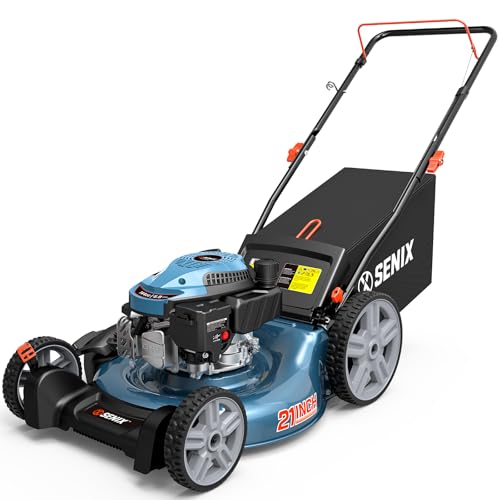
SENIX 21" Gas Lawn Mower 144cc, 3-in-1 Push Mower Mulch Bag Side Discharge | 4-Stroke Engine, 3-in-1 Design, 1.25''-3.75'' Cut Height, Includes 1.7 Bushels Grass Bag
Chosen because it specifies 3-in-1 Push Mower Mulch Bag Side Discharge and 4-Stroke Engine.
View on AmazonYARDMAX 22 in. 201cc Select PACE 6 Speed CVT High Wheel FWD 3-in-1 Gas Walk Behind Self Propelled Lawn Mower, Black (YG2860)
Chosen because it specifies Black (YG2860).
View on AmazonBILT HARD 21" Self Propelled Gas Lawn Mower – 201cc 4-Cycle OHV, 3-in-1 Bagging/Mulching/Side Discharge, 8 Adjustable Cutting Heights & Smooth Easy Start
Chosen because it specifies 201cc 4-Cycle OHV and 3-in-1 Bagging/Mulching/Side Discharge.
View on AmazonSENIX 201cc 22" 3-in-1 Variable Speed Self Propelled Gas Lawn Mower | Self Propelled Lawn Mower, 22" Self Propelled Gas Lawn Mower, 6 Height Adjustable
Chosen because it specifies Self Propelled Lawn Mower and 22" Self Propelled Gas Lawn Mower.
View on AmazonSENIX 21" Gas Lawn Mower 144cc, 3-in-1 Push Mower Mulch Bag Side Discharge | 4-Stroke Engine, 3-in-1 Design, 1.25''-3.75'' Cut Height, Includes 1.7 Bushels Grass Bag
Chosen because it specifies 3-in-1 Push Mower Mulch Bag Side Discharge and 4-Stroke Engine.
View on AmazonYARDMAX 22 in. 201cc Select PACE 6 Speed CVT High Wheel FWD 3-in-1 Gas Walk Behind Self Propelled Lawn Mower, Black (YG2860)
Chosen because it specifies Black (YG2860).
View on AmazonBILT HARD 21" Self Propelled Gas Lawn Mower – 201cc 4-Cycle OHV, 3-in-1 Bagging/Mulching/Side Discharge, 8 Adjustable Cutting Heights & Smooth Easy Start
Chosen because it specifies 201cc 4-Cycle OHV and 3-in-1 Bagging/Mulching/Side Discharge.
View on AmazonTop Picks at a Glance
- Best Overall: AMERISUN 21″ 170cc Self-Propelled Gas Mower (AV8621S1), a rear-wheel-drive 3-in-1.
- Best Value Self-Propelled: PowerSmart 21-Inch 170cc Self Propelled Gas Mower, rear-wheel drive with a steel deck.
- Best High-Wheel Pick: YARDMAX 22 in. 201cc Select PACE 6-Speed CVT High Wheel FWD, for flat or gently rolling lawns with bumps.
- Best Variable Speed: SENIX 22″ 201cc 3-in-1 Variable Speed Self Propelled, for adjustable walking pace.
- Best for Bagging and Heights: BILT HARD 21″ 201cc Self Propelled, with 8 cutting heights and 3-in-1 operation.
- Best Push Mower: SENIX 21″ 144cc 3-in-1 Gas Push Mower, with a 1.25 to 3.75 inch cut range.
- Best Compact Push Mower: PowerSmart EasyCut 18-Inch 144cc, for small yards and tight storage.
Push vs Self-Propelled: The First Decision
A push mower makes you supply the forward motion. A self-propelled mower drives its wheels and you steer. For a flat lawn under about a quarter acre, a push mower is lighter, cheaper and has one less system to maintain. For slopes, a full bag or a larger yard, self-propelled is worth the extra cost because it saves your arms and legs. If you search for the best and worst walk-behind mowers, the biggest “worst” outcomes usually come from a mismatch: an underpowered push mower on a big or hilly lot, or a heavy self-propelled mower on a tiny yard.
Quick Comparison of the Seven Main Picks
| Product | Drive | Engine and deck (from listing) | Best for | Watch for | Price tier |
|---|---|---|---|---|---|
| AMERISUN AV8621S1 | Rear-wheel, self-propelled | 170cc 4-cycle OHV, 21 in, 3-in-1 | Hills, bagging | Single speed: check listing | Mid-range |
| PowerSmart 21″ 170cc | Rear-wheel, self-propelled | 170cc 4-stroke OHV, steel deck, 3-in-1 | Value self-propelled | Brand support: check warranty | Mid-range |
| YARDMAX 22″ 201cc | Front-wheel, 6-speed CVT, high wheel | 201cc, 22 in, 3-in-1 | Flat lawns with bumps | FWD is weaker uphill and when bagging | Mid-range |
| SENIX 22″ 201cc | Self-propelled, variable speed | 201cc, 22 in, 3-in-1 | Adjustable pace | Drive layout: check manual | Mid-range |
| BILT HARD 21″ 201cc | Self-propelled | 201cc 4-cycle OHV, 21 in, 8 heights, 3-in-1 | Many grass types and heights | Heavier | Premium |
| SENIX 21″ 144cc Push | Push | 144cc 4-stroke, 21 in, 3-in-1, 1.25 to 3.75 in | Flat lawns | No drive assist | Budget |
| PowerSmart EasyCut 18″ | Push | 144cc 4-cycle, 18 in, side discharge, 5 heights | Small yards, storage | No bagging listed | Budget |
1. AMERISUN 21″ 170cc Self-Propelled (AV8621S1): Best Overall
- 21-inch deck
- 170cc 4-cycle OHV engine
- Rear-wheel drive, self-propelled
- 3-in-1: mulching, bagging and side discharge
Best for: medium lawns with some slope where you also bag. Skip if: your yard is tiny, because the extra weight and drive system are not needed.
Rear-wheel drive is the layout most owners should look for if they bag or work on a slope. As a bag fills, more weight sits over the back wheels, which can help rear-drive traction and can reduce front-drive grip. The 21-inch deck is the standard residential size: wide enough to cut down on passes and still easy to store. The model also appears in a push version, so make sure you pick the S in the model name.
Pros: rear-wheel drive; 3-in-1; common deck size; engine size suited to residential lawns. Cons: speed adjustment not listed; heavier than a push model; check the warranty terms.
2. PowerSmart 21-Inch 170cc Self Propelled: Best Value Self-Propelled
- 170cc 4-stroke OHV engine
- Rear-wheel drive
- Steel deck, 3-in-1 walk-behind
Best for: homeowners who want self-propelled drive without paying for a premium brand. Skip if: you want a long-established dealer network for service.
A steel deck matters for durability, because plastic decks can crack on impact. Steel can rust if you leave wet clippings underneath, so scrape and rinse after mowing, then let it dry. Check the oil level before every use, since a small engine run low on oil can fail quickly.
Pros: lower cost tier for a rear-drive mower; steel deck; 3-in-1 design. Cons: fewer service locations; speed control not listed; check how the warranty is handled.
3. YARDMAX 22 in. 201cc Select PACE: Best High-Wheel Pick
- 22-inch deck, 201cc engine
- 6-speed CVT drive, front-wheel drive, high wheels
- 3-in-1 operation
Best for: flat or lightly rolling lawns with small bumps, roots and ruts. Skip if: you have long uphill stretches and bag often, where rear-drive is a better match.
Big-wheel and high-wheel mowers are popular because larger wheels roll over small obstacles more easily and are less likely to sink into soft ground. People searching for the best big wheel self-propelled mowers are usually looking for this, and for an all-terrain feel. Be clear about what the listing says: this one is front-wheel drive. Front-wheel drive turns easily and handles flat yards well, but it can lose traction when the bag is heavy or the slope is steep. The six-speed CVT gives you control over pace, which is helpful in tight areas.
Pros: six speeds; high wheels; larger 22-inch deck; 201cc engine. Cons: front-wheel drive; heavier; may not suit steep slopes.
4. SENIX 22″ 201cc Variable Speed Self-Propelled: Best for Adjustable Pace
- 22-inch deck, 201cc engine
- Variable speed self-propel
- 3-in-1: mulch, side discharge, bagging
Best for: mixed lawns where you slow down for trimming and speed up on open runs. Skip if: you want a documented drive layout; the listing title does not say which wheels drive.
Variable speed saves effort because you can match the mower to your walking pace. A fixed single-speed unit can be too fast for tight turns or too slow on open stretches. Check the owner’s manual for the drive wheels and recommended slope limits.
Pros: variable speed; larger deck; 201cc engine. Cons: drive layout not in the title; heavier; check warranty terms.
5. BILT HARD 21″ 201cc Self-Propelled: Best for Cutting-Height Range
- 21-inch deck, 201cc 4-cycle OHV engine
- 8 adjustable cutting heights
- 3-in-1 bagging, mulching and side discharge
Best for: lawns with mixed grass types or seasonal height changes. Skip if: you prefer a lighter mower.
Eight heights give you finer control. A common lawn rule is to remove no more than about a third of the blade length per mowing, which means you can step the height down gradually after a growth surge. Bagging is useful in spring and autumn; mulching is better in summer to return fine clippings.
Pros: eight heights; larger engine class; 3-in-1. Cons: premium tier; weight; drive layout should be checked.
6. SENIX 21″ 144cc 3-in-1 Push: Best Push Mower
- 21-inch steel deck
- 144cc 4-stroke engine
- 3-in-1 design, cut heights listed from 1.25 to 3.75 inches
Best for: flat lawns under a quarter acre where you want bagging and mulching on a budget. Skip if: your yard has hills or is larger than half an acre.
A push mower has fewer parts to fail and costs less to maintain. The 144cc engine class is typical for a residential push mower, and the 21-inch deck is wide enough to keep the job short. If the lawn is bumpy, keep the deck up and avoid scalping.
Pros: lower cost tier; simple; 3-in-1. Cons: no drive assist; harder on slopes with a full bag.
7. PowerSmart EasyCut 18-Inch 144cc Push: Best Compact Push Mower
- 18-inch deck, 144cc 4-cycle engine
- Side discharge, 5 height positions
- Lightweight walk-behind design
Best for: small yards, narrow gates and garage storage. Skip if: you want a bagger.
The smaller deck means more passes, but it fits narrow side yards and is easy to lift. On a quarter-acre or less this is enough, and it is the only pick here that makes sense for a tiny yard.
Pros: light; compact; low cost tier. Cons: no bagger in the listing; smaller deck.
Also Consider
- AMERISUN 21″ 144cc 3-in-1 Push (AV8621P1): the push version of the pick above for flat lawns.
- BILT HARD 201cc 21-inch 3-in-1 Push: a larger-engine push option for thick grass without a drive system.
- PowerSmart EasyDrive Pro 22-Inch 170cc Self Propelled: a 22-inch 3-in-1 self-propelled model with mulch, bag and rear discharge.
- Jungle Jim’s Jungle Wheels Lawn Mower Sulky: a stand-on sulky with a folding hitch and 10-inch wheels, a way to ride behind a walk-behind mower. Check that the sulky fits your mower’s handle before ordering.
All-Terrain, Commercial and Walk-Behind Questions
What does “all terrain” mean for a self-propelled mower?
It is usually a marketing term for rear-wheel or all-wheel drive, bigger rear wheels and a drive system that holds traction on uneven ground. Look for the drive layout and wheel size in the specs and not the label.
Are commercial walk-behind mowers different?
Yes. Commercial units are built for daily use, with heavier decks, larger engines, hydrostatic or belt drive and replaceable parts. They cost much more, and the ones sold as commercial walk-behinds with front swivel wheels or sulkies are meant for professionals who mow all day. We did not find a commercial-grade walk-behind mower in the site’s store, so this guide covers residential gas models. If you need a commercial stand-behind or sulky setup, check with an equipment dealer who services them.
What about “the best company” for lawn mowers?
No single company wins in all categories. Established engine and mower makers have wider dealer networks and parts availability. Value brands cost less, but check how warranty claims and parts are handled before you buy.
How We Chose
We searched the site’s store for gas push and self-propelled mowers, sorted candidates by drive type and engine class, and limited each brand to two main picks. We read listing details for engine size, deck width, drive type and cutting modes, and compared those with general guidance on front, rear and all-wheel drive from published buying guides. This guide is research-based. We did not personally use these products. We do not state horsepower, noise or runtime figures that the listings do not give.
Buying Guide
Drive Type: FWD, RWD and AWD
Front-wheel drive is lighter and easier to turn, so it suits flat lawns with obstacles. Rear-wheel drive pulls better uphill and keeps traction as the bag fills, which makes it the pick for hills and bagging. All-wheel drive is the most capable on wet or steep ground and the most expensive; none of the picks here are listed as AWD. If your slope is steep enough that you hesitate to walk it, consider a different tool such as a robot or a brush cutter.
Engine Size
Residential walk-behind mowers commonly use engines of roughly 140cc to 200cc. A 144cc engine is fine for a push mower on a normal lawn; 170cc to 201cc gives more headroom for thick grass and a drive system. Displacement alone does not tell you torque, so do not compare brands on cc only.
Deck Size and Materials
A 21 or 22 inch steel deck is the common residential choice. Steel is sturdy; keep the underside clean to slow rust. Smaller 18-inch decks save space but take longer.
Bag, Mulch and Side Discharge
3-in-1 means one mower can bag, mulch or throw clippings to the side. Bag when the grass is long or you want a clean look, mulch for regular mowing, and use side discharge for tall or wet grass. Some mowers add rear discharge. If you want a bagging push mower, check the bag capacity in the listing, since it affects how often you stop.
Maintenance Basics
Check engine oil before each use. Change oil, clean or replace the air filter and replace the spark plug on the schedule in the owner’s manual. At season end, either run the fuel out or add a fuel stabilizer according to the manual’s directions. Store fuel only in approved containers, away from heat, and refuel only when the engine is off and cool.
Safety Basics
- Clear sticks, stones and toys before mowing.
- Wear closed-toe shoes, eye protection and hearing protection.
- Keep children and pets away from the area.
- Mow across slopes with a push mower and up and down with a wheeled self-propelled model only if the manual allows it. Follow the manual’s slope warnings.
- Never remove or disable the blade control bar or guards.
- Do not refuel a hot engine, and run gas engines only outdoors.
Frequently Asked Questions
Is a self-propelled gas mower worth it?
Yes for slopes, bagging and lawns over about a quarter acre, because the drive does the pulling. On a small flat lawn, a push mower is cheaper and lighter.
Which is better, front-wheel or rear-wheel drive?
Rear-wheel drive is generally better on hills and when bagging, while front-wheel drive is easier to turn on flat lawns. All-wheel drive is the strongest on steep or wet ground.
What is the best bagging mower?
Choose a rear-wheel-drive self-propelled model with a 3-in-1 design, such as the AMERISUN AV8621S1 or the PowerSmart 21-inch 170cc, and check the bag size. A push mower with a bagger works on flat lawns.
Are big wheels worth it?
They roll over bumps, roots and soft ground better. Big wheels help most with uneven lawns, but they do not fix poor traction on steep slopes.
How big an engine do I need?
For most home lawns a 144cc push or 170cc to 201cc self-propelled engine is enough. Use displacement as a rough guide, not a guarantee of power.
Can I use a walk-behind mower on a hill?
Many can on moderate slopes, but follow the maker’s slope warnings. Rear-wheel or all-wheel drive helps; avoid slopes that feel unsafe to walk.
Is a 21-inch deck better than 22?
The difference is small. Choose based on storage space, bag size and how the mower handles, not the one-inch deck gap.
Which One Should You Buy?
Choose the AMERISUN AV8621S1 if you want the best all-round gas self-propelled mower, or the PowerSmart 21-inch 170cc if cost matters more. Choose the YARDMAX if your yard is flat but bumpy and you value high wheels, the SENIX 22-inch for variable speed, and the BILT HARD 21-inch for the most cutting-height options. For small flat lawns, the SENIX 21-inch 144cc push mower and the PowerSmart 18-inch are simple, affordable answers. Whatever you buy, match drive type to your slope, check oil before each use and follow the manual’s safety rules.
Sources
- Manufacturer listings for AMERISUN, PowerSmart, YARDMAX, SENIX and BILT HARD mowers
- SlashGear: front-wheel vs rear-wheel drive self-propelled mower guide
- Mowrator: FWD vs RWD self-propelled mower comparison
- US Consumer Product Safety Commission: lawn mower safety guidance
- Owner’s manuals for small gasoline engines: oil, air filter and fuel storage guidance
Last updated: October 2026