Key takeaways
- Best Water Filters for Backpacking for 2026 — top picks compared, key buying factors, and answers to common questions.
There is a lot of near-identical marketing around best water filters for backpacking, so this guide focuses on what genuinely separates a good buy from a disappointing one: durable construction, sensible sizing, and features you will actually use. Here is what to check before you order, along with the models that consistently earn their keep.
What to Look for Before You Buy
What It Actually Removes
Nearly every filter here removes bacteria and protozoa — giardia, cryptosporidium, E. coli — which is what you need for backcountry travel in North America and Europe. What hollow-fibre filters do not remove is viruses, which are small enough to pass through. If you are travelling somewhere with poor sanitation or drinking downstream of settlements, you need a purifier or chemical treatment rather than a filter. Check the micron rating: 0.1 micron is the standard for bacteria and protozoa.
Flow Rate
Flow rate decides whether you actually use the filter or start rationing water to avoid the chore. A fast filter lets you drink at the source and top up without unpacking; a slow one turns every refill into a five-minute stop, and squeeze filters slow down noticeably as they clog. Gravity systems trade speed of setup for volume — you hang the bag and walk away, which is the right answer when you are filling bottles for several people.
Weight and Packability
Backcountry filters range from under two ounces for a bare straw to over a pound for a group gravity system, and that spread matters when it is on your back for a week. A bare filter you attach to an existing bottle saves the weight of a dedicated container. Also think about shape rather than just weight — a rigid bottle filter competes for space in a pack in a way a flat pouch does not.
Maintenance and Freeze Risk
Hollow-fibre filters clog as they trap sediment, so backflushing is routine maintenance, not a repair — carry the syringe or a clean squeeze pouch. The more serious risk is freezing: ice expands inside the fibres and cracks them, and a frozen filter can fail silently while still appearing to work. On cold nights, sleep with the filter in your bag, and retire any filter you suspect has frozen.
Quick Comparison
| Model | Best For | Typical Price |
|---|---|---|
| Sawyer Squeeze Water Filtration System | Best overall for backpacking | under $50 |
| Sawyer Mini Water Filtration System | Best ultralight filter | under $30 |
| LifeStraw Personal Water Filter | Best emergency backup | under $20 |
| Katadyn BeFree Collapsible Water Filter Bottle | Best for fast flow | under $40 |
| Katadyn BeFree Gravity Water Filter 3L | Best for groups and basecamp | under $80 |
Prices are approximate market ranges and change frequently; always confirm the current price on the live listing.
Top Picks Reviewed
Sawyer Squeeze Water Filtration System — Best overall for backpacking
The Squeeze has been the default backcountry filter for a decade and this SP129 package is the version to buy, because it includes two 32oz squeeze pouches rather than leaving you to source containers. It threads onto standard bottles, weighs very little, and filters to 0.1 micron, removing bacteria and protozoa. For under $50 with a 4.6-star average it is not the cheapest option here, but the larger pouches mean fewer refills and less squeezing per litre than the Mini — which is exactly where the Mini frustrates people.
Check price and availability on Amazon →
Sawyer Mini Water Filtration System — Best ultralight filter
The Mini is the same filtration approach as the full Squeeze in a smaller, lighter and cheaper package, which is why it dominates ultralight packs and emergency kits. For under $30 it is the sensible entry point, and it threads onto standard bottles the same way. The honest trade-off is flow: the smaller filter body means slower flow and more frequent backflushing, so it suits a solo hiker filtering a litre at a time far better than someone filling bottles for a group at the end of a long day.
Check price and availability on Amazon →
LifeStraw Personal Water Filter — Best emergency backup
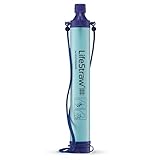
For under $20 and with the highest rating on this list at 4.9 stars, the LifeStraw is the filter to carry as a backup rather than as your primary system. You drink directly through it from the source, which is brilliantly simple and means nothing to set up or squeeze — and also means you cannot easily carry filtered water away with you. That limitation is precisely why it belongs in a day pack, a glovebox or an emergency kit alongside a proper squeeze or gravity filter on longer trips.
Check price and availability on Amazon →
Katadyn BeFree Collapsible Water Filter Bottle — Best for fast flow
The BeFree exists because people got tired of squeezing. Its filter has a noticeably faster flow than the Sawyer designs, so you can scoop, drink and move on rather than standing at a stream working a pouch — which matters most to trail runners and anyone hiking long days with frequent water sources. The 0.6L collapsible flask packs flat when empty. Its 4.2-star average is the lowest here, and the recurring theme is durability: the soft flask is more fragile than a Sawyer pouch, so treat it gently.
Check price and availability on Amazon →
Katadyn BeFree Gravity Water Filter 3L — Best for groups and basecamp
Filtering for three or four people one squeeze pouch at a time is miserable, and this is the fix. Fill the 3L reservoir, hang it from a branch and let gravity do the work while you set up camp — no squeezing, no pumping, and enough volume to cover cooking and bottles for a group in one go. It carries a 4.8-star average, the highest of the serious systems here. For under $80 and with the bulk of a 3L bag, it is overkill for a solo overnighter and exactly right for basecamp or a family trip.
Check price and availability on Amazon →
How to Choose the Right Option
Match the purchase to how and where you will use it. Prioritise durability and the one or two features that matter most, size everything to your space, and buy from a listing with clear returns. The best value is the model whose capability fits your actual routine — not the cheapest, and rarely the priciest.
The Bottom Line
There is no single best water filter for every trip — the right pick depends on whether you are filtering for yourself or a group, how much you mind stopping to filter, and whether you are treating clear mountain streams or murkier sources. The models above were selected because they balance real-world performance, build quality and value rather than winning on spec sheets alone. If you are unsure, start with the option we highlight as the best overall or best value; both are safe choices that suit the majority of buyers, and you can step up to a premium pick if a specific feature matters to you. Whatever you choose, buy from a listing with clear return terms so you can confirm the fit works for your needs, and always check the current price before ordering, since deals and stock change frequently.
Before you commit, it is worth reading recent buyer reviews for the specific model you are considering, since real-world reliability and customer service vary between brands and can matter as much as the headline specifications. Check the seller’s return window and warranty terms, confirm the current price rather than relying on a quoted figure, and make sure the size, capacity or compatibility genuinely matches your needs and space. A little verification at this stage saves the frustration and cost of returning the wrong product later, and it helps you buy with confidence the first time.
Frequently Asked Questions
Do I need a water filter for backpacking?
Yes, if you will drink from streams, lakes or springs. Even clear-looking backcountry water can carry giardia and cryptosporidium, and the illness will end a trip. A filter like the Sawyer Squeeze weighs very little and removes bacteria and protozoa, which covers the realistic risks in North America and Europe. The only time you can skip one is a short trip where you carry all your water from home.
Do water filters remove viruses?
Generally no. The hollow-fibre filters on this list filter to around 0.1 micron, which stops bacteria and protozoa but not viruses, which are smaller. That is fine for backcountry travel in North America and Europe, where viral contamination is rare. If you are travelling somewhere with poor sanitation, or drinking downstream of villages or livestock, you need a purifier, chemical treatment or boiling instead.
How do I clean and maintain a water filter?
Backflush it regularly — this is routine maintenance, not a repair. Sediment clogs the fibres and flow drops off long before the filter reaches its rated capacity, so carry the syringe or use a clean squeeze pouch to push water back through. Filter the clearest water you can find, let murky water settle first, and rinse and air-dry the filter fully before storing it so nothing grows inside.
What happens if my water filter freezes?
Freezing is the one failure that is genuinely dangerous, because ice expands inside the hollow fibres and cracks them — and a cracked filter looks and flows exactly like a working one while passing everything straight through. There is no reliable way to test for it in the field. On trips below freezing, keep the filter inside your jacket during the day and in your sleeping bag at night, and replace any filter you think may have frozen.
Related Guides
- Best Camping Tents in 2026
- Best Sleeping Bags in 2026
- Best Camping Backpacks in 2026
- Best Camping Stoves in 2026
- Best Sleeping Pads in 2026
- Best Coolers for Camping in 2026
As an Amazon Associate we earn from qualifying purchases. This guide is informational; verify specifications and pricing on the product listing before buying.