Key takeaways
What's inside
Backpacking kitchen setup is where ounces add up fast, so every piece has to earn its place. This roundup walks through five field-tested items, from stove to spork, comparing weight, material, and role, so you can assemble a light, complete trail kitchen that boils water, cooks a meal, and still nests down small enough to disappear into your pack.
As an Amazon Associate we earn from qualifying purchases at no extra cost to you. Product prices and availability are accurate as of the date shown and are subject to change.
As an Amazon Associate we earn from qualifying purchases at no extra cost to you. Product prices and availability are accurate as of the date shown and are subject to change.


By Jake Thompson
How to Build a Backpacking Kitchen
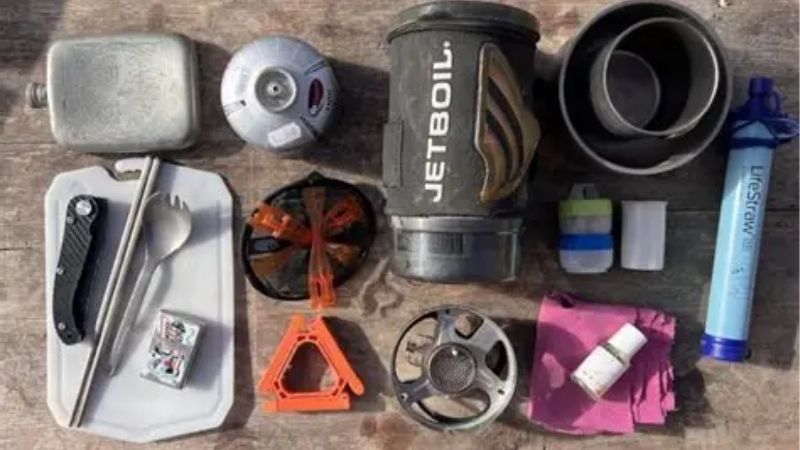
A trail kitchen is a system, not a pile of gear. The goal is the fewest pieces that still let you cook what you like, packed so they nest together. A smart backpacking kitchen setup starts with three questions about how, what, and for how many people you cook.
Match Gear to Your Cooking Style
Be honest about your meals. If you only rehydrate freeze-dried dinners, you need little more than a burner, a pot to boil water, and a spoon. If you actually cook, adding a small pan and a broader stove opens up real meals but adds weight you have to carry every mile.
Group size drives capacity too. A solo hiker can live off a 750-milliliter pot, while two people want closer to 1,300 milliliters plus a lid that doubles as a pan. Size the kit to your party so you are not hauling volume you never fill.
Prioritize Weight and Nesting
Weight is the whole game on the trail. Titanium is the lightest metal for pots and utensils, though it costs more and heats unevenly. Anodized aluminum is heavier but spreads heat better and cheaper. The best material depends on whether you burn dinners or count grams more.
Nesting is just as important as raw weight. A good backpacking kitchen setup collapses into a single pot: canister, stove, and lighter tuck inside, the lid seals it, and a mesh sack holds it all. That packed volume matters as much as the numbers on the scale.
Cover the Small Essentials
The little things make or break a trail kitchen. A reliable lighter plus backup matches, a long spoon that reaches the bottom of a meal bag, and a way to make coffee turn a bare burner into a real kitchen. Skimp here and even great cookware feels frustrating.
Cleanup counts too. A tiny cloth, a scrap of biodegradable soap, and a pot you can wipe out easily keep your kit sanitary without much weight. Plan how you will clean up before you leave, since a greasy pot attracts animals and sours fast in a pack.
Top Picks: A Complete Backpacking Kitchen Setup
With those principles in mind, here are five pieces that combine into a light, capable backpacking kitchen setup. The table sums up the essentials, and the reviews below explain what each piece does well and where it falls short so you can adjust the kit to your trips.
| Item | Weight | Material | Role | Best For |
|---|---|---|---|---|
| MSR PocketRocket 2 | 2.6 oz | Canister stove | Heat source | Boiling and cooking |
| TOAKS Titanium 750 mL | ~3.3 oz | Titanium | Solo pot | One hiker |
| Snow Peak Trek 900 | ~6.2 oz | Titanium | Pot plus pan lid | Two hikers |
| Snow Peak Titanium Spork | 0.6 oz | Titanium | Utensil | Eating anything |
| GSI Ultralight Java Drip | ~0.7 oz | Fabric and mesh | Coffee | Trail brews |
MSR PocketRocket 2 – The Engine
Every trail kitchen needs a heat source, and the MSR PocketRocket 2 is the standard. At just 2.6 ounces it screws onto an isobutane-propane canister, throws out 8,200 BTUs, and boils a liter in about three and a half minutes, all while folding down small enough to nest inside your pot.
It lacks a built-in igniter, so you carry a lighter, and its open burner catches wind. But its featherweight, low price, and bulletproof reliability make it the obvious anchor for most lightweight kits.
TOAKS Titanium 750 mL – The Solo Pot
For one hiker, the TOAKS Titanium 750-milliliter pot is a benchmark. It weighs roughly 3.3 ounces, holds enough water for a dehydrated meal plus coffee, and nests a 110-gram canister and a small stove inside, so the whole cook system travels as one compact package with a mesh sack.
The bare handles and lid have no insulation, so you need a pot grip or a sleeve to avoid burns, and titanium heats unevenly. For boil-and-rehydrate cooking, though, its weight-to-capacity balance is hard to beat.
Snow Peak Trek 900 – The Two-Person Upgrade
Cooking for two calls for more volume, and the Snow Peak Trek 900 titanium set delivers. It pairs a roughly 900-milliliter pot with a frypan lid that doubles as a plate, weighs about 6.2 ounces together, and is backed by a lifetime warranty, making it a durable core for a shared backpacking kitchen setup.
Like all titanium, it can scorch food over a hot spot if you are not attentive, and it costs more than aluminum. But the pot-and-pan combo covers far more meals than a single pot, which many pairs find worth the price.
Snow Peak Titanium Spork – The Utensil
A good utensil is easy to overlook until you are eating with a stick. The Snow Peak Titanium Spork weighs just 0.6 ounces, is 6.5 inches long, resists bending, and carries a lifetime warranty, so it handles everything from noodles to oatmeal without staining or picking up a metallic taste.
Its standard length does not quite reach the bottom of a tall freeze-dried bag, so messy fingers are possible with deep pouches. For most in-pot meals, though, it is a near-indestructible piece you will use for years.
GSI Ultralight Java Drip – The Coffee Maker
Coffee makes a camp kitchen feel complete, and the GSI Ultralight Java Drip weighs almost nothing at around 0.7 ounces. It folds flat, perches on most mugs, and uses a reusable mesh basket, so you brew pour-over coffee without carrying paper filters or a bulky press on the trail.
The open drip design is slower than a press and a little fussy in wind, and it makes one cup at a time. For solo hikers who want real coffee at a featherweight cost, though, it is tough to top.
Frequently Asked Questions
A few questions come up again and again when hikers plan a backpacking kitchen setup. Here are quick, practical answers to help you finalize your kit.
How much should a backpacking kitchen weigh?
A minimalist solo kit of stove, pot, spork, and lighter can come in around 12 to 16 ounces with an empty canister. Adding a pan, mug, or coffee gear pushes it higher. Weigh each piece and cut anything you will not use, since ounces compound over a long trip.
Titanium or aluminum cookware?
Titanium is lighter and nearly indestructible but heats unevenly, so it suits boiling water more than gourmet cooking. Anodized aluminum is heavier yet spreads heat better and costs less, making it friendlier for frying and simmering. Pick based on whether you count grams or actually cook meals.
What is the lightest way to make coffee outdoors?
A collapsible pour-over dripper or a fabric filter cone weighs well under an ounce and needs only hot water and grounds. Instant coffee is even lighter but sacrifices flavor. If you want a fuller cup, a small press adds weight but brews a richer, more satisfying result.
How do I clean up on the trail?
Wipe the pot with a small cloth, use minimal biodegradable soap, and scatter strained wastewater well away from camp and water sources. Pack out food scraps. A pot that wipes clean easily saves water and time, and keeping gear tidy helps avoid attracting animals overnight.
See More:
- Best camp chair
- Lightweight camp chair
- Camping table review
- Backpacking cookware set
- Camp stove review
Final Thoughts
A great backpacking kitchen setup is a small, tight system where every piece nests and earns its weight. Solo hikers can build around the PocketRocket 2 and TOAKS pot, pairs can step up to the Snow Peak Trek 900, and a spork plus a featherweight coffee dripper round it out. Size the kit to your meals, then dial it in trip after trip.