
Key takeaways
What's inside
Best hiking in Zion National Park depends on when you go, since the season shapes water levels, heat, and crowds as much as the trail itself does. This guide to the best hiking in Zion National Park sorts the park by season and by crowd level, so you can match your plans to spring runoff, summer heat, or quiet winter days, then pack the right gear.
As an Amazon Associate we earn from qualifying purchases at no extra cost to you. Product prices and availability are accurate as of the date shown and are subject to change.




As an Amazon Associate we earn from qualifying purchases at no extra cost to you. Product prices and availability are accurate as of the date shown and are subject to change.
By Jake Thompson, gear writer at Roger Bacon Outdoors
🛒 Best Price Today on Amazon
Prime members get fast, free shipping on everything above, plus member-only deals. New members get a 30-day free trial — cancel anytime.
Best Hiking in Zion National Park by Season
Zion transforms across the year, and the best hiking in Zion National Park changes with it. Water, heat, and crowds all swing dramatically between seasons, so picking the right months is half the battle. Here is what each season means for your hiking plans.
Spring: Waterfalls and High Water
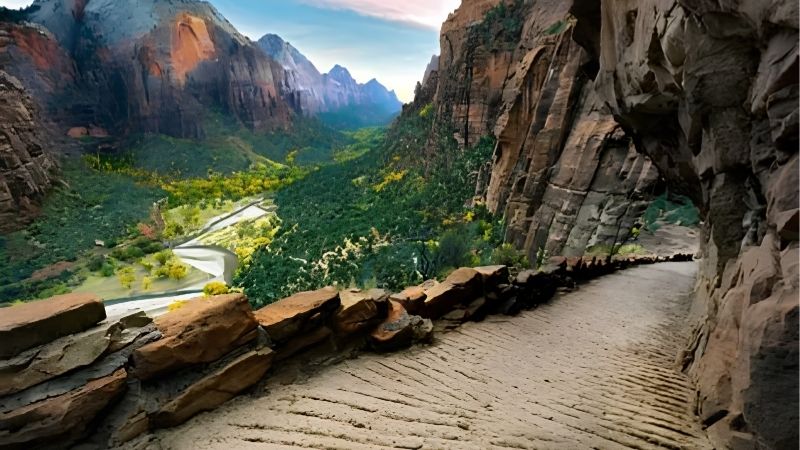
Spring, roughly March through May, delivers the park’s most dramatic scenery, with wildflowers blooming and snowmelt feeding roaring waterfalls and lush hanging gardens. Temperatures are comfortable, often in the 60s and 70s, making it a prime time for iconic hikes like Angels Landing and the canyon rim trails.
The catch is water. High spring runoff pushes the Virgin River over the 150-cfs threshold, so The Narrows often closes from April into early May. Spring is also busy, so reserve Angels Landing permits early, ride the shuttle, and keep a backup hike in mind if the river runs too high to enter.
Summer: Heat, the Narrows, and Monsoons
Summer, June through August, is the hottest and most crowded stretch, with canyon-floor temperatures often topping 100 degrees. The upside is The Narrows, which usually opens by mid-May and offers a cool, wading escape up the river when flows allow, making it the summer highlight for many visitors to Zion.
Two hazards define summer planning. Start hikes at dawn to beat the heat on exposed trails, carrying about a gallon of water per person. Late-summer monsoon afternoons bring sudden thunderstorms and serious flash-flood danger in slot canyons, so check forecasts and never enter The Narrows when storms threaten upstream.
Fall and Winter: Fewer Crowds
Fall, September and October, is the sweet spot for many hikers: mild temperatures, thinner crowds, and every major trail open, with cottonwood colors peaking from late October into early November. It blends the accessibility of summer with the calm of the off-season, which is why so many regulars favor it.
Winter is the quietest time, beautiful with snow dusting the red rock, and private vehicles are often allowed up the canyon when the shuttle pauses. The trade-off is ice, which makes shaded sections of Angels Landing and the Upper Emerald Pools trail genuinely treacherous, so bring traction and skip the sketchiest exposure.
Quieter Trails and Beating the Crowds
Zion is one of America’s busiest parks, but the best hiking in Zion National Park does not have to mean shoulder-to-shoulder trails. A few smart choices get you big views with far fewer people. Here are three reliable ways to find some breathing room.
Observation Point via East Mesa Trail
For the park’s best view of Angels Landing without the permit, chains, or crowds, take the East Mesa Trail to Observation Point. The trailhead sits outside the main canyon off Kolob Terrace Road, and the roughly 6.5-mile round trip is mostly flat, finishing at a rim that looks down on Angels Landing from 700 feet higher.
This is the route regulars quietly recommend. It skips the shuttle, the lottery, and the exposure that makes the classic Observation Point climb from the canyon floor so strenuous, delivering one of Zion’s greatest panoramas with a fraction of the foot traffic you would meet on the marquee trails.
Watchman and Pa’rus Trails
Two easy trails near the visitor center let you skip the shuttle entirely. The Watchman Trail is a roughly 3.3-mile loop that climbs to a viewpoint over the lower canyon and Springdale, quiet in the early morning and a solid pick for sunset when the red cliffs glow. It needs no permit and no shuttle ride.
The paved Pa’rus Trail is even more relaxed, an easy riverside path open to bikes and leashed pets, perfect for families or a low-effort morning. Pair it with the flat Riverside Walk deeper in the canyon, and you get scenic, low-stress miles without the congestion of the headline hikes.
Kolob Canyons and Early Starts
For real solitude, drive to the Kolob Canyons section at the park’s northwest corner, which has its own entrance and a fraction of the visitors. Trails like Taylor Creek and the Timber Creek Overlook reward you with towering finger canyons and red-rock views that rival the main canyon, minus the crowds and shuttle.
Wherever you hike, an early start is the simplest crowd-beater of all. Canyon parking fills by 8 a.m. in peak season, and popular trailheads clear out midday when day-trippers retreat from the heat. Catch the first shuttle, and you will have the trails and the morning light largely to yourself.
What to Pack for Hiking in Zion
Zion’s slick sandstone, cold river, and big temperature swings call for specific gear. These five essentials cover the best hiking in Zion National Park across the seasons, all real and widely available.
| Item | Why It Matters |
|---|---|
| Grippy hiking shoes | Slick sandstone and rim trails |
| Water shoes / neoprene socks | Wading the cold Narrows |
| Hydration (about 1 gal/day) | Intense summer canyon heat |
| Sun protection | Exposed rim and desert sun |
| Layers and traction | Big daily swings and winter ice |
Grippy Footwear and Water Shoes
Traction is everything on Zion’s sandstone. Sturdy hiking shoes or boots with a grippy outsole keep you steady on the slick rock of Angels Landing and the rim trails, where a slip near exposure is serious. Break them in before your trip to avoid blisters on the longer canyon hikes and rim climbs.
If The Narrows is on your list, your regular shoes will not cut it. Closed-toe water shoes or canyon boots paired with neoprene socks protect your feet from the cold Virgin River and its slick, rocky bed. Many hikers rent a package in Springdale, but grippy footwear remains the core piece of the kit.
Hydration and Sun Protection
Water is non-negotiable in Zion, where summer canyon temperatures top 100 degrees and the park recommends about a gallon per person per day. Carry a hydration reservoir plus extra bottles, and drink steadily rather than waiting for thirst, which in desert heat already arrives too late to catch up on.
Sun protection matters just as much on the exposed rim and desert trails. A wide-brim hat, sunglasses, a sun shirt, and high-SPF sunscreen guard against relentless UV, which is stronger at Zion’s elevation than many visitors expect. Reapply often on long, shadeless stretches like the climb up to Scout Lookout.
Layers, Traction, and a Daypack
Zion’s temperatures can swing 30 to 40 degrees in a single day, so pack layers even in summer. A light insulating layer and a packable rain shell handle chilly mornings, breezy rims, and the sudden showers that come with monsoon season, all without adding real weight or bulk to your daypack.
In winter, add slip-on traction devices for the ice that lingers on shaded trail sections, and carry it all in a comfortable daypack with room for water, snacks, and a first-aid kit. Since cell service is unreliable in the canyon, download offline maps before you set out on any Zion trail.
Frequently Asked Questions
These are the questions visitors ask most about the best hiking in Zion National Park. Short answers follow.
When is the best time to hike Zion?
Fall, September and October, is the sweet spot, with mild weather, all trails open, and thinner crowds. Spring brings waterfalls but can close The Narrows with runoff, summer is hot and busy but opens The Narrows, and winter is quiet and scenic but icy on shaded, exposed trails like Angels Landing.
Do I need a permit for Angels Landing?
Yes. The chains section beyond Scout Lookout requires a permit through a lottery on Recreation.gov, via either a seasonal lottery months ahead or a day-before lottery. The Narrows bottom-up day hike needs no permit, though it closes when the Virgin River runs high or a flash-flood warning is in effect.
How do I avoid the crowds?
Hike early, since canyon parking fills by 8 a.m. in peak season, and choose quieter trails like Observation Point via East Mesa, the Watchman Trail, or the Kolob Canyons section. Visiting in fall or winter, or on weekdays rather than weekends, also thins the crowds considerably at the popular trailheads.
Is the shuttle required?
From about March 7 through late November 2026, the free shuttle is the only way to reach Zion Canyon trailheads like Angels Landing and The Narrows, since private vehicles cannot drive the scenic road then. In winter, when the shuttle pauses, you can usually drive up the canyon yourself instead.
See More:
- best travel backpack for females
- best backpack for laptops
- best hydrogen water bottle
- best headlight restoration kit
Final Thoughts
The best hiking in Zion National Park comes down to timing as much as trail choice: chase waterfalls in spring, wade The Narrows in summer, or savor quiet fall and winter days. Reserve Angels Landing ahead, start early, and use quieter trails like Observation Point to dodge the crowds. Pack grippy shoes, water, sun protection, and layers before you go.





Write Your Review
No reviews yet. Be the first to share your experience!