
Key takeaways
What's inside
Best hiking Oahu offers falls into two moods: lush waterfall valleys and wide-open coastal ridges. This guide to the best hiking Oahu serves up sorts the island’s trails by scenery, so you can pick a shaded rainforest walk or a breezy ocean ridge to match your mood, then pack the right gear for mud, sun, and heat.
As an Amazon Associate we earn from qualifying purchases at no extra cost to you. Product prices and availability are accurate as of the date shown and are subject to change.


As an Amazon Associate we earn from qualifying purchases at no extra cost to you. Product prices and availability are accurate as of the date shown and are subject to change.
By Jake Thompson, gear writer at Roger Bacon Outdoors
🛒 Best Price Today on Amazon
Prime members get fast, free shipping on everything above, plus member-only deals. New members get a 30-day free trial — cancel anytime.
Waterfall and Rainforest Hikes
The island’s windward valleys hide some of the best hiking Oahu has, with shaded jungle trails ending at tall waterfalls. These hikes stay cooler than the exposed ridges but come with mud and freshwater cautions. Here are three worth the drive.
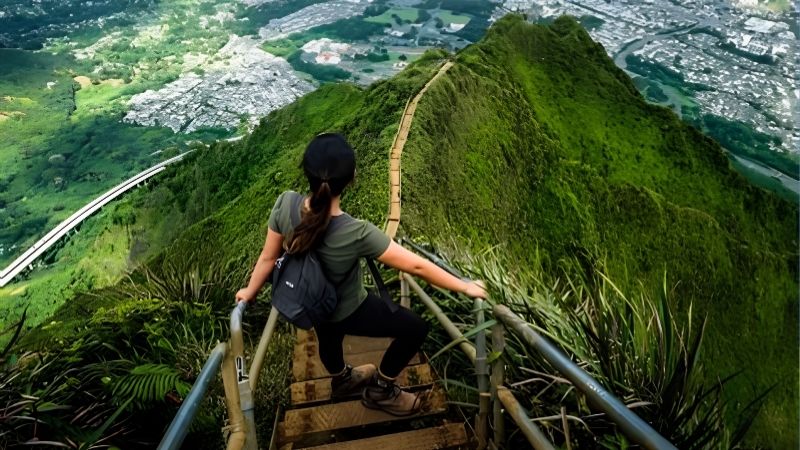
Manoa Falls
Manoa Falls is the go-to rainforest hike, a 1.6-mile round trip through lush jungle to a 150-foot waterfall just 15 minutes from Honolulu. The shaded canopy, giant ferns, and Jurassic Park scenery make it feel wild despite its accessibility, and the easy grade suits almost anyone willing to deal with a muddy path.
Come prepared for the mud, which lingers year-round, so wear grippy shoes rather than sandals. Parking runs about seven dollars at the lot, and you should not swim at the base, since freshwater pools here carry a real leptospirosis risk that is not worth the dip.
Waimea Falls
Waimea Falls on the North Shore is the family-friendly waterfall hike, a paved, gentle stroll of roughly 1.5 miles round trip through a botanical garden to a 45-foot falls. Unlike most Oahu waterfalls, the pool here is lifeguarded, so you can actually swim beneath the cascade, which makes it a favorite for hot days.
It is a paid attraction rather than a free trail, with an admission fee that covers the garden and the lifeguarded pool. The easy, stroller-friendly path and cultural sites along the way make it ideal for families or anyone wanting a low-effort payoff with a real swim.
Lulumahu Falls
Lulumahu Falls is the adventurous jungle option, a roughly 2.5-mile round trip through bamboo groves and stream crossings to a slender waterfall near the Pali. It feels more off-the-grid than Manoa, with muddy, unmarked stretches that reward hikers comfortable navigating a rougher, wetter trail.
Note that Lulumahu sits on state land and requires a permit to hike legally, so arrange that before you go. As with other freshwater spots, avoid submerging in the pool due to leptospirosis, and skip it after heavy rain when the stream crossings and flash-flood risk rise sharply.
Coastal and Ridge Hikes
For ocean air and big horizons, the best hiking Oahu offers heads to the coast and the ridgelines. These trails trade shade for breeze and sweeping blue views. Here are three standouts across easy to moderate effort.
Makapuʻu Point Lighthouse
The Makapuʻu Point Lighthouse Trail is the easy coastal winner, a paved, roughly two-mile round trip and the only wheelchair-accessible trail on the island. It climbs gently to a historic lighthouse with sweeping Pacific views, and it doubles as a top sunrise walk and a prime humpback whale-watching spot in winter.
Because it is fully paved with no scrambling, it suits every fitness level, including families with strollers. The trade-off is sun exposure, since the open coastal path offers little shade, so bring a hat and water and consider going early to enjoy the cooler air and best light.
Lanikai Pillbox
The Lanikai Pillbox hike on the Kaʻiwa Ridge is the iconic sunrise ridge, a short but steep 1.6-mile round trip to two WWII bunkers. The reward is a jaw-dropping view of the Mokulua Islands and turquoise Lanikai Beach, best caught at dawn when the golden light hits the water and the crowds are thinnest.
The climb is steep, rocky, and exposed with no guardrails, so watch your footing near the edges. Parking is limited to residential streets where neighbors are understandably weary of trail traffic, so arrive early, keep noise down, and pair the hike with a beach day afterward.
Kuliʻouʻou Ridge
Kuliʻouʻou Ridge is the rewarding ridge climb for those wanting more of a workout, a roughly five-mile round trip that gains around 1,800 feet through shaded forest before opening to a summit ridge. The payoff is a panoramic view over the Windward Coast, Koko Head, and the ocean beyond, earned by a steady climb.
It is well-maintained and less crowded than the marquee trails, making it a satisfying moderate-to-strenuous option. Bring plenty of water for the sustained ascent, and take care on the exposed upper ridge, where the trail narrows and the wind can pick up near the top.
What to Pack for the Best Hiking Oahu Offers
Whether you choose waterfalls or ridges, Oahu’s mix of mud, sun, and heat calls for smart gear. These five essentials cover the best hiking Oahu delivers, all real and widely available.
| Item | Why It Matters |
|---|---|
| Grippy trail shoes | Muddy valleys and slick ridges |
| Hydration | Hot, exposed coastal climbs |
| Packable rain shell | Sudden windward showers |
| Sun protection | Little shade on the coast |
| Daypack | Carry water, layers, first aid |
Grippy Trail Shoes
Footwear does the heavy lifting on both trail types. Waterfall hikes like Manoa and Lulumahu stay muddy year-round, while ridge rock gets slick in the wind, so grippy trail shoes beat sandals every time. A good outsole keeps you upright on wet roots, red clay, and the loose gravel of an exposed climb.
Closed-toe shoes also protect against scrapes on rocky ridge scrambles like Lanikai and Kuliʻouʻou. Skip the flip-flops that many visitors default to on the island, since smooth soles are genuinely dangerous on muddy jungle paths and slick, exposed rock alike, and a slip on a ridge is no small thing.
Rain Shell and Layers
A packable rain shell is an island essential. Windward valleys and ridges catch passing showers even on sunny days, and getting soaked and chilled at a breezy summit is no fun. A light shell stuffs into your pack and comes out in seconds when a cloud rolls over the ridge line above you.
A thin extra layer helps on early-morning ridge starts, when the trade winds make a summit feel far cooler than the trailhead did. Pair it with the shell for sunrise hikes at Lanikai, and you will stay comfortable from the cool climb up through the warm, sunny walk back down.
Water, Sun Protection, and a Daypack
Coastal and ridge trails bake in the sun, so carry more water than you think you need, at least a liter or two per person and a reservoir for longer climbs like Kuliʻouʻou. Dehydration sneaks up fast on exposed paths like Makapuʻu, where there is little shade anywhere to cool off in.
Pair that with real sun protection, a wide-brim hat, sunglasses, a sun shirt, and reef-safe sunscreen, and a comfortable daypack to carry it all along with snacks and a first-aid kit. The tropical UV is stronger than mainland visitors expect, especially with the glare reflecting off the ocean.
One last tip: reef-safe sunscreen is not just courtesy but law in Hawaii, which bans certain chemical sunscreens to protect the coral reefs. Grab a mineral formula before your trip so you are covered on the trail and at the beach, and reapply it every couple of hours under the strong island sun on the exposed sections.
Frequently Asked Questions
These are the questions travelers ask most about the best hiking Oahu offers. Short answers follow.
Waterfall or ridge hikes, which should I choose?
It depends on your mood and the weather. Waterfall hikes like Manoa stay shaded and cooler but muddy, ideal for hot days or a lush jungle feel. Coastal and ridge hikes like Makapuʻu and Lanikai offer breeze and big ocean views but little shade, so they shine early in the day.
Can I swim at these waterfalls?
Only at Waimea Falls, which has a lifeguarded pool and paid admission. At Manoa and Lulumahu, swimming is discouraged because freshwater pools carry a leptospirosis risk. If a swim is the goal, head to Waimea; otherwise enjoy the falls from the viewing areas and stay dry.
Do any of these need a permit?
Lulumahu Falls sits on state land and requires a permit to hike legally, so arrange it in advance. Manoa, Makapuʻu, Lanikai Pillbox, and Kuliʻouʻou Ridge are free and permit-free, though Manoa charges for parking and Waimea Falls charges admission as a private attraction.
Are the ridge hikes safe for beginners?
Makapuʻu is beginner- and family-friendly since it is paved and gentle. Lanikai Pillbox is short but steep, rocky, and exposed with no rails, so beginners should go carefully. Kuliʻouʻou is a bigger, sustained climb better suited to hikers with some fitness and comfort on narrow, breezy ridges.
See More:
- best travel backpack for females
- best backpack for laptops
- best hydrogen water bottle
- best headlight restoration kit
Final Thoughts
The best hiking Oahu offers comes in two flavors: waterfall valleys and coastal ridges, so pick the scenery that fits your day. Save the muddy jungle falls for hot afternoons, catch the ridges at sunrise, and respect permits and freshwater cautions. Wear grippy shoes, pack a rain shell and sun protection, and buy your gear before the trip.






Write Your Review
No reviews yet. Be the first to share your experience!