
Key takeaways
What's inside
Best hiking pole choices come down to materials and mechanism, not brand hype, once you know your trails. This guide to the best hiking pole breaks five picks down by shaft material, locking system, and pack style, so whether you want ultralight carbon, bombproof aluminum, or poles that fold small, you match the right design to the way you hike.
As an Amazon Associate we earn from qualifying purchases at no extra cost to you. Product prices and availability are accurate as of the date shown and are subject to change.


As an Amazon Associate we earn from qualifying purchases at no extra cost to you. Product prices and availability are accurate as of the date shown and are subject to change.
By Jake Thompson, gear writer at Roger Bacon Outdoors
🛒 Best Price Today on Amazon
Prime members get fast, free shipping on everything above, plus member-only deals. New members get a 30-day free trial — cancel anytime.
How to Choose the Best Hiking Pole
Three design choices decide how a pole performs: the shaft material, the locking mechanism, and how it packs down. Each is a trade-off between weight, durability, and price, so the best hiking pole for a fast-and-light hiker differs from the one a rugged-terrain hiker needs. Here is how to weigh each.
Shaft Material: Carbon or Aluminum
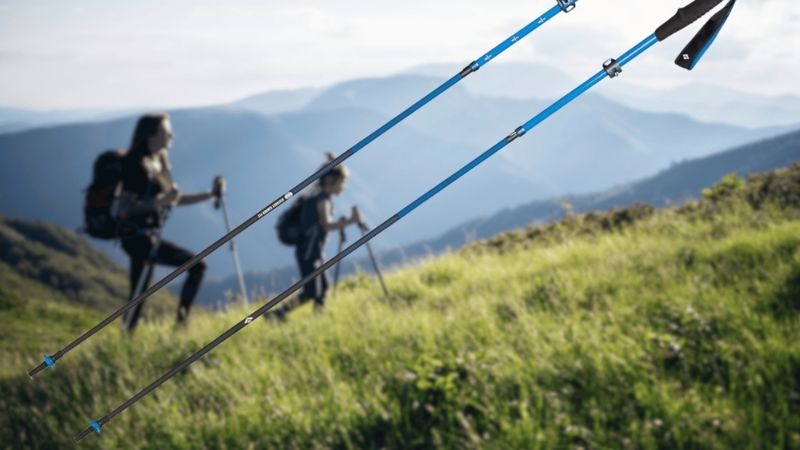
Carbon fiber is lighter and stiffer, saving weight on every step over a long day, which is why fast-and-light hikers favor it. The catch is that carbon can shatter under a sharp impact, so it is less forgiving when a pole gets pinned between rocks or takes a hard, twisting load on technical ground.
Aluminum is heavier but bends rather than breaks under impact, making it the more durable, worry-free choice for rocky, abrasive terrain. For hikers who value reliability over minimum weight, or who hike where pole-on-rock contact is common, aluminum is often the smarter material despite the extra ounces.
Locking Mechanism
The lock is what keeps a pole from collapsing under load, and lever locks are categorically more reliable than twist locks. A cam-and-lever system like Black Diamond’s FlickLock stays set in cold, wet, and dirty conditions, while twist locks can collect grit and slowly unwind on long descents exactly when you need them most.
Prioritize the lock when comparing poles at a similar price. A lever lock is the single most important upgrade over the cheapest twist-lock poles, since it holds your length setting under body weight on steep ground. The best hiking pole for most people uses a proven lever mechanism you can adjust with gloves on.
Packing Method and Grip
How a pole collapses affects how you travel with it. Folding Z-poles break into short segments that pack the smallest, ideal for attaching to a pack on technical scrambles, while telescoping poles adjust across a wider height range and are simpler to fine-tune. Fixed-length folding poles save weight but must be bought in your size.
Grip material shapes comfort too. Cork molds to your hand and wicks sweat over long days, EVA foam is lighter and softer, and rubber suits cold weather but can blister sweaty hands. Choose cork or foam for warm, long hikes, and consider an extended grip for gripping lower on steep traverses.
What 2026 Prices Mean for Trekking Poles
A quick market read helps you buy the best hiking pole before material tariffs push prices up further this season.
Aluminum Tariffs Hit Pole Shafts Directly
Trekking poles are among the products most exposed to metal tariffs, since aluminum and steel duties raise the cost of pole shafts directly, and carbon and components are largely imported too. With outdoor cost increases estimated near 7.7 percent on average, poles are squarely in the path of this year’s price pressure.
Prices Are Hard to Pin Down
Because trade policy keeps shifting, gear brands increasingly describe upcoming prices as estimates rather than firm numbers. For buyers, that uncertainty rewards buying a proven pair of poles when you find them rather than waiting for a discount that may not materialize.
Buy Ahead of the Fall Season
Timing helps too. Poles sell hardest as fall hiking and hunting seasons approach, when popular models thin out. Buying early lets you dial in the length and get comfortable with the locks and grips before you rely on them on a long, demanding trail.
Top Picks for the Best Hiking Pole
These five picks span aluminum workhorses to ultralight carbon, with lever, folding, and telescoping designs. All are real, widely available models. Weights reflect manufacturer figures per pair and vary by length, and we skip prices because tariffs keep moving them.
| Model | Material | Lock / Pack | Best For |
|---|---|---|---|
| Black Diamond Trail Ergo Cork | Aluminum | Lever / telescoping | Durable all-rounder |
| Black Diamond Distance Carbon Z | Carbon | Lever / folding | Ultralight, packable |
| Cascade Mountain Tech Carbon | Carbon | Lever / folding | Budget carbon |
| Leki Makalu Lite Cork | Aluminum | Speed Lock / telescoping | Durable comfort |
| Gossamer Gear LT5 | Carbon | Twist / telescoping | Ultralight minimalists |
Black Diamond Trail Ergo Cork
The Trail Ergo Cork is the durable all-rounder and the right first pair for most hikers. Its aluminum shafts bend rather than shatter on rocky terrain, the FlickLock lever mechanism stays set in cold, wet, and dirty conditions, and the ergonomic cork grip wicks sweat and molds to your hand over long days on the trail.
The trade-off is weight: at a little over a pound per pair it is not the lightest option, and the telescoping design packs larger than a folding pole. For hikers who want proven reliability and lock security over minimum weight, though, it is the benchmark.
Black Diamond Distance Carbon Z
The Distance Carbon Z is the ultralight, packable pick for fast hikers and scramblers. Carbon shafts keep the weight remarkably low, the folding Z-pole design collapses into short segments that stow easily on a pack, and a quick external lock deploys them in seconds when the trail steepens or you need extra stability.
Its limitations are the flip side of the design: the fixed-length Z version must be bought in your correct size, carbon is less forgiving of hard impacts than aluminum, and it sits at the premium end. For weight-conscious hikers who value packability, though, it is superb.
Cascade Mountain Tech Carbon
The Cascade Mountain Tech Carbon is the budget carbon pick and one of the best-selling poles on Amazon for good reason. It offers a genuine carbon shaft, a reliable lever lock, a folding design that packs small, and replaceable shaft segments, delivering a feature set that usually costs far more from premium brands.
Where it gives ground is refinement and long-term durability: the build and lock are not as polished as premium poles and tend to wear faster under heavy use. As a low-cost way to try quality poles or as a light-use pair, though, it is an impressive value.
Leki Makalu Lite Cork
The Makalu Lite Cork pairs durable aluminum shafts with Leki’s proven Speed Lock mechanism and a comfortable cork grip. It is a stable, reassuring pole that resists bending and lock failure trip after trip, and the cork handle keeps your grip secure and blister-free on long, sweaty ascents and rough traverses.
The trade-offs are weight and price: aluminum keeps it heavier than a carbon pole, and it sits above budget options. For hikers who want long-lasting comfort and dependable locks from a trusted brand, though, it is a rock-solid choice.
Gossamer Gear LT5
The LT5 is the ultralight minimalist’s pole, prized by thru-hikers who count every gram. Its slim carbon shafts make it one of the lightest telescoping poles available, and the simple, low-weight design keeps swing weight down over huge daily mileage, which is exactly what fast, long-distance hikers want.
Its cons are fragility and simplicity: the featherweight carbon is delicate under hard impacts, and the minimalist twist-style adjustment is less bombproof than a lever lock. For experienced ultralight hikers on established trails, though, the weight savings are unmatched.
Frequently Asked Questions
These are the questions hikers ask most when choosing the best hiking pole. Short answers follow.
Carbon or aluminum poles?
Choose carbon for minimum weight on established trails and long miles, and aluminum for durability on rocky, abrasive terrain where poles take impacts. Carbon can shatter under a hard load, while aluminum bends and keeps going. Match the material to your terrain and to how much you prioritize weight.
Lever lock or twist lock?
Lever locks, like FlickLock and Speed Lock, are more reliable than twist locks because they hold under load and resist grit in cold, wet, dirty conditions. Twist locks can slowly unwind on descents. A lever lock is the single most important feature to prioritize over the cheapest poles.
Do I need one pole or two?
Two poles give the most balance, stability, and load sharing on climbs and descents, which most hikers prefer. A single pole can help on easier trails or when you want a free hand, but for steep, rough, or heavily loaded hiking, a pair distributes effort far better and protects your knees.
How tall should my hiking poles be?
With a pole planted and your hand on the grip, your elbow should bend at about 90 degrees on flat ground. Adjustable poles let you shorten them for climbs and lengthen them for descents. If you buy fixed-length folding poles, choose the size that gives that 90-degree bend on level terrain.
See More:
- best travel backpack for females
- best backpack for laptops
- best hydrogen water bottle
- best headlight restoration kit
Final Thoughts
The best hiking pole is the one whose material, lock, and pack style match your terrain. The Black Diamond Trail Ergo Cork is the durable all-rounder, the Distance Carbon Z wins for ultralight packability, and the Cascade Mountain Tech Carbon is the budget value. Prioritize a proven lever lock, and buy before fall.




Write Your Review
No reviews yet. Be the first to share your experience!