
Key takeaways
The best 1 person tent keeps you dry and comfortable on solo trips without the weight and bulk of a bigger shelter, so you can travel farther and faster. This guide compares six tested 2026 solo picks across weight, waterproofing, liveability, and value, so you can match a tent to fast-and-light thru-hiking, three-season backpacking, or budget-friendly solo camping rather than carrying more than you need.
As an Amazon Associate we earn from qualifying purchases.
🛒 Best Price Today on Amazon
Prime members get fast, free shipping on everything above, plus member-only deals. New members get a 30-day free trial — cancel anytime.
Start 30-Day Prime Free Trial →See Today’s Amazon DealsHow to Choose the Best 1 Person Tent
The best 1 person tent balances weight, weather protection, and liveability for solo trips. Before comparing models, weigh four levers that decide the experience: weight and packed size, waterproofing, freestanding versus trekking-pole, and liveability with ventilation. Get these right and your solo shelter carries easy and sleeps well.
Weight and Packed Size
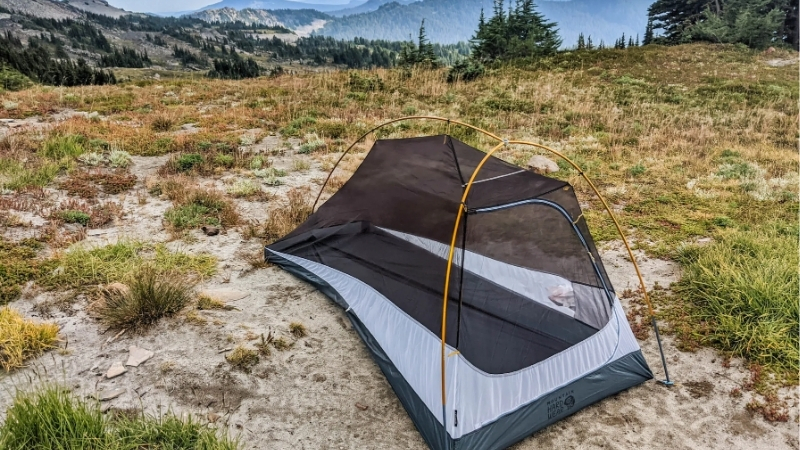
Weight dictates how far and fast you can travel, so a low pack weight matters most for solo hikers. Under four pounds is a good target, with ultralight models dropping well below that.
Packed size matters as much as weight, since a bulky light tent can be as inconvenient as a heavier compact one. The lightest Dyneema tents pack tiny but cost the most, while nylon offers great value.
Waterproofing
A solo tent must keep you dry in unpredictable weather, so check the hydrostatic head ratings. Aim for at least 1,500mm on the fly and 3,000mm on the floor, which bears ground pressure.
Taped seams and a full-coverage rainfly matter as much as the fabric rating, since a tent is only as waterproof as its weakest link. A vestibule adds covered space to keep gear and boots dry.
Freestanding Versus Trekking-Pole
Freestanding tents use their own poles and stand up anywhere, which helps on rocky ground where staking is hard. They are easy to pitch and move but weigh a little more.
Trekking-pole tents shed that weight by using poles you already carry, but they need good stakeout, are less stable in side gusts, and leave you stranded if a pole breaks. Choose based on your terrain and priorities.
Liveability and Ventilation
Liveability comes from floor size and headroom, so check the width and length fit your pad and height. A wider floor fits a broad pad, and enough length suits taller hikers without cramping.
Ventilation fights condensation, with double-wall mesh designs breathing better than single-wall tents. Dual doors and peak vents add airflow and convenience, though they add a little weight.
Buying a 1 Person Tent in 2026: Prices and Timing
Beyond specs, timing shapes what you pay for the best 1 person tent in 2026. Fabric and pole costs have climbed, and camping season swings prices, so a little planning helps.
Tariffs and Material Costs
Duties on aluminum poles and broad tariff pressure on imported fabrics have pushed tent costs upward this year. Brands have described some new prices as estimates that may shift as trade conditions change.
The practical upshot is that a quality tent is unlikely to get much cheaper at full retail. When a tent you want appears at a fair price, buying can beat waiting for a discount that may not undercut a rising baseline.
Seasonal Timing
Tent demand peaks in spring and summer, so the deepest discounts often land off-season or when a model is refreshed and last year’s version clears out. Popular models sell through first.
Major sales windows, including October’s Prime Big Deal Days and the late-November Black Friday and Cyber Monday stretch, typically deliver strong tent deals as the season winds down.
Buy Early and Test at Home
Buy before your trip so you can pitch the tent at home, learn the pole or trekking-pole setup, and check the seams before you face weather in the field. A dry run prevents fumbling in the dark.
Early buying also lets you confirm your pad fits and refresh the fly’s water-repellent finish if needed, so the tent is ready when you head out solo.
Top Picks: The Best 1 Person Tent Reviewed
These six picks for the best 1 person tent span an all-rounder, a balanced freestanding, a packable semi-freestanding, a trekking-pole value, an ultralight value, and a budget option. The table gives a quick overview, then each review covers who it suits and its trade-offs.
| Model | Type | Best For | Price Tier |
|---|---|---|---|
| Big Agnes Copper Spur UL1 | Freestanding | Best all-rounder | Premium |
| MSR Hubba NX 1 | Freestanding | Balanced protection | Mid-premium |
| NEMO Hornet OSMO 1P | Semi-freestanding | Packable ultralight | Mid-premium |
| Durston X-Mid 1 | Trekking-pole | Spacious value | Mid |
| Six Moon Designs Lunar Solo | Trekking-pole | Ultralight value | Mid |
| Naturehike Cloud-Up 1 | Freestanding | Budget solo | Budget |
Big Agnes Copper Spur UL1
The Big Agnes Copper Spur UL1 is our best all-rounder, a high-walled, ultralight freestanding tent with superb liveability and a full set of well-executed features that balance protection, space, weight, and packed size. It is fully featured without feeling heavy.
It costs a premium and its high walls catch side gusts. For solo hikers who want the best blend of comfort and weight, it is the standout.
MSR Hubba NX 1
The MSR Hubba NX 1 is our balanced-protection pick, a freestanding tent that is easy to set up, well-ventilated, and delivers a strong balance of protection, liveability, weight, and packed size for three-season use. Its near-vertical walls maximize interior space.
It is not the lightest option available. For solo backpackers who want proven, all-round performance, it is a dependable choice.
NEMO Hornet OSMO 1P
The NEMO Hornet OSMO 1P is our packable ultralight pick, a roughly 29-ounce semi-freestanding tent whose OSMO fly resists sag in rain and whose short-folding poles pack horizontally in almost any backpack. Lots of mesh aids ventilation.
Its single door and semi-freestanding design suit fair to moderate conditions best. For weight-conscious hikers who value packability, it is an excellent pick.
Durston X-Mid 1
The Durston X-Mid 1 is our spacious value pick, a trekking-pole tent with a very roomy interior, dual doors and vestibules, and easy setup that fits taller hikers, all at a friendly price versus premium peers. It is remarkably livable for its weight.
It needs two trekking poles and good stakeout. For solo hikers who want space and value in a light tent, it is a smart choice.
Six Moon Designs Lunar Solo
The Six Moon Designs Lunar Solo is our ultralight value pick, a single-wall trekking-pole tent that pitches with one pole and keeps weight low for fast-and-light trips. It offers a lot of covered space for the ounces.
Single-wall designs collect more condensation, and it needs careful pitching. For minimalist hikers who want ultralight shelter on a budget, it is a great value.
Naturehike Cloud-Up 1
The Naturehike Cloud-Up 1 is our budget solo pick, a self-standing tent around 2.7 pounds with generous interior space and a good door height that simplifies setup on varied terrain. It delivers real value for weight-conscious campers.
Its materials are less premium than top-tier tents. For solo campers who want a light, self-standing shelter without a big spend, it is an excellent entry.
Frequently Asked Questions
Quick answers to the questions solo campers ask most when choosing the best 1 person tent.
How light should a 1 person tent be?
Under four pounds is a good target for a solo tent, with ultralight models dropping well below three pounds. Lighter lets you travel farther and faster, which matters most for thru-hikers and fast-and-light trips. Remember packed size matters too, since a bulky light tent is as awkward as a heavier compact one. Balance weight against durability and liveability for your trips.
Freestanding or trekking-pole tent?
Freestanding tents stand on their own poles, pitch anywhere including rocky ground, and are easy to move, but weigh a bit more. Trekking-pole tents use poles you already carry to save weight, but need good stakeout, are less stable in side wind, and leave you stuck if a pole breaks. Choose freestanding for convenience and rough terrain, or trekking-pole to cut weight.
Can two people fit in a 1 person tent?
Only in a true emergency, and it will be extremely cramped, pressing you against the walls and worsening condensation and discomfort. One-person tents are designed for solo use. For regular trips with a partner, invest in a proper two-person tent, since the slight weight increase is well worth the comfort and safety margin. Do not plan on squeezing two adults into a solo shelter.
What waterproof rating do I need?
Aim for at least 1,500mm on the rainfly and 3,000mm on the floor, which bears ground pressure and your body weight. Taped seams and a full-coverage fly matter as much as the rating, since a tent is only as waterproof as its weakest link. For heavy or prolonged rain, higher ratings add margin. Check that seams are sealed before trusting a tent in a storm.
See More:
- best rain jacket for runners
- best everyday carry multi tool
- best travel binoculars
- best safari binoculars
- best rangefinding binoculars
Final Thoughts
Choosing the best 1 person tent comes down to matching weight, waterproofing, and liveability to your solo trips rather than chasing one number. The Big Agnes Copper Spur UL1 leads as an all-rounder, the MSR Hubba NX 1 balances protection, and the Durston X-Mid 1 offers spacious value, while the Naturehike Cloud-Up 1 covers the budget. Buy early, test it at home, and any of these six will shelter your solo adventures.
Our top picks


 ALPS Mountaineering Backpacking-Tents Lynx 1
At just over 4 pounds it's easy to backpack
Freestanding two-pole setup goes up quickly
Half-mesh walls reduce condensation on warm nights
Built for one occupant only
Vestibule storage is the only extra gear space

As an Amazon Associate we earn from qualifying purchases at no extra cost to you.





Write Your Review
No reviews yet. Be the first to share your experience!