
Key takeaways
Best waterproof boots for hiking have to do one job flawlessly — keep your feet dry — without turning to bricks on the trail. This guide compares six tested pairs, from a light GORE-TEX all-rounder to a resoleable leather workhorse, with real weights, membrane types, and outsole details so you can match a boot to your terrain and pack weight.
As an Amazon Associate we earn from qualifying purchases.
🛒 Best Price Today on Amazon
Prime members get fast, free shipping on everything above, plus member-only deals. New members get a 30-day free trial — cancel anytime.
Start 30-Day Prime Free Trial →See Today’s Amazon DealsHow to Choose the Best Waterproof Boots for Hiking
The best waterproof boots for hiking balance dryness, weight, and support for the loads and terrain you actually cover. Four factors decide most of it: the waterproof membrane, weight and support level, outsole traction, and how the boot fits and breaks in. Nail these and a boot will carry you comfortably for years.
Waterproof Membranes Explained
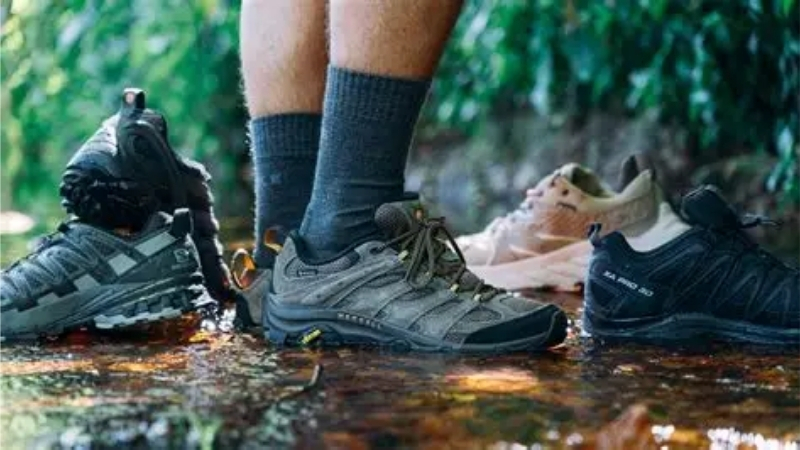
The upper itself is not what keeps water out — a membrane or liner beneath it does. GORE-TEX is the proven standard, bonding a waterproof-breathable layer inside the boot. Proprietary membranes like Merrell’s M Select Dry cost less but can behave more like a coating that fades over time.
There is a catch worth knowing: waterproofing always trims breathability, since keeping rain out also slows sweat from escaping. Boots with some mesh in the upper vent better than heavy all-leather GORE-TEX builds, so weigh how wet versus how hot your typical hikes run.
Weight and Support
Lightweight all-rounders sit near 1 pound 11 ounces per pair and move nimbly on day hikes, while backpacking boots run 2 pounds or more and add the stiffness and ankle support you need under a heavy load. Match the boot’s weight class to your typical pack.
A shank or rock plate stiffens a boot heel-to-toe and side-to-side, protecting your sole on jagged terrain and steadying you under weight. Day hikers rarely need that much structure; multi-day haulers on rough ground almost always do. Be honest about the trips you actually take.
Traction and Outsole
Outsole rubber and lug pattern decide grip on wet rock, mud, and loose descents. Vibram compounds like TC5+ are the durability benchmark, while Salomon’s own Contagrip rivals them in both bite and lifespan. Deeper, well-spaced lugs shed mud better and dig into soft ground.
On a long rocky descent, a grippy outsole and a supportive midsole are what save your knees and keep you upright. Polyurethane midsoles absorb shock without feeling mushy, which is why premium boots lean on them for heavy, technical days over many miles.
Fit, Width, and Break-In
Fit trumps every spec. A boot that rubs will end a trip fast, so try boots with your hiking socks and check heel lock and toe room. Leather boots run stiffer and need a real break-in, while synthetic and hybrid uppers soften faster and feel ready sooner.
Width options matter more than shoppers expect. A few boots, like the Lowa Renegade, come in narrow, medium, and wide, and models such as the KEEN Targhee are built roomy for wide feet. Buying the right width beats forcing a great boot that simply does not fit your foot.
Buying Hiking Boots in 2026: Tariffs and Timing
A little market context helps you time the purchase of the best waterproof boots for hiking. Between tariff-driven price creep and seasonal stock swings, when you buy can matter almost as much as what you buy, so it pays to plan rather than grab a pair in a rush.
How Tariffs Are Raising Boot Prices
Outdoor brands report input costs up roughly 7.7% under new tariffs, with technical materials such as high-tenacity nylon and specialized foams climbing 10-15%. Those increases pass through to footwear, nudging boots that sold near $130 upward and pushing premium models higher still.
Brands have openly said current prices are best guesses while supply chains and duties keep moving. For a boot you know you will wear all season, that uncertainty is a reason to buy sooner rather than betting the trend reverses in your favor.
Seasonal Timing for the Best Selection
Late summer and early fall bring the fullest inventory of the year, which matters most for footwear where common sizes and popular widths sell through fastest. Hunting and cold-weather boot demand also climbs into September, thinning shelves right when many hikers start shopping.
Buying early gets you a proper fit and break-in window before the trips that count, and spares you the mid-season scramble when your size in the boot you want is suddenly on backorder. First come tends to mean best fit here.
Buy Early or Wait for Sales?
The deepest discounts still land around October’s Prime Big Deal Days and late-November Black Friday. If your hiking schedule allows, build a wishlist, track prices, and wait for a real markdown on the pair you have already vetted rather than paying full price on impulse.
The sensible split: buy must-have boots early while sizes and widths are complete and prices are still climbing, and reserve patience for upgrades you can delay. That way you dodge the worst price creep without missing the genuine sales later in the year.
Top Picks: The Best Waterproof Boots for Hiking
These six picks are the best waterproof boots for hiking across the trips most people take, from fast day hikes to loaded multi-day treks. Every pair below is current and in stock on Amazon, chosen for a specific job rather than a one-boot-does-all promise.
| Boot | Weight (pair) | Waterproofing | Best For |
|---|---|---|---|
| Salomon X Ultra 5 Mid GTX | ~1 lb 11 oz | GORE-TEX | All-around |
| Lowa Renegade Evo GTX Mid | ~2 lb 3 oz | GORE-TEX | Premium leather |
| Merrell Moab 3 Mid GTX | ~1 lb 11 oz | GORE-TEX | Budget best-seller |
| Salomon Quest 5 GTX | ~2 lb 5 oz | GORE-TEX | Heavy loads |
| KEEN Targhee IV Mid WP | ~2 lb 2 oz | KEEN.Dry | Wide feet |
| NORTIV 8 Waterproof | ~2 lb | Membrane | Ultra-budget |
Salomon X Ultra 5 Mid GTX — Best Overall
The X Ultra 5 is the best waterproof boot for most hikers in 2026, balancing breathability, traction, and weight better than anything near its price. It pairs a PFC-free GORE-TEX membrane with a Kevlar-reinforced upper and Salomon’s grippy Contagrip outsole, all at about 1 pound 11 ounces per pair and roughly $185.
The limit is load: it is not as supportive or protective as a true backpacking boot, so heavy multi-day hauls on technical terrain want something burlier. For day hikes and weekend trips, though, its blend of light weight and on-trail grip makes it the versatile default.
Lowa Renegade Evo GTX Mid — Best Premium Leather
A modern classic, the Renegade Evo pairs a Nubuck leather upper with a GORE-TEX liner, a shock-absorbing polyurethane midsole, and a Vibram outsole that grips wet roots and slick rock with confidence. It comes in narrow, medium, and wide, and Lowa can even resole it, so it can last a decade.
The premium build carries a premium price near $250, and the stiff leather needs a genuine break-in before it feels broken in. But for durability, support on rocky descents, and long-term value through resoling, few boots justify the cost as clearly as this one.
Merrell Moab 3 Mid GTX — Best Budget Best-Seller
Merrell sells more Moab 3s than any other hiking boot on earth, and the value math is easy: an EVA midsole and Vibram TC5+ outsole handle groomed trails and moderate rock without fuss, with roomy comfort and an easy break-in that suits new and casual hikers alike.
Buy the GORE-TEX version, not the base model — Merrell’s own support has acknowledged the base membrane behaves more like a treatment that wears off, while the GTX build near $170 gives true bonded waterproofing. Lugs can pack out on clay, but for the money it is a lot of boot.
Salomon Quest 5 GTX — Best for Heavy Loads
When you shoulder a heavy multi-day pack over technical ground, the Quest 5 delivers the support the lighter X Ultra cannot. A taller, stiffer build with a GORE-TEX membrane and Contagrip outsole steadies you under load, and the chunky toe cap shrugs off the rocks that end lesser boots.
At roughly 2 pounds 5 ounces it is heavy and overkill for casual day hikes, and it costs more than an all-rounder. But for backpackers hauling weight across rough, remote terrain, that extra structure is exactly what keeps ankles and feet intact mile after mile.
KEEN Targhee IV Mid WP — Best for Wide Feet
KEEN built its reputation on roomy fit, and the Targhee IV is the go-to for hikers whose feet feel cramped in narrower boots. A generous toe box, KEEN.Dry waterproof membrane, and a grippy outsole make it a comfortable, dependable all-around hiker straight out of the box with minimal break-in.
The trade-off is precision: that roomy fit feels less locked-down on steep, technical terrain, and it is not the lightest boot here. But for wide-footed hikers who have struggled to find comfort, the Targhee’s fit solves the one problem that matters most.
NORTIV 8 Waterproof — Best Ultra-Budget
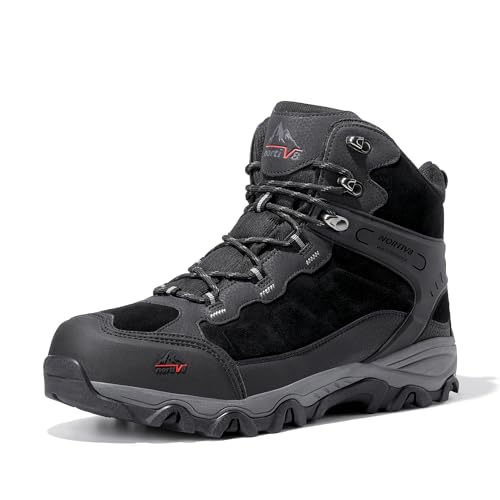
Often cited as Amazon’s best-selling hiking boot, the NORTIV 8 answers one question well: what do you get for $45-60? More than you would expect. It is waterproof, reasonably supportive, and comfortable enough out of the box that many first-time hikers wonder why anyone pays more.
The compromises show over time in materials and long-haul durability that cannot match a $200 boot, and the outsole grip is merely adequate on wet technical ground. But as an entry pair, an occasional-use boot, or a low-risk way to try hiking, the value is genuinely hard to beat.
Frequently Asked Questions
A few questions come up every time hikers shop for the best waterproof boots for hiking. Here are quick, honest answers to help you choose.
Are waterproof hiking boots worth it?
For cold, wet, or shoulder-season hiking, absolutely — dry feet mean fewer blisters and more comfort. The trade-off is breathability, since waterproof boots run warmer in summer heat. If most of your hiking is hot and dry, a non-waterproof boot or trail runner may actually serve you better.
GORE-TEX vs. proprietary membranes — does it matter?
Often, yes. GORE-TEX is a proven bonded membrane with reliable long-term waterproofing. Some proprietary membranes perform more like a treatment that fades over time, as Merrell’s own support has noted about certain base models. When waterproofing is non-negotiable, the GORE-TEX version is the safer buy.
How do I keep waterproof boots waterproof?
Clean off mud and grit after hikes, since abrasion degrades the membrane and outsole. Reapply a DWR treatment to the upper when water stops beading, and dry boots away from direct heat. Regular care noticeably extends both waterproofing and outsole life over the boot’s lifespan.
Boots or trail runners for hiking?
It depends on load and terrain. Trail runners are lighter and cooler for fast day hikes and light packs, while boots offer more ankle support, protection, and warmth under heavy loads or on rough ground. Many hikers own both and choose based on the specific trip.
See More:
- Best shoes for trail running
- Best rated binoculars for hunting
- best waterproof rain jacket women
- sleeping pad best
Final Thoughts
The best waterproof boots for hiking are the ones matched to your terrain, your load, and the fit of your foot — not simply the priciest pair on the wall. The Salomon X Ultra 5 is the versatile default, the Lowa Renegade rewards hard miles and resoles for years, and the Moab 3 GTX covers the basics affordably. Buy early while sizes and widths are full and prices keep climbing, and your feet will thank you all season.
Our top picks


 Columbia Mens Newton Ridge Plus II Waterproof
- this uses AUI list/listitem elements in desktop
- Origin Imported Sole material Rubber Shaft height Ankle…
- this is where AUI list/listitem elements in desktop…

As an Amazon Associate we earn from qualifying purchases at no extra cost to you.

Write Your Review
No reviews yet. Be the first to share your experience!