
Key takeaways
What's inside
Best ice retention cooler performance comes from wall thickness, gasket quality and how you pack it, not from the number of days printed on the box. This guide explains what actually keeps ice solid on a long trip, then compares five coolers that span rotomolded premium builds and sensible budget choices.
As an Amazon Associate we earn from qualifying purchases at no extra cost to you. Product prices and availability are accurate as of the date shown and are subject to change.





As an Amazon Associate we earn from qualifying purchases at no extra cost to you. Product prices and availability are accurate as of the date shown and are subject to change.
🛒 Best Price Today on Amazon
Prime members get fast, free shipping on everything above, plus member-only deals. New members get a 30-day free trial — cancel anytime.
How to Choose the Right Best Ice Retention Cooler
Manufacturer ice claims are made under ideal conditions that no camping trip resembles. What survives contact with reality are three specifications: how much insulation sits in the walls, how well the lid seals, and whether the box is big enough to run the ice-to-contents ratio the best ice retention cooler needs.
Wall Thickness and Insulation Type Set the Ceiling
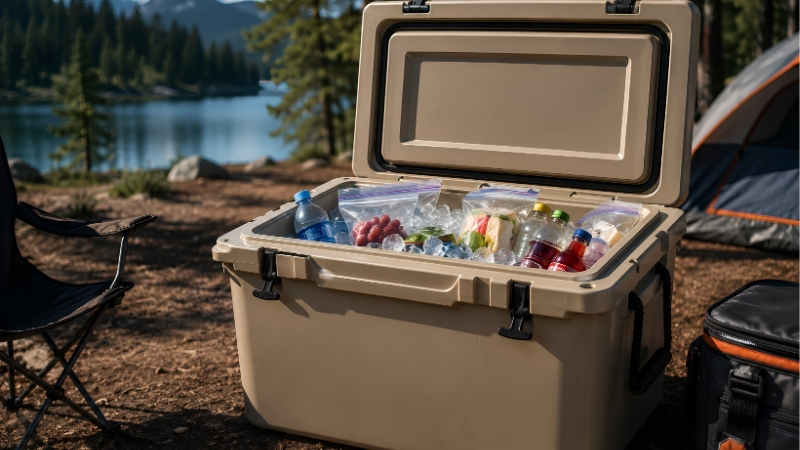
Rotomolded coolers are moulded as a single shell and filled with pressure-injected polyurethane foam, which is why models like the YETI Tundra series carry up to two inches of insulation and RTIC advertises around three inches in its larger boxes. That mass of foam is the entire reason they outperform.
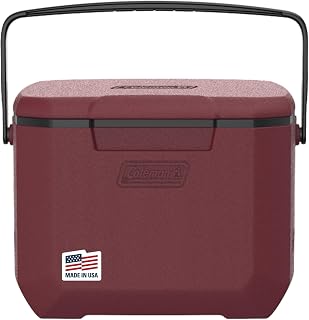
Injection-moulded coolers such as the Coleman Xtreme use thinner walls but add insulation to the lid, which is where a surprising amount of heat enters. They will not match a rotomolded box on a five-day trip, but for two to three days they deliver a large fraction of the performance at a small fraction of the weight.
Gasket, Latches and Lid Design Stop Cold Leaks
A freezer-grade rubber gasket around the lid is the difference between a sealed box and an insulated one. Without it, warm air exchanges every time the cooler is nudged, and the best foam in the world cannot compensate. Check that the gasket is continuous and seats evenly before trusting any retention claim.
Latch design matters for the same reason. Rubber T-latches on the Tundra and press-and-pull latches on Pelican coolers pull the lid down hard against the gasket, while simple plastic clips let the lid float. Hinges should be full length rather than two small pivots that allow the lid to flex in the middle.
Size Up for Ice Ratio, Not Just Food Volume
Retention depends on cold mass, which means a cooler needs roughly two parts ice to one part contents by volume to hit its advertised numbers. Buying a cooler that exactly fits your food guarantees disappointing results, because there is no room left for the ice that actually does the work.
Pre-chilling matters just as much. A cooler stored in a hot garage will spend its first several hours melting ice simply to cool its own plastic. Running a sacrificial bag of ice inside overnight before a trip, then dumping it and loading fresh, adds a meaningful margin at no cost beyond a little planning.
Top Picks for the Best Ice Retention Cooler
The best ice retention cooler picks below cover the realistic spread from a heavyweight rotomolded box to a light injection-moulded model that most families already recognise. The table gives the quick comparison, and each entry that follows explains who the cooler genuinely suits and where it falls short in practice.
| Model | Construction | Approx capacity | Insulation | Best for |
|---|---|---|---|---|
| YETI Tundra 45 | Rotomolded | Mid-size | Up to 2 in walls | Long trips, abuse |
| RTIC 45 | Rotomolded | Mid-size | Around 3 in | Value per day of ice |
| Pelican Elite 30QT | Rotomolded | 30 qt | Thick walls | Compact heavy duty |
| ORCA 40 | Rotomolded | 40 qt | Thick walls | US-made durability |
| Coleman Xtreme 70 | Injection moulded | 70 qt | Insulated lid | Budget family camping |
YETI Tundra 45
The Tundra is the cooler every other rotomolded box is measured against. Up to two inches of PermaFrost insulation, a one-piece moulded shell and a freezer-grade gasket give it retention measured in days, and the rubber T-latches and full-length hinge are still working long after cheaper hardware has failed.
It is genuinely heavy at over twenty pounds empty, which makes two-person carrying the norm once loaded, and it costs more than most people expect to spend on a cooler. Usable interior volume is also smaller than the exterior suggests, because all that insulation has to live somewhere.
RTIC 45
RTIC built its reputation by offering rotomolded construction with around three inches of insulation at a noticeably lower price than the established premium brands. In practical terms the retention is close enough that most campers would struggle to tell the difference across a normal weekend or a four-day trip.
The compromises show in the fittings rather than the insulation, with latches and handles that feel less refined and a lid that can need a firmer push to seat evenly. It is also every bit as heavy and bulky as its rivals. As pure cold-per-dollar, it is the strongest argument on this list.
Pelican Elite 30QT
Pelican brings its case-building background to coolers, and the Elite series shows it. Press-and-pull latches lock the lid down with real force, the moulded body shrugs off impacts, and the compact thirty quart size fits behind a seat or in a small truck bed where a larger box simply will not go.
It is disproportionately heavy for its capacity, which is the price of that thick construction, and the aggressive latches take a firm hand in cold weather. The narrow footprint also limits how you can arrange contents. For a solo camper or a hunter who values toughness over volume, it is well judged.
ORCA 40
The ORCA 40 is a rotomolded cooler made in the United States with an insulated lid, a full gasket and flexible cargo net storage on the exterior. Its stretch-strap latches are easier on cold fingers than stiff rubber T-latches, and the moulded body handles being dragged over rock and truck bed liner.
It sits at the premium end of pricing without a clear retention advantage over its rivals, and like every cooler in this class it is heavy before anything goes inside. The single-piece lid also lacks the moulded cup indentations some competitors offer. Build quality and support are where it earns its place.
Coleman Xtreme 70-Quart
The Xtreme is the reality check on this list. It uses thinner injection-moulded walls with added lid insulation, weighs a fraction of the rotomolded options, and costs a small share of their price while still holding ice for several days in shaded, moderate conditions with a proper ice ratio.
It has no gasket seal, the latches are simple plastic, and it is not built for bear country or serious abuse. Sustained heat will beat it in a way it will not beat a rotomolded box. For family camping where the cooler lives under a tarp and gets restocked, it remains outstanding value.
Tariffs, Timing and the Cooler Market
The best ice retention cooler models are heavy goods that ship expensively and are made from materials caught up in current trade measures. A short look at the pricing environment and the seasonal calendar helps clarify whether to buy immediately or hold out for one of the autumn discount events.
Why Hard Cooler Prices Have Held High
An Outdoor Industry Association survey found 84 percent of member businesses expect to be affected by new tariffs, with overall input costs up by around 7.7 percent and technical materials including specialist foams rising ten to fifteen percent. Insulation is the main ingredient in a cooler by volume.
Freight is the second pressure. A rotomolded cooler is bulky and heavy relative to its value, so shipping economics leave little room to absorb increases. Manufacturers have described current pricing as provisional, which realistically means stable-to-higher rather than a return to earlier price levels.
Peak Season Is When Retention Actually Matters
The hottest weeks of the year are the honest test of any cooler, and there is still a solid run of summer camping left. Buying now means you discover how your particular loading habits affect ice life while the conditions are demanding, rather than finding out on a trip planned months in advance.
Hunting season also arrives in September, and coolers are core equipment for it. Demand climbs through early autumn as hunters restock, which tightens availability on mid-size boxes in the thirty-five to fifty quart range that suit both camping and game care. Early buying avoids that squeeze entirely.
Set a Target Price Before the Autumn Events
Coolers are one of the categories that genuinely does see meaningful discounts in the late November window, so shortlisting now and watching prices is a reasonable strategy if the purchase can wait. Amazon also runs early deals ahead of its October event, which occasionally catch cooler stock.
Track a specific best ice retention cooler model rather than the category. Discounts on hard coolers frequently land on unpopular colours or discontinued sizes, and a headline percentage means nothing without knowing the usual price. A written target figure removes the guesswork when the sale window opens.
Frequently Asked Questions
Most questions about the best ice retention cooler concern packing technique, whether the drain plug should stay open, and how far the advertised day counts can be trusted. The practical answers below assume a pre-chilled cooler kept in shade and opened as little as circumstances allow.
What ice ratio should I use?
Aim for roughly two parts ice to one part contents by volume, which is the ratio most manufacturer claims are based on. Block ice lasts considerably longer than cubes because it has less surface area, so a mix of both works well: blocks for duration, cubes to fill the gaps and chill things quickly.
Should the drain plug stay open or closed?
Leave it closed. Cold meltwater is still cold and helps maintain the temperature around your contents, whereas draining it lets warm air in to replace it. The exception is food stored loose in the water rather than sealed, in which case drain periodically to avoid soggy packaging and cross contamination.
Are the advertised ice retention days realistic?
Rarely, because those figures come from a sealed, pre-chilled, fully loaded cooler kept in shade and never opened. Real trips involve heat, sunlight and frequent access. A sensible planning assumption is roughly half to two-thirds of the claimed figure for a rotomolded cooler used normally in summer conditions.
Can I use dry ice in a rotomolded cooler?
Most rotomolded models tolerate dry ice, but check the manufacturer guidance first, and never seal the cooler airtight because sublimating carbon dioxide needs somewhere to go. Keep it off bare plastic with cardboard, handle it with gloves, and never transport it in a sealed vehicle cabin.
Related Guides
- backpack coolers for hiking in
- portable air coolers for bedrooms
- soft coolers for day trips
- beach shelters and sand anchoring
Final Thoughts
The best ice retention cooler is the one sized for a proper ice ratio, sealed by a real gasket and pre-chilled before the trip. Rotomolded boxes buy days of margin for the weight and the money, while a well-packed budget cooler covers most family weekends. Technique matters as much as the specification sheet.




Write Your Review
No reviews yet. Be the first to share your experience!