
Best thermal binoculars reveal what your eyes and standard optics cannot: heat signatures in total darkness, through brush, and across open country. Built for hog and predator hunters, they detect animals hundreds of yards off at night. The trick is matching sensor resolution and range to your hunt. This guide sorts the top models by real specs.
Our top picks




As an Amazon Associate we earn from qualifying purchases at no extra cost to you.
As an Amazon Associate we earn from qualifying purchases.
🛒 Best Price Today on Amazon
Prime members get fast, free shipping on everything above, plus member-only deals. New members get a 30-day free trial — cancel anytime.
Start 30-Day Prime Free Trial →See Today’s Amazon DealsHow to Choose the Right Best Thermal Binoculars
The best thermal binoculars are judged on their core sensor and features, not glass quality. Five factors decide it: sensor resolution and pixel pitch, detection range, refresh rate and stabilization, rangefinder and recording extras, and battery and durability. Match these to your hunting distances and budget before buying.
Sensor Resolution and Pixel Pitch
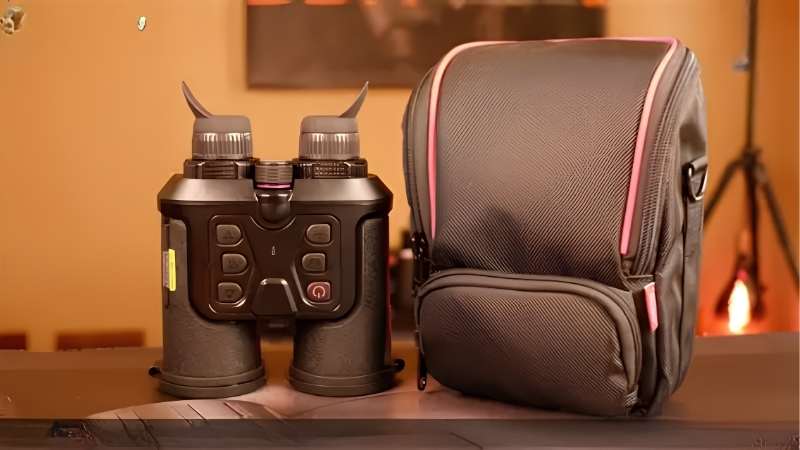
The thermal core, not the lens, determines image quality. Resolutions run from 256×192 on entry units up to 640×480 and beyond on premium models, and a smaller 12-micron pixel pitch sharpens detail. Higher resolution means you can identify an animal, not just spot a warm blob at distance.
Match resolution to your needs. A 384×288 sensor handles most real-world hog and predator hunting inside common distances, while 640-class cores resolve musculature at a quarter mile. Entry 256-class units confirm heat but struggle to identify, so decide whether detection or identification matters most for your hunt.
Detection Range
Detection range tells you how far the unit spots a heat source, and it scales with sensor and lens. Entry models reach a few hundred yards, mid-range units cover 500 to 1,000-plus yards, and premium optics exceed 1,500 yards, enough to scan whole fields and ridgelines.
Remember that detection is not identification. You may sense heat far beyond the distance at which you can confirm a legal target, so match the range to how you actually hunt. For close cover, a shorter-range unit suffices; for open country, invest in reach and a higher-resolution core.
Refresh Rate, Stabilization, and Rangefinding
Refresh rate affects how smooth the image looks when you pan. A 50-hertz rate keeps scanning fluid and responsive, while slower units lag and can show refresh pauses. Some premium binoculars add digital image stabilization, which genuinely tames hand-shake at higher magnification.
An integrated laser rangefinder is a key feature if you spot for a shooter, measuring distance out to 1,000 meters or more on top units. Recording, WiFi app connectivity, ballistic tools, and multiple color palettes like black-hot and white-hot round out the useful extras worth weighing.
Battery, Durability, and Budget Tiers
Battery life ranges from about 6 hours to 15-plus, so match it to your session length, and favor rechargeable or swappable packs for long nights. Look for weatherproof ratings like IP67 or IPX7 and a rugged magnesium or armored body that survives rain, snow, and pack abuse.
Budget tiers are clear: entry units run under roughly 1,500 dollars, the mid-range sweet spot lands around 1,500 to 3,500, and premium models exceed that. These optics are imported and exposed to tariff pressure, so buying ahead of hunting season helps, and thermal-hunting legality varies by state and species, so check local regulations first.
Top Picks for the Best Thermal Binoculars
Our picks for the best thermal binoculars span entry to flagship, from a budget dual-spectrum unit to premium rangefinding binoculars that resolve detail at distance. Configurations below reflect current models, and each names a real trade-off so you can match resolution, range, and price to your hunt.
| Model | Sensor | Detection Range | Rangefinder | Best For |
|---|---|---|---|---|
| Pulsar Merger LRF XP35 | 640-class | ~1,000+ yd | Yes | Best overall premium |
| ATN BinoX 4T 384 | 384×288 | ~1,000 yd | Yes | Best value / battery |
| Hikmicro Habrok 4K HE25L | Thermal + 4K day | Mid-range | Yes | Best budget |
| AGM ObservIR LRF 35-640 | Thermal + 4K CMOS | Long | Yes | Dual-spectrum |
| AGM Explorator FSB50-640 | 640 | Long | Optional | Recording / sharing |
| Pulsar Merger LRF XT50 | High-res | ~1,640 yd | Yes | Flagship stabilized |
Pulsar Merger LRF XP35
The Merger LRF XP35 is the premium all-rounder, pairing a high-resolution 640-class core with a built-in laser rangefinder reaching around 1,000 meters, a rubber-coated magnesium alloy body, and multiple color palettes. Pulsar’s StreamVision 2 app adds cloud storage and easy sharing, and the weatherproof build handles rain and extreme temperatures.
It is a serious investment rather than a casual buy, and the premium price puts it out of reach for many hunters. For those who want top-tier detection, rangefinding, and image quality in one rugged, proven binocular, though, it is among the best thermal binoculars available to civilian buyers.
ATN BinoX 4T 384
The BinoX 4T 384 is the value and endurance pick, combining a 384×288 sensor with 2-8x zoom, an integrated laser rangefinder, image stabilization, HD recording, and WiFi through ATN’s Obsidian computer. Its standout is battery life exceeding 15 hours, making it ideal for long, all-night hunting sessions.
Image quality degrades on very close targets, it is bulkier than a monocular, and the feature-rich interface has a learning curve. For hunters who want genuine binocular thermal with rangefinding and marathon battery life at a mid-range price, though, it delivers exceptional value for the money.
Hikmicro Habrok 4K HE25L
The Habrok is the budget standout, a dual-spectrum unit that pairs a thermal core with a 4K daytime sensor, letting you switch between heat detection and full-color viewing in one device. That versatility at an accessible price makes it a smart entry into thermal for hunters testing the waters.
Its thermal resolution and detection range trail premium models, and the build is more budget-oriented, so it is a starter rather than a long-range specialist. For hunters who want dual thermal-and-daytime capability without a four-figure premium spend, though, it offers remarkable value.
AGM ObservIR LRF 35-640
The ObservIR LRF is the dual-spectrum powerhouse, built on the premise that you should not have to choose between thermal and digital. It houses a 12-micron uncooled thermal sensor alongside a 4K ultra-low-light CMOS sensor, so you switch seamlessly between heat detection and full-color day or high-contrast night viewing.
That capability adds complexity, weight, and premium cost, so it is more device than casual hunters need. For those who want one optic that genuinely does both thermal and enhanced day-and-night digital viewing with a rangefinder, though, it is a uniquely versatile, forward-looking choice.
AGM Explorator FSB50-640
The Explorator FSB50-640 is the pick for capturing and sharing the hunt, a 640-class thermal binocular that supports both optical and thermal recording so you can document detections in the field. Its high-resolution core delivers strong detection and identification, backed by AGM’s rugged, weather-ready construction.
It sits at a premium price and is a specialist tool geared toward serious users, and recording adds a layer to the workflow. For hunters and observers who value high-resolution thermal plus the ability to record and share footage, though, it is a capable and distinctive option.
Pulsar Merger LRF XT50
The Merger LRF XT50 is Pulsar’s stabilized flagship, adding the brand’s first digital image stabilization so high-magnification scanning no longer fights hand-shake. It pairs a rangefinder accurate to a meter out to 1,640 yards, a 17.5-degree field of view, dual battery life near 10 hours, IPX7 waterproofing, and a magnesium body.
Testers note it is expensive and can show occasional refresh pauses, so it is not flawless for the price. But for hunters who want the richest detail, longest rangefinding, and genuine image stabilization in a top-tier binocular, it is among the finest thermal optics money can buy.
Frequently Asked Questions
Quick answers to the best thermal binoculars questions buyers ask, from resolution to legality and how much you really need to spend.
What thermal resolution do I need for hunting?
A 384×288 sensor is the practical sweet spot, handling most hog and predator hunting inside common distances with enough detail to identify targets. Entry 256-class cores confirm heat but struggle to identify, while 640-class sensors resolve fine detail at long range for those who need it and can afford it.
What is the difference between detection and identification range?
Detection range is how far you can spot a heat source, while identification range, always shorter, is how far you can confirm a legal, specific target. You may sense heat well beyond the distance at which you can identify it, so match both to how and where you actually hunt.
Is thermal hunting legal?
It depends entirely on your location. Thermal-hunting legality varies by state and by species, with different rules for hogs, predators, and game animals, and for day versus night use. Always check your current state and local regulations before hunting with thermal optics, since rules change and vary widely.
How much should I spend on thermal binoculars?
Entry units run under about 1,500 dollars, the mid-range sweet spot lands around 1,500 to 3,500 with solid resolution and range, and premium models exceed that with the best sensors and rangefinders. Performance generally scales with price, so match your budget to your hunting distances and how often you go.
See More:
- Best hiking boots for wide feet women
- Best summer hiking boots
- Best hiking boots flat feet
- Best affordable hiking boots
- Best minimal hiking boots
Final Thoughts
The best thermal binoculars are the ones whose sensor resolution, detection range, and features match your hunting distances and budget, not simply the highest-priced model. Match resolution to whether you need detection or identification, weigh rangefinding and battery life, check your local regulations, and buy ahead of hunting season.





Write Your Review
No reviews yet. Be the first to share your experience!