Key takeaways
Best handheld GPS units keep you found when phones fail and trails vanish. This roundup compares five field-tested handhelds across accuracy, battery life, mapping, and price, from a flagship with satellite SOS to a budget unit with week-long battery, so you can navigate confidently deep in the backcountry no matter how far from cell service.
As an Amazon Associate we earn from qualifying purchases.
Our top picks




As an Amazon Associate we earn from qualifying purchases at no extra cost to you. Ratings are shown as listed on Amazon.
By Jake Thompson
How to Choose a Handheld GPS
Before comparing models, think about your trips and what a wrong turn would cost. A weekend day-hiker needs less than a backcountry hunter days from a road. Picking the best handheld GPS for you comes down to four factors that decide whether it earns its place in your pack.
Accuracy and GNSS Support
Accuracy hinges on how the unit tracks satellites. Multi-band receivers follow several frequencies at once, holding tight accuracy under heavy canopy and in canyons where single-band units drift. For off-trail navigation and precise waypoints, multi-band is worth the premium; for open trails, standard tracking is usually fine.
More satellite systems help too. Units that use several constellations lock on faster and stay steadier in difficult terrain. The best handheld GPS for rugged, off-trail travel leans on multi-band accuracy, while casual trail users can save money with a solid standard receiver.
Battery Life and Power Type
Battery life sets your range between charges. Rated numbers assume ideal use, so real hiking with frequent screen checks often delivers half to two-thirds of the claim, and cold weather cuts it further. Plan a generous margin for multi-day and winter trips where a dead unit is dangerous.
Power type matters in the field. Units that take AA batteries let you swap fresh cells in under a minute with no outlet, a real advantage on long trips, while internal rechargeable packs are convenient near power. Match the power system to how and where you resupply energy.
Mapping, Screen, and Extras
Mapping and screen quality drive daily use. Preloaded topographic maps, ample storage, and a bright, sunlight-readable display make navigation easy, and color screens show terrain far better than monochrome. Larger screens read well but add weight and drain power, so balance clarity against portability for your trips.
Extras add real value. Some units bundle satellite messaging and SOS for a lifeline beyond cell service, while sensors like a barometric altimeter and compass aid navigation. Decide which extras you truly need, since the best handheld GPS for you is the one whose features match your actual trips.
Top Picks: The Best Handheld GPS Units
With those factors in mind, here are five of the best handheld GPS units on the market, each a clear winner for a different kind of hiker. The table sums up the essentials, and the reviews below explain who each unit suits and the trade-offs to weigh before you buy.
| Device | GNSS | Battery | Screen | Best For |
|---|---|---|---|---|
| Garmin GPSMAP 67i | Multi-band | Up to ~180 hr | 3″ color | Overall + inReach |
| Garmin GPSMAP 65s | Multi-band | AA-powered | Color | No subscription |
| Garmin eTrex SE | Standard | Up to ~168 hr | Monochrome | Budget |
| Garmin eTrex 32x | Standard | AA-powered | Color topo | Affordable color |
| Garmin Montana 700 | Standard | Long | Large touchscreen | Big screen |
Garmin GPSMAP 67i – Best Overall
The Garmin GPSMAP 67i is the flagship and, for many, the best handheld GPS you can buy. It combines multi-band accuracy and full offline topo maps with built-in inReach satellite messaging and SOS, a bright three-inch screen, and up to around 180 hours of battery life for demanding backcountry trips.
It is expensive, and the satellite messaging needs a subscription. But for hikers who want top accuracy, long battery, and a built-in emergency lifeline in one rugged unit, it is the most complete handheld on the market.
Garmin GPSMAP 65s – Best Without a Subscription
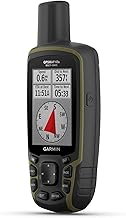
The Garmin GPSMAP 65s delivers the same multi-band accuracy as the flagship without the inReach or the price. It runs on two AA batteries you can swap in the field, loads detailed topo maps, and posts pinpoint accuracy, making it a favorite for hikers who want precision without any subscription.
It lacks satellite messaging and USB-C, and multi-day battery use is its weaker point. But for navigation-focused hikers who value field-swappable power and top accuracy, it is one of the smartest buys here.
Garmin eTrex SE – Best Budget
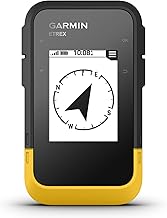
The Garmin eTrex SE proves reliable navigation need not cost much. It runs a very long time in standard mode, adds a modern USB-C port, and works fully standalone with no subscription, making it an excellent budget backup or first GPS for hikers who mainly need direction and waypoints.
Its monochrome screen lacks detailed color mapping, and it has no satellite messaging. But at a fraction of a flagship’s price, its long battery life and simple, dependable performance make it a standout value.
Garmin eTrex 32x – Best Affordable Color
The Garmin eTrex 32x adds color topo maps and expandable storage at a friendly price. It runs on AA batteries, includes a barometric altimeter and compass, and accepts a microSD card for more maps, giving day hikers and geocachers a capable color unit without a premium cost.
Its standard GNSS drifts more than multi-band units in tough terrain, and the small screen is dated. But for affordable color mapping and reliable AA-powered navigation, it remains a popular, practical choice.
Garmin Montana 700 – Best Big Screen
The Garmin Montana 700 centers on a large, glove-friendly touchscreen that reads like a phone. Its rugged, MIL-STD build shrugs off shock and weather, it mounts in a vehicle for overlanding, and the roomy display makes detailed maps and satellite imagery genuinely easy to read on the move.
It is heavy and bulky next to a compact handheld, and the big screen uses more power. But for hikers who also go off-roading, or anyone who wants the clearest possible map view, its screen is unmatched among handhelds.
Frequently Asked Questions
A few questions come up again and again when hikers shop for the best handheld GPS. Here are quick, practical answers to help you finalize your choice.
Is a handheld GPS better than a phone?
A handheld lasts far longer, survives abuse, and often works where phones cannot, making it a serious safety upgrade for remote or multi-day trips. A phone with offline maps handles many day hikes, but for true backcountry travel, a dedicated unit is far more dependable when it matters.
Do I need multi-band GNSS?
Multi-band matters most for off-trail navigation and in challenging terrain like canyons and dense forest, where it holds accuracy that standard units lose. For open trails and casual use, a standard receiver is plenty. Choose multi-band if precise, reliable positioning in tough conditions is important to you.
Which units work without a subscription?
Most handhelds navigate fully without any subscription, including the eTrex and GPSMAP 65s series. Only inReach-equipped models like the 67i need a plan, and only for satellite messaging and SOS. If you skip satellite communication, you can navigate, map, and mark waypoints with no ongoing fees at all.
How much should I spend on a handheld GPS?
Budget units around $130 handle core navigation well, mid-range color models add better mapping, and flagships with multi-band accuracy and satellite SOS reach several hundred dollars. Match the spend to your trips: save on a simple backup, or invest in a full-featured unit for remote, off-grid travel.
See More:
- Best camp chair
- Lightweight camp chair
- Camping table review
- Backpacking cookware set
- Camp stove review
Final Thoughts
The best handheld GPS is the one whose accuracy, battery, and features match your trips. The GPSMAP 67i leads overall with a built-in lifeline, the 65s drops the subscription, and the eTrex SE and 32x cover budget and affordable color, while the Montana 700 offers the clearest screen. Weigh what you truly need, then pick the unit that keeps you found off the grid.