Key takeaways
- Load rating: Check whether the rating applies per bracket, per pair, or to the entire shelf assembly. It should also state the mounting surface and fastener requirements.
- Adjustment range: Slots or telescoping sections help compensate for uneven walls and allow the shelf to be leveled after loading.
- Mounting depth: The horizontal arm should support a substantial portion of the shelf without protruding beyond its front edge.
- Material thickness: A thicker steel bracket generally resists bending better than a thin decorative bracket, but geometry and wall attachment matter just as much.
- Corrosion resistance: Powder coating works well indoors, zinc plating suits dry utility areas, and stainless steel is preferable outdoors or near saltwater.
Best Anti-Sag Brackets
The best anti-sag brackets depend on the shelf’s span, load, material, and whether you want a discreet retrofit or a heavy-duty permanent fix: for most home shelving, choose a steel or aluminum bracket rated for at least 1.5 times the expected load, with adjustment slots and corrosion-resistant hardware.
Quick picks by situation
| Situation | Best bracket type | Why it fits | Typical budget |
|---|---|---|---|
| Light indoor shelf up to 36 in. | Low-profile steel center support | Inexpensive, easy to hide, enough for books and pantry goods | $8–$20 per pair |
| Long hardwood or plywood shelf | Wide adjustable steel shelf bracket | Multiple mounting holes and vertical adjustment reduce installation errors | $15–$40 per pair |
| Garage or utility shelving | Heavy-gauge angle bracket or slotted standard system | Higher capacity and easier repositioning as storage needs change | $20–$70 per pair |
| Outdoor, damp, or coastal location | 316 stainless steel bracket | Best resistance to moisture and salt exposure | $30–$100 per pair |
| Finished furniture or floating shelf | Hidden steel support or underside reinforcement | Preserves the appearance while supporting the shelf from the center | $25–$90 per shelf |
What makes an anti-sag bracket effective?
A shelf sags because its material flexes between supports. A bracket helps in one of three ways: it adds a support near the center, transfers weight to the wall, or stiffens the shelf itself. The most suitable design is not necessarily the bracket with the highest advertised capacity.
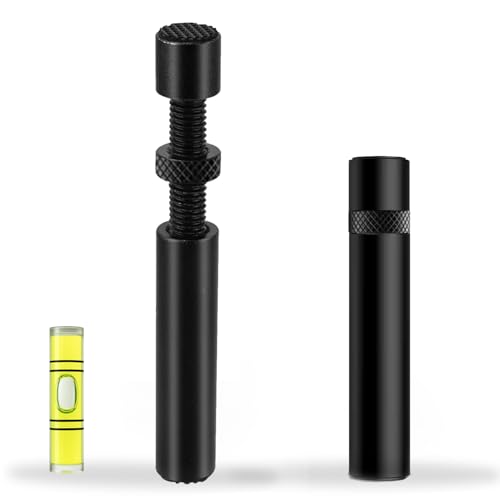
California JOS GPU Support Bracket Graphics Card Brace Anti-Sag Holder Height Adjustable Video Card Stand Large(1 PCAK, Black)
Included for 'Best Anti-Sag Brackets' because the listing specifies Black), details this guide uses to compare options.
View on Amazon
TEAMOLA Tall GPU Support Bracket - Adjustable GPU Anti-Sag Stand GPU Mount
Included for 'Best Anti-Sag Brackets' because the listing specifies Adjustable GPU Anti-Sag Stand GPU Mount, details this guide uses to compare options.
View on Amazon
Aivalas GPU Support Bracket, Graphics Video Card Brace with Height Adjustable, Anti Sag Holder for Universal Graphics Card Sag, GPU Stand with Magnet and Rubber Pad (Black)
Included for 'Best Anti-Sag Brackets' because the listing specifies Graphics Video Card Brace with Height Adjustable and Anti Sag Holder for Universal Graphics Card Sag, details this guide uses to compare options.
View on Amazon
LIAN LI GB-002 Multi-Way GPU Anti-Sag Bracket, ATX/E-ATX, Black
Included for 'Best Anti-Sag Brackets' because the listing specifies ATX/E-ATX and Black, details this guide uses to compare options.
View on Amazon- Load rating: Check whether the rating applies per bracket, per pair, or to the entire shelf assembly. It should also state the mounting surface and fastener requirements.
- Adjustment range: Slots or telescoping sections help compensate for uneven walls and allow the shelf to be leveled after loading.
- Mounting depth: The horizontal arm should support a substantial portion of the shelf without protruding beyond its front edge.
- Material thickness: A thicker steel bracket generally resists bending better than a thin decorative bracket, but geometry and wall attachment matter just as much.
- Corrosion resistance: Powder coating works well indoors, zinc plating suits dry utility areas, and stainless steel is preferable outdoors or near saltwater.
Head-to-head: the main bracket designs
Fixed steel angle brackets
Fixed angle brackets are the simplest and usually the best value. They have a vertical plate against the wall and a horizontal plate beneath the shelf. A pair spaced near the ends of the shelf can prevent sag on moderate spans, while a third bracket is often needed in the middle of a long shelf.
Choose brackets with at least two wall fasteners per vertical plate and a horizontal arm that reaches 60% or more of the shelf depth. They work particularly well with solid wood and plywood. They are less suitable for thin particleboard because concentrated screw loads can pull out or crush the board.
Adjustable or slotted brackets
Adjustable brackets use vertical slots, pivoting arms, or telescoping sections. Their main advantage is installation tolerance rather than unlimited capacity. Slots let you level a shelf on a slightly uneven wall, while adjustable arms accommodate different shelf depths.
They are a strong choice for renters, utility rooms, and projects where the final shelf position may change. Tighten every adjustment fastener firmly and recheck it after the shelf has been loaded; a loose pivot can allow gradual downward movement even when the steel itself is strong.
Hidden shelf supports
Hidden supports are installed into a drilled channel in the shelf or into a concealed cleat. They give the cleanest appearance, but installation is less forgiving. The wall must provide a solid fixing point, and the shelf material must be thick and strong enough to hold the concealed rods.
Use them for solid timber or well-built plywood shelves. Avoid relying on a concealed support in weak hollow-core shelving or thin melamine board unless the manufacturer specifically permits it. A visible center support is safer than an invisible support that is undersized or poorly anchored.
Slotted standards and twin-track systems
Standards and brackets are ideal where shelves need frequent repositioning. The vertical tracks distribute loads through several wall screws, and the brackets can be moved without drilling new holes. This is often the most practical option for garages, workshops, and changing storage areas.
The limitation is appearance: the tracks remain visible. Capacity also depends on the spacing between standards, the type of wall anchor, and how far the shelf extends beyond the bracket.
Load ratings and shelf materials compared
| Bracket style | Typical steel thickness | Useful adjustment | Typical rated capacity* | Best shelf materials |
|---|---|---|---|---|
| Decorative light-duty angle | 1.5–2 mm | Usually none | 25–75 lb per pair | Solid wood, light plywood |
| Heavy fixed angle | 2.5–4 mm | Minor leveling through holes | 100–250 lb per pair | Hardwood, plywood, laminated board |
| Adjustable steel bracket | 2–3 mm | 1–3 in. vertical or depth adjustment | 75–200 lb per pair | Wood, plywood, utility shelving |
| Slotted standard system | 1.5–3 mm | Usually 1–2 in. shelf-height increments | 100–400 lb per shelf | Plywood, solid wood, steel shelving |
| 316 stainless hidden support | 3–6 mm rod or plate | Limited after installation | 50–200 lb per shelf | Solid timber, thick plywood |
*These are common market ranges, not guarantees. Actual capacity can be much lower when the bracket is mounted in drywall alone, installed with short screws, spaced too far apart, or loaded near the front edge.
How to choose the correct capacity
Estimate the shelf contents rather than choosing by shelf size alone. For example, suppose a 48-inch shelf will hold 80 lb of books and containers. Add 20% for uneven loading and occasional extra weight: 80 × 1.2 = 96 lb. A sensible target is therefore a bracket system rated for at least 150 lb under the same mounting conditions, giving a useful safety margin.
Long shelves also need help with flex between brackets. If a 48-inch shelf has brackets only at the ends, add a center bracket or a continuous cleat. If the shelf is deeper than about 12 inches, use brackets with diagonal braces or a substantial rear support; a small flat plate may resist vertical force but still allow the front edge to tilt.
Installation: the details that determine real-world performance
- Find the structure. Mark wall studs, masonry joints, or a properly installed horizontal cleat. Drywall anchors alone are appropriate only for light loads and brackets specifically approved for them.
- Measure bracket spacing. Keep brackets several inches from each end, and add a center or intermediate bracket when the shelf is long, heavily loaded, or made from flexible board.
- Check the shelf material. Pre-drill solid wood and plywood. For particleboard or melamine, use the fasteners and edge distances specified by the bracket maker; avoid overtightening, which can strip the core.
- Level the wall plates. Use a spirit level before fully tightening. Adjustable slots are useful here, but they do not compensate for a bracket mounted at a severe angle.
- Use suitable fasteners. Wood screws belong in studs or a cleat; masonry requires masonry screws or anchors; metal framing may require toggle-style anchors or a reinforced fixing point.
- Attach the shelf. Secure it to the horizontal arms through pre-drilled holes. This stops the shelf sliding and prevents the load from shifting forward.
- Load gradually. Put heavier items over the supports first, then inspect for tilt, screw movement, or cracking before reaching the intended load.
Corrosion resistance and ownership realities
Indoor powder-coated steel is adequate for dry rooms, but chipped coating can expose bare steel. Wipe brackets occasionally with a dry or lightly damp cloth and touch up scratches before rust spreads. Zinc-plated brackets tolerate occasional humidity but are not the best choice for direct rain.
For outdoor use, choose stainless steel fasteners that match the bracket. In coastal environments, 316 stainless steel generally offers better resistance to salt than 304 stainless steel. Rinse exposed hardware with fresh water periodically and inspect for discoloration, pitting, and loosened screws.
The parts most likely to wear are adjustment threads, pivot washers, and wall fasteners—not the bracket plate itself. A shelf that gradually droops may indicate a loosening fastener or crushed shelf material rather than inadequate steel strength. Remove the load, inspect the fixing points, and replace damaged anchors or board instead of simply tightening harder.
Final buying advice
For a normal indoor shelf, the best anti-sag brackets are heavy-duty steel brackets with a clear per-pair load rating, at least two wall fasteners per plate, and enough depth to support most of the shelf. Choose adjustable brackets when leveling or future repositioning matters, a slotted standard system for frequently changing storage, and stainless steel when moisture or salt is unavoidable. Above all, match the bracket rating to the wall, fasteners, shelf material, and spacing—the weakest part of that combination determines the safe result.