Key takeaways
- Fipronil – A slow-acting neurotoxin that ants carry back to the nest, poisoning the colony through contact and ingestion over several days. Effective at very low concentrations, which makes it common in perimeter granules and some gel baits. Moderately rain-fast once it binds to soil, usually within a few hours of drying.
- Hydramethylnon – A metabolic inhibitor used almost exclusively in bait form. It’s slow by design (3–10 days) because ants need time to feed it to the queen and larvae before they die. Useless as a repellent spray; it only works as bait.
- Bifenthrin – A pyrethroid that kills on contact, often within minutes to hours. Great for a visible, fast knockdown and strong as a perimeter barrier, but it doesn’t translocate well into the nest, so surviving workers deeper in the colony can repopulate.
- Borax (sodium tetraborate) – The classic DIY and low-toxicity bait ingredient, usually mixed with sugar or protein. Slow (several days to two weeks for full colony collapse), gentler on surrounding soil life, and the standard choice for anyone wanting to avoid synthetic pyrethroids near edible plants.
What's inside
The best ant killer for outdoor use depends on whether you need fast knockdown of ants you can see or slow colony elimination that reaches the queen. For most yards, a combination approach wins: a slow-acting bait (hydramethylnon or borax-based) placed at trails and nest sites to collapse the colony, paired with a bifenthrin or fipronil granule or spray around the foundation perimeter to stop new ants from entering. Relying on one product alone usually means either fast surface kills with the colony still thriving underground, or slow colony knockdown while ants keep crossing your threshold in the meantime.
How the Active Ingredients Actually Differ
The ingredient list matters more than the brand name on the bag. Each active compound has a different kill speed, a different mechanism, and a different tolerance for rain.

Raid MAX Perimeter Protection Ant & Roach Killer Spray, Prevents Bugs by Killing for Up to 18 Months, Indoor and Outdoor Use, 22oz
Included for 'Best Ant Killer for Outdoor Use: Baits, Granules, and Sprays Compared' because the listing specifies Prevents Bugs by Killing for Up to 18 Months and Indoor and Outdoor Use, details this guide uses to compare options.
View on Amazon
Raid Outdoor Fire Ant Mound Killer Dust Insecticide for Outside, 24 Oz
Included for 'Best Ant Killer for Outdoor Use: Baits, Granules, and Sprays Compared' because the listing specifies 24 Oz, details this guide uses to compare options.
View on Amazon
Raid MAX Liquid Ant Killer Baits, Indoor & Outdoor Use, 8 Count
Included for 'Best Ant Killer for Outdoor Use: Baits, Granules, and Sprays Compared' because the listing specifies Indoor & Outdoor Use and 8 Count, details this guide uses to compare options.
View on Amazon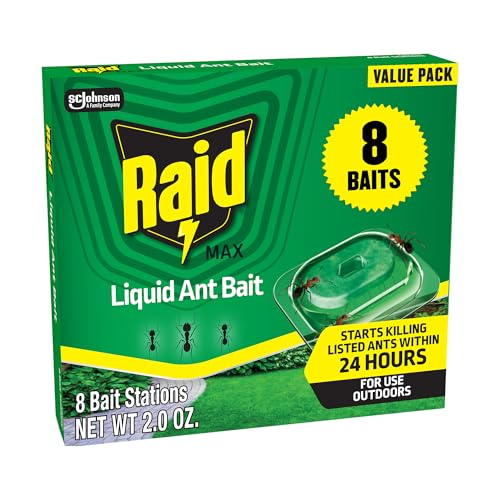
Raid Outdoor Liquid Ant Bait, 8 Ready-to-Use Ant Bait Stations, 2 fl oz
Included for 'Best Ant Killer for Outdoor Use: Baits, Granules, and Sprays Compared' because the listing specifies 8 Ready-to-Use Ant Bait Stations and 2 fl oz, details this guide uses to compare options.
View on Amazon- Fipronil – A slow-acting neurotoxin that ants carry back to the nest, poisoning the colony through contact and ingestion over several days. Effective at very low concentrations, which makes it common in perimeter granules and some gel baits. Moderately rain-fast once it binds to soil, usually within a few hours of drying.
- Hydramethylnon – A metabolic inhibitor used almost exclusively in bait form. It’s slow by design (3–10 days) because ants need time to feed it to the queen and larvae before they die. Useless as a repellent spray; it only works as bait.
- Bifenthrin – A pyrethroid that kills on contact, often within minutes to hours. Great for a visible, fast knockdown and strong as a perimeter barrier, but it doesn’t translocate well into the nest, so surviving workers deeper in the colony can repopulate.
- Borax (sodium tetraborate) – The classic DIY and low-toxicity bait ingredient, usually mixed with sugar or protein. Slow (several days to two weeks for full colony collapse), gentler on surrounding soil life, and the standard choice for anyone wanting to avoid synthetic pyrethroids near edible plants.
Kill Speed vs. Colony-Level Knockdown
This is the real tradeoff, and it’s where most buying mistakes happen. Fast-acting contact killers like bifenthrin look like they’re working because ants die on contact within the hour, but if the queen never ingests it, the colony rebuilds in a few weeks. Slow-acting baits look like they’re failing because nothing dies for days, but that delay is what lets foraging ants carry the poison back to feed the colony, including the queen.
| Active Ingredient | Visible Kill Speed | Colony Knockdown | Rain-Fastness |
|---|---|---|---|
| Bifenthrin | Minutes to 2 hours | Low to moderate (contact only) | Moderate once dry (~2–3 hrs) |
| Fipronil | 24–72 hours | High (translocates to nest) | Good once bound to soil |
| Hydramethylnon | 3–10 days | High (bait-delivered to queen) | Poor if bait station floods |
| Borax bait | 5–14 days | Moderate to high | Poor; dissolves/washes out |
Reapplication After Rain or Irrigation
Label directions tell you the reapplication interval, but the practical rule of thumb is this: granules and sprays with bifenthrin or fipronil need roughly 4–6 hours of dry time to bind to soil particles before a watering cycle or rainfall washes them off the surface. If sprinklers run that same evening, the product underperforms and you’re effectively starting over. Liquid baits and gel baits sheltered in stations hold up better since the bait itself isn’t exposed to runoff, but outdoor granular bait left uncovered on bare soil can be ruined by a single heavy rain.
- Bifenthrin granules/spray: reapply every 30–90 days under normal conditions; reapply immediately after any rain exceeding roughly half an inch if applied within the prior 24 hours.
- Fipronil granules: reapply every 60–90 days; more rain-tolerant than bifenthrin once cured.
- Bait stations (hydramethylnon or borax): check every 1–2 weeks, refill when empty rather than on a fixed schedule, and swap exposed bait after heavy rain.
Coverage: What a Bag or Bottle Actually Treats
Package sizes vary enough between brands that it’s worth doing the math before buying multiples. These are typical figures found on current product labels, not brand-specific guarantees.
| Format | Typical Package Size | Rated Coverage | Approx. Cost per 1,000 sq ft |
|---|---|---|---|
| Bifenthrin granules | 10–25 lb bag | 5,000–10,000 sq ft | $6–$12 |
| Fipronil granules | 4–12 lb bag | 2,000–4,000 sq ft | $10–$18 |
| Liquid bifenthrin concentrate | 32 oz bottle (concentrate) | 8,000–16,000 sq ft diluted | $4–$8 |
| Borax/sugar bait stakes or stations | Pack of 8–12 stations | Spot treatment only (not sq ft rated) | N/A – priced per station, ~$2–$4 each |
For a typical quarter-acre lot (about 10,890 sq ft), that works out to roughly one 25 lb bag of bifenthrin granules for a full perimeter and lawn treatment, versus two to three bags of fipronil granules to cover the same ground at double the per-bag cost. That’s why fipronil tends to get reserved for foundation perimeters and problem zones rather than whole-yard broadcast, while bifenthrin is the more economical choice for broad lawn coverage.
Matching the Format to Where You’re Treating
Where the product goes matters as much as what’s in it, especially with pets, kids, or food plants in the yard.
- Vegetable beds and edible gardens: Borax-based baits in covered stations are the standard low-toxicity choice; keep stations away from root zones and never broadcast granular pesticide directly onto soil growing food. Diatomaceous earth (not a chemical active, but mechanical) is another option for light infestations right at the plant base.
- Lawns with pets: Look for labels specifying pet-safe-when-dry intervals, typically requiring the treated area to dry fully (and often a watering-in step) before pets re-enter, usually listed as a 24-hour restriction on bifenthrin and fipronil products. Keep pets off treated turf until the label’s re-entry interval has passed.
- Foundation perimeters: This is where fast, rain-fast granules or liquid barrier sprays (bifenthrin or fipronil) earn their keep, since the goal is a continuous chemical barrier ants won’t cross, not colony elimination.
- Active nest mounds (fire ants, carpenter ants near structures): Mound drenches or injectable bait formulations work faster directly on a visible nest than broadcast granules, since you’re treating the colony at its source rather than waiting for foraging ants to find bait.
Decision Guide by Situation
| Your Situation | Best Approach |
|---|---|
| Ants trailing into the house along the foundation | Bifenthrin or fipronil granules/liquid barrier around the perimeter, reapplied every 60–90 days |
| Visible mound in the lawn, want it gone fast | Direct mound drench or fast-acting granule applied right on the nest |
| Ants near vegetable beds or edible plants | Borax or hydramethylnon bait stations kept away from root zones; avoid broadcast sprays |
| Dogs or kids use the yard regularly | Granules watered in and allowed to dry fully before re-entry; favor contained bait stations over open bait |
| Whole-yard ant problem, budget-conscious | Bifenthrin granules broadcast across the lawn; cheapest per-square-foot option |
| Recurring colony that keeps coming back | Slow-acting bait (hydramethylnon or borax) to hit the queen, not just contact killers |
Common Mistakes That Waste a Treatment
- Watering in granules too soon: Most labels want the product to sit dry for several hours before any irrigation. Watering immediately washes the active ingredient off target.
- Mixing bait with repellent spray in the same zone: If you spray a fast-acting repellent right where you’ve placed bait, ants avoid the area entirely and never carry the bait back to the colony.
- Treating only visible trails: Surface ants are a small fraction of the colony. Products that don’t reach the nest give the appearance of control without actually reducing colony size.
- Ignoring the re-treatment window: Letting a 60–90 day product run past a year because “it worked” lets perimeter barriers break down well before the next visible ant problem shows up.
For large infestations, recurring structural damage from carpenter ants, or situations involving stinging fire ant mounds near where people or pets regularly walk, consulting a licensed pest control professional is worth the cost before relying solely on retail products.