Key takeaways
- Capacity and feed rate: Match usable batch volume to the scraps you actually produce. A larger stated bucket does not mean it can accept every kind of waste; bones, liquids, packaging, and large fibrous pieces may be restricted.
- Cycle time: Electric processors may finish a run in hours, but that is a drying/grinding cycle. Outdoor compost needs time for decomposition and curing. Plan garden use around the latter, not the appliance timer.
- Odor control: Seals and activated-carbon filters reduce escaping odors, but filters are consumables. Replace them on schedule, clean the lid and bucket, and avoid leaving wet scraps in a warm machine for days.
- Noise and energy: Countertop units use motors, fans, and sometimes grinding components, so they are audible; avoid running one beside a bedroom or during quiet hours. For operating cost, multiply the machine’s rated kilowatts by cycle hours and your electricity rate. For example, a 0.5 kW machine running four hours uses 2 kWh; at $0.20/kWh, that is $0.40 per cycle. Use the actual rating and cycle duration for your model.
- Maintenance and wear: On electric units, filters and bucket seals are routine consumables; buildup around the lid and grinding area is a common source of odor or poor operation. On outdoor units, hinges, latches, bearings, and UV-exposed plastic are likely wear points. Keep moving parts clean and do not force a jammed drum or motor.
- Finished-compost quality: A dark, dry, reduced-volume output can still contain incompletely decomposed material. Mature compost should be earthy-smelling, relatively uniform, and no longer heating after turning. If uncertain, cure the output in a separate compost pile before using it around plants.
Best Commercial Composting Machines for Home Gardens: Picks by Capacity and Use
The best commercial composting machine for a home garden is a small in-vessel composter sized to your weekly food-scrap volume—not the biggest machine you can fit. For frequent batches and fast processing, the Lomi 2 is a convenient countertop preprocessor; for a larger household that wants an enclosed, automated unit, the FoodCycler Eco 5 is another option. If you want actual compost rather than dried, ground scraps, a rotating tumbler or insulated outdoor compost bin is usually the better choice, even though it takes weeks or months rather than hours.
That distinction matters: countertop electric machines commonly dry and grind scraps, producing material that still needs curing or further composting before it behaves like mature garden compost. “Commercial” is also used loosely in product searches. The machines below are consumer products, not continuous-feed commercial systems designed for restaurants or municipal sites.

The Lab Made Electric Kitchen Composter – 3.5L Countertop Compost Bin
Included for 'Best Commercial Composting Machines for Home Gardens' because the listing specifies 3.5L Countertop Compost Bin, details this guide uses to compare options.
View on Amazon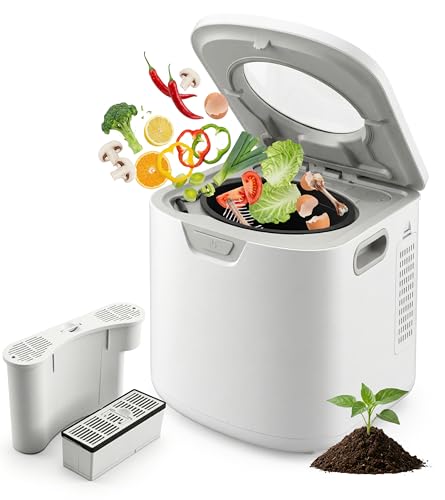
NutriChef 4 Quart Electric Kitchen Composter | Smart Countertop Composter Includes 2 Odorless Carbon Filters | Electric Compost Bin for Indoor Use | 3 Volume Based Modes Small, Medium & Large | White
Included for 'Best Commercial Composting Machines for Home Gardens' because the listing specifies Electric Compost Bin for Indoor Use and 3 Volume Based Modes Small, details this guide uses to compare options.
View on Amazon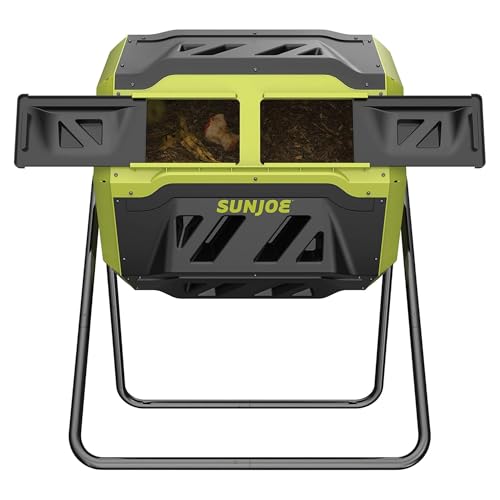
Sun Joe Outdoor Tumbling Composter, Dual Chamber, 2-10 Weeks Compost, Helps Reduce Carbon Footprint and Waste with Advanced Aeration, 42 Gal, SJ-CMPS1
Included for 'Best Commercial Composting Machines for Home Gardens' because the listing specifies Dual Chamber and 2-10 Weeks Compost, details this guide uses to compare options.
View on Amazon
SUPER DEAL 53 Gallon Dual Chamber Compost Tumbler, 360° Rotating Composter
Included for 'Best Commercial Composting Machines for Home Gardens' because the listing specifies 360° Rotating Composter, details this guide uses to compare options.
View on AmazonCompare the options
| Option | Published capacity or size | Typical processing time | Power and noise | Best fit |
|---|---|---|---|---|
| Lomi 2 | About 3 L per cycle | Roughly 3–20 hours, depending on mode and load | Electric; fan and grinding noise during operation | Small batches and users who value a compact indoor appliance |
| FoodCycler Eco 5 | About 5 L bucket capacity | Often several hours; varies with load and cycle | Electric; enclosed, with active odor filtration | Households producing more scraps between emptying |
| Joraform JK 270 | 270 L total capacity | Weeks, depending on feedstock and conditions | Manual turning; no powered cycle | Gardeners wanting a large, insulated outdoor composter |
| Two-chamber rotating tumbler | Commonly 100–200 L total | About 6–12 weeks in favorable conditions | Manual turning; no electrical use | Regular garden-waste mixing and staggered batches |
Capacities and cycle durations are approximate product-category figures, not guarantees. Models and specifications can change; check the current manufacturer listing, especially for bucket volume, dimensions, electrical requirements, and included filters. A short machine cycle is not the same as a finished composting cycle.
Choose by the job you need done
For a small kitchen and frequent scraps: Lomi 2
Lomi 2 is a countertop electric processor with a small batch size and selectable processing modes. Its main advantage is convenience: scraps go into an enclosed bucket, and a filter helps limit odors. It makes more sense for someone who generates modest quantities and wants to reduce the volume of scraps before adding them to an outdoor compost system or following the manufacturer’s guidance for using the output.
Its limitation is throughput. A household that produces several liters of scraps daily may need to run it often, and the finished material should not automatically be treated as mature compost. Budget for electricity and replacement odor-control filters, and leave room around the unit for ventilation and cleaning.
For a bigger countertop batch: FoodCycler Eco 5
The Eco 5 offers a larger bucket than many compact food recyclers, so it can suit a household that wants to collect scraps for longer before running a cycle. The enclosed design and replaceable odor-filter media help make indoor operation practical, but they do not eliminate every smell—especially if the bucket is overloaded, dirty, or left with wet scraps for too long.
As with other electric processors, expect drying and grinding rather than a complete biological composting process. The output may need mixing into soil or curing with a carbon-rich material, depending on the manufacturer’s directions and what you put in. Confirm that the unit’s footprint, cycle duration, and filter costs work for your routine before buying.
For real compost at garden scale: Joraform JK 270 or a tumbler
The Joraform JK 270 is an insulated, dual-chamber outdoor composter with far more volume than a countertop appliance. The insulation and chamber design support active composting, while the separated chambers let you add fresh material to one side as the other batch matures. It still needs a balanced mix, adequate moisture, and regular turning; an insulated drum does not correct a pile that is too wet or mostly food scraps.
A two-chamber tumbler is a less expensive alternative for gardeners with room to turn and unload it. Look for sturdy supports, a secure latch, corrosion-resistant hardware, and a drum that can be rotated when full. Tumblers are convenient for keeping pests out, but a full drum can be heavy to turn, and small capacity limits how much leaves or prunings you can process.
What matters most in ownership
- Capacity and feed rate: Match usable batch volume to the scraps you actually produce. A larger stated bucket does not mean it can accept every kind of waste; bones, liquids, packaging, and large fibrous pieces may be restricted.
- Cycle time: Electric processors may finish a run in hours, but that is a drying/grinding cycle. Outdoor compost needs time for decomposition and curing. Plan garden use around the latter, not the appliance timer.
- Odor control: Seals and activated-carbon filters reduce escaping odors, but filters are consumables. Replace them on schedule, clean the lid and bucket, and avoid leaving wet scraps in a warm machine for days.
- Noise and energy: Countertop units use motors, fans, and sometimes grinding components, so they are audible; avoid running one beside a bedroom or during quiet hours. For operating cost, multiply the machine’s rated kilowatts by cycle hours and your electricity rate. For example, a 0.5 kW machine running four hours uses 2 kWh; at $0.20/kWh, that is $0.40 per cycle. Use the actual rating and cycle duration for your model.
- Maintenance and wear: On electric units, filters and bucket seals are routine consumables; buildup around the lid and grinding area is a common source of odor or poor operation. On outdoor units, hinges, latches, bearings, and UV-exposed plastic are likely wear points. Keep moving parts clean and do not force a jammed drum or motor.
- Finished-compost quality: A dark, dry, reduced-volume output can still contain incompletely decomposed material. Mature compost should be earthy-smelling, relatively uniform, and no longer heating after turning. If uncertain, cure the output in a separate compost pile before using it around plants.
A practical buying decision
| Your situation | Better direction | Why |
|---|---|---|
| Apartment or patio, low-to-moderate scraps, little outdoor space | Compact electric processor | Small footprint and enclosed operation; treat output as a preprocessed material unless fully cured. |
| Several people cooking daily, indoor convenience is the priority | Higher-capacity electric processor such as the Eco 5 | Fewer, larger batches than a very small unit; factor in filter replacement and electricity. |
| Large garden, steady scraps plus leaves or shredded cardboard | Insulated dual-chamber composter | Produces biologically composted material at a more useful garden scale. |
| Lowest ongoing energy cost and room to turn a bin | Manual tumbler or stationary compost bin | No powered cycle or electrical bill; requires space, balancing, and physical handling. |
For serious gardeners, the best overall choice is usually an outdoor composting system with enough capacity for both nitrogen-rich kitchen scraps and carbon-rich dry material. Choose an electric machine when space, convenience, or indoor containment is the deciding factor—not because an hours-long cycle promises finished garden compost. Before purchase, measure the installation spot, check the current manual for accepted inputs and cleaning instructions, and price replacement filters or hardware as part of the total cost.