Key takeaways
- Very low carrying weight: Most personal filters weigh approximately 2 to 3 ounces before adding a pouch or bottle. That is far lighter than carrying several liters of water.
- Small storage footprint: A straw-style filter is generally around 6 to 9 inches long and about 1 to 2 inches wide, so it fits easily in a side pocket or emergency drawer.
- No batteries or electricity: These filters work by suction or hand pressure. You do not need an outlet, charger, or a stated wattage capacity.
- Reusable: Unlike single-use bottled water, a filter can serve across multiple trips. Follow the care and replacement instructions rather than assuming it lasts forever.
- Useful during interruptions: A filter can provide an extra option during a short-term outage, evacuation, canceled flight, or unexpected delay.
- Lower long-term cost than bottled water: A $15 to $30 filter can pay for itself quickly if it prevents repeated purchases of individual bottles during travel or outdoor trips.
- Less plastic waste: You can use an existing bottle, cup, or pouch instead of buying a new disposable container for every drink.
- Easy to share in some situations: A squeeze-style system can often filter water into a separate bottle, while a personal straw is usually intended for one person drinking directly.
What's inside
The Short Answer
Yes—if you regularly travel, hike, camp, or prepare for interruptions in your water supply. A personal water filter is worth carrying when you may need to drink from a stream, lake, or questionable tap and want a reusable backup that weighs only a few ounces. It is not worth carrying as an everyday accessory if you already have dependable, treated water everywhere you go.
The key condition is your water source. Most compact filters remove bacteria, parasites, sediment, and unpleasant particles, but they generally do not remove viruses, dissolved chemicals, fuel, salt, or every form of agricultural runoff. “Filtered” does not automatically mean “safe from every hazard.”
As an Amazon Associate we earn from qualifying purchases at no extra cost to you. Product prices and availability are accurate as of the date shown and are subject to change.

What You Actually Get
A personal water filter is a small, non-powered device that forces water through a fine membrane. The simplest models are straw-shaped: place one end in a bottle, cup, or natural water source and drink through the other. Others attach to a soft squeeze pouch or a standard bottle, allowing you to filter water into a container before drinking.
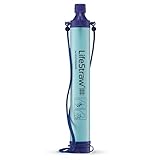
The LifeStraw Personal Water Filter, listed at about $14.99, is the basic straw-style option. It is roughly 9 inches long, about 1 inch wide, and weighs around 2 ounces. Its appeal is simplicity: there is no bottle to fill, battery to charge, or pump to maintain. You can carry it in a daypack, glove compartment, or emergency kit with almost no space penalty.
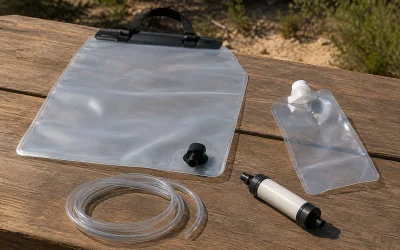
The Sawyer Products SP128 Mini, listed at about $28.99, is a more flexible system. The filter itself is approximately 5.8 inches long and weighs around 2 ounces, though the complete kit weighs more once you include the pouch, cap, and accessories. It can be used as a drinking straw, attached to a compatible bottle, or paired with its squeeze pouch to filter water into another container.
Both products are compact enough to forget about until you need them. That is their biggest practical advantage. They are also manual: you must find water, collect it, and drink or squeeze it through the filter. Flow can become slower with dirty water, and maintenance matters. A filter stored wet or used with heavily silty water needs more care than a sealed bottle of drinking water.
Pros
- Very low carrying weight: Most personal filters weigh approximately 2 to 3 ounces before adding a pouch or bottle. That is far lighter than carrying several liters of water.
- Small storage footprint: A straw-style filter is generally around 6 to 9 inches long and about 1 to 2 inches wide, so it fits easily in a side pocket or emergency drawer.
- No batteries or electricity: These filters work by suction or hand pressure. You do not need an outlet, charger, or a stated wattage capacity.
- Reusable: Unlike single-use bottled water, a filter can serve across multiple trips. Follow the care and replacement instructions rather than assuming it lasts forever.
- Useful during interruptions: A filter can provide an extra option during a short-term outage, evacuation, canceled flight, or unexpected delay.
- Lower long-term cost than bottled water: A $15 to $30 filter can pay for itself quickly if it prevents repeated purchases of individual bottles during travel or outdoor trips.
- Less plastic waste: You can use an existing bottle, cup, or pouch instead of buying a new disposable container for every drink.
- Easy to share in some situations: A squeeze-style system can often filter water into a separate bottle, while a personal straw is usually intended for one person drinking directly.
Cons
- It does not solve every water problem: Most compact filters are not designed to remove viruses, dissolved chemicals, heavy metals, salt, or fuel contamination. Check the specific product claims for the hazard you expect.
- You need a water source: A filter does not create water. In a dry environment, carrying several bottles may be more useful than carrying filtration equipment.
- Direct drinking can be awkward: A straw-style filter requires you to lean over a stream or use a separate cup. It cannot easily fill a bottle for later unless you collect water first.
- Flow may slow down: Mud, silt, and organic debris can clog the membrane. Pre-filtering visibly cloudy water through a cloth can help, but it does not make contaminated water safe by itself.
- Cleaning and storage matter: A filter may need backwashing, drying, or other care. Putting a wet filter into a sealed bag can create an unpleasant maintenance problem.
- Cold-weather limitations: If water inside the membrane freezes, the filter may be damaged even when the exterior appears fine. Winter travelers need to protect it from freezing.
- Limited convenience at home: For ordinary kitchen use, a countertop pitcher or under-sink system is usually easier and provides more water at once.
- Not a substitute for local advisories: During a boil-water notice or suspected viral outbreak, follow public-health guidance. A compact filter may not be the recommended treatment.
Who Should Buy It
Buy a personal water filter if you hike, backpack, camp, travel in places with inconsistent water quality, or keep a compact emergency kit. It makes especially good sense for people who already carry a daypack and occasionally pass streams, lakes, or remote campsites. The low weight means you can carry it routinely rather than remembering it only when a trip becomes complicated.
Choose a straw-style model when the priority is the lowest upfront price and simplest possible setup. The LifeStraw Personal Water Filter is the more economical reference point at about $14.99. It is a sensible “just in case” item for a car kit, travel bag, or occasional day hike.
Choose a squeeze-compatible system when you want more flexibility. At about $28.99, the Sawyer Mini costs more, but its ability to connect to a pouch or compatible bottle can make it more useful for filling water containers and sharing filtered water. That extra versatility is worthwhile for backpackers and frequent travelers.
Who Should Skip It
Skip it if your normal trips stay near reliable drinking fountains, hotels, stores, or treated municipal water. In that case, the filter may spend years in a drawer while a reusable water bottle does the job better.
Also skip a personal filter if your main concern is chemical contamination, seawater, viruses, or a known industrial spill. Those problems require a treatment method designed for the specific contaminant. A filter is also a poor choice for anyone who dislikes cleaning gear or is unlikely to follow storage instructions.
Cheaper Alternatives
| Option | Cost | Trade-off |
|---|---|---|
| Carry tap water in a reusable bottle | $5–$25 | Cheapest and easiest where safe water is available; does not help when your supply runs out. |
| Disposable bottled water | $1–$3 per bottle | Immediate convenience, but ongoing cost, storage bulk, and plastic waste add up quickly. |
| Water purification tablets | $8–$15 per pack | Lightweight and useful for emergencies; treatment can take time and may leave an aftertaste. Product coverage varies. |
| Boil water | $0 if you have a stove; roughly $30–$100 for a basic camping stove setup | Effective for many biological hazards, but requires fuel, heat, a pot, and time to cool the water. |
| Gravity or pump filter | $35–$100 | Better for groups and larger volumes, but heavier, bulkier, and more expensive than a personal filter. |
FAQ
Can you drink directly from a lake or stream with a personal filter?
You can, if the filter is rated for the biological hazards present and is used correctly. Choose the clearest available water, avoid stagnant areas, and do not assume that clear water is clean. If viruses or chemical pollution are possible, use an appropriate additional treatment method or a safer water source.
Is the LifeStraw worth buying at about $14.99?
Yes, for occasional emergency use or simple day hikes where you only need to drink directly from a collected source. It offers a low-cost, low-weight backup. Its main limitation is convenience: a personal straw is less useful when you want to fill a bottle for later or supply more than one person.
Is the Sawyer Mini worth paying about $28.99 for?
It can be, especially for backpackers and frequent travelers. The additional cost buys a more adaptable format that can work with a pouch or compatible bottle. If you only want a filter for a rarely used emergency kit, the cheaper straw-style option may be enough.
Should a water filter replace bottled water?
Not completely. A filter is a backup and a way to reduce bottled-water purchases, not a guarantee that every questionable source is safe. Carry enough water for the route, check local advisories, and use boiling, chemical treatment, or another method when the suspected hazard falls outside the filter’s capabilities.