Key takeaways
What's inside
Choosing the right turkey call can feel overwhelming given the sheer volume of options on the market. From traditional box calls to intricate mouth diaphragms, manufacturers offer tools designed for every skill level, hunting style, and acoustic preference. However, sorting through marketing hype to find what actually matters for your turkey hunting success requires looking past aesthetic appeal and understanding the mechanics of sound production.
Whether you are stepping into the turkey woods for the very first time or looking to refine your spring vest setup, making an informed purchase comes down to matching the call’s operational mechanics to your physical capabilities and hunting strategy. This guide breaks down the core elements you need to evaluate, helping you invest your money wisely in gear that performs when a wary gobbler is hanging up just out of range.
As an Amazon Associate we earn from qualifying purchases at no extra cost to you. Product prices and availability are accurate as of the date shown and are subject to change.
Understanding Turkey Call Categories
Turkey calls generally fall into four primary categories: box calls, pot-and-peg friction calls, mouth calls, and locator or tube calls. Each category serves a distinct purpose and demands a different physical interaction from the hunter, making it vital to understand their operational roles before building your kit.
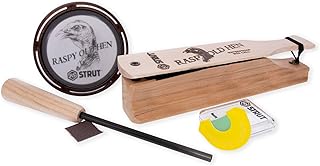
Box calls are exceptionally user-friendly and produce loud, far-reaching cuts and yelps, making them ideal for locating distant birds or cutting through heavy wind. Pot calls offer a massive range of volume and tone, allowing for subtle soft clucks and purrs as well as aggressive raspy yelps, though they require both hands to operate. Mouth calls require the highest learning curve because they sit inside the roof of your mouth, but they leave your hands completely free to shoulder your shotgun as a bird approaches. Tube calls and wingbone calls offer incredible realism and purity of tone for close-range manipulation, though they lack the high volume needed for windy days.
Acoustic Materials and Their Real-World Effects
When looking at friction calls like pots and box calls, the materials used dictate the pitch, volume, and rasp of the sound waves produced. Wood selection in box calls drastically changes acoustic resonance, with mahogany and walnut tending to produce deeper, mellower tones, while cedar and poplar offer higher pitches and sharper cuts.
For pot calls, the surface material paired with the striker material determines your acoustic range. Slate surfaces provide a forgiving, easy-to-play surface that excels at soft, mellow calling. Glass and crystal surfaces offer much higher friction, resulting in blistering volume and sharp high notes that cut through thick timber. Aluminum sits somewhere in between, providing a unique metallic rasp that can trigger stubborn gobblers. Matching your striker material—whether carbon, wood, or acrylic—to your pot surface is critical for achieving clean rollovers and realistic yelps.
Matching Calls to Your Hunting Style and Mobility
Your preferred hunting style dictates which calls deserve valuable space in your vest. If you practice an aggressive run-and-gun style where you cover miles of public land each day, minimizing bulk and weight is essential for endurance and quiet movement.
Hunters on the move often rely heavily on a combination of a reliable diaphragm call kept in place and a compact aluminum or slate pot call secured in an accessible vest pocket. Conversely, if you hunt from a blind or set up in fixed strut zones for hours at a time, you have the luxury of carrying bulkier box calls and multiple pot options with interchangeable strikers. Consider how quickly you need to transition from walking to calling, and ensure your call choices do not compromise your ability to remain completely still when a bird approaches.
Mouth Call Cuts and Reed Configurations
Diaphragm calls are categorized by the number of reeds, typically ranging from two to four, and the specific cut style applied to the top latex reed. Understanding these configurations prevents frustration during the learning process and helps you find a profile that matches your lung capacity.
Two-reed calls are very easy to break over and require minimal lung pressure, making them fantastic for soft purrs and tree yelps, though they lack deep rasp. Three- and four-reed calls offer more backpressure, allowing you to push hard for loud, raspy locator calls and aggressive cutting. Cut styles—such as V-cuts, batwing cuts, and ghost cuts—alter how the air escapes across the reeds. A V-cut creates a distinct split in the sound that adds natural rasp and double-tone breaks, while a standard straight-cut or batwing offers a cleaner, more uniform yelp that is easier for beginners to master without splitting notes.
Common Buyer Mistakes to Avoid
Many hunters fall into common traps when purchasing turkey calls, often wasting money on gear that sits unused in a drawer. The most frequent mistake is buying a call based entirely on how loud it sounds in a retail store or online video. Volume is rarely the deciding factor when a tom is at close range; timber density, wind management, and tone quality matter far more.
Another common pitfall is purchasing advanced mouth calls with heavy four-reed configurations before building up adequate palate strength and breath control. Starting with a forgiving two-reed or modified split-V call prevents bad habits from forming. Finally, avoid buying single-purpose specialty calls until you have mastered the foundational staples: a good pot call and a reliable mouth call.
When to Spend More: Entry-Level vs. Premium Calls
Price points in the turkey call market vary wildly, from mass-produced budget friction calls to hand-turned custom pot calls crafted from exotic burl woods with high-end crystal surfaces.
Budget-friendly production calls often utilize synthetic pots and standard aluminum surfaces that perform adequately out of the box. However, stepping up to mid-tier and premium calls buys you superior consistency, tighter manufacturing tolerances, weather-resistant materials, and hand-tuned surfaces that do not require constant chalking or scuffing. Custom pot calls often feature superior soundboards that project cleaner frequencies and eliminate dead spots on the friction surface. If you hunt frequently in wet or humid conditions, investing in high-end waterproof components prevents your gear from failing when moisture ruins traditional wood and slate setups.
Related Guides
If you are ready to look at specific gear recommendations for the upcoming season, check out our comprehensive Best Turkey Calls in 2026: Tested and Ranked roundup to see top performers.
FAQ
What turkey call is easiest for a complete beginner to learn?
Box calls are universally considered the easiest entry point because they require minimal technique to produce realistic yelps and cuts. For hands-free operation, a two-reed mouth call with a basic batwing cut allows beginners to learn breath control without excessive lung strain.
How do I maintain my friction calls during the season?
Slate and ceramic surfaces require regular conditioning using a conditioning stone or sandpaper to maintain a clean, textured micro-groove pattern that grips the striker. Keep your wood box calls free of heavy moisture, and avoid using chalk on waterproof synthetic box models.
Should I carry multiple types of calls in my vest?
Yes, carrying at least two different types of calls—such as a pot call and a mouth call—gives you versatility in tone and volume. Different situations demand different sounds, and having a backup ensures you can still call effectively if one call gets wet or lost.
How long do latex mouth calls typically last?
Latex mouth diaphragms degrade over time due to exposure to saliva, heat, and physical stress during use and storage. A well-maintained mouth call will usually last for one or two seasons before the latex loses its stretch and pitch consistency, meaning you should inspect them annually.