Key takeaways
- Lower weight: Removing the back panel, zipper, and hood can save several ounces compared with a similarly warm sleeping bag. A well-designed quilt may weigh 18 to 25 ounces for mild three-season use.
- Smaller packed size: Down quilts compress efficiently, leaving more room in a 40- to 55-liter backpack for food and clothing.
- Better ventilation: You can loosen the top edge, open the footbox, or use the quilt like a blanket when temperatures rise. This is often more comfortable than fighting a full-length zipper.
- More freedom to move: The open design suits side sleepers and people who dislike the restrictive shape of a mummy bag.
- Strong warmth-to-cost potential: Entry-level quilts can deliver useful three-season performance for roughly $70 to $180, although the lowest-priced options deserve careful inspection.
- Flexible layering: A quilt can cover you over a sleeping bag liner, insulated clothing, or another blanket when conditions change.
- Less zipper trouble: There is no long zipper to snag, break, or collect dirt. Footbox closures and pad straps are simpler to maintain.
The Short Answer
Yes, a backpacking quilt is worth it if you sleep mostly on your back or side, camp in conditions above freezing, and are willing to manage drafts with straps and good sleeping technique. If you toss and turn constantly, sleep cold, or regularly camp below about 25°F, a traditional sleeping bag is usually the better choice.
A quilt removes insulation from the underside of your sleeping system, where it is compressed and provides little warmth. That can reduce weight, bulk, and cost. The trade-off is that you lose the enclosed, foolproof feel of a sleeping bag. In 2026, quilts remain one of the simplest ways to make a three-season sleep system lighter without giving up down insulation or comfort.
Our top picks

As an Amazon Associate we earn from qualifying purchases at no extra cost to you. Ratings are shown as listed on Amazon.
What You Actually Get
A backpacking quilt is essentially an insulated blanket designed to attach to your sleeping pad. Most models have a sewn footbox, a drawcord or snap closure at the foot, and straps that wrap around the pad. Some include a pad attachment system, while others rely on elastic bands or simple clips.
Unlike a sleeping bag, a quilt usually has no hood and no full-length zipper. Your sleeping pad supplies insulation beneath you, and your clothing or a separate hood covers your head. The quilt rests over your body and tucks around your shoulders. When you sit up, it can open like a blanket; when you lie down, the edges need to be secured to prevent cold air from entering.
Typical three-season backpacking quilts weigh about 18 to 32 ounces, depending on temperature rating, width, fill power, and fabric. Budget synthetic models can weigh 30 to 45 ounces. Premium down quilts may cost $250 to $500 or more, while entry-level products commonly fall between $70 and $180.
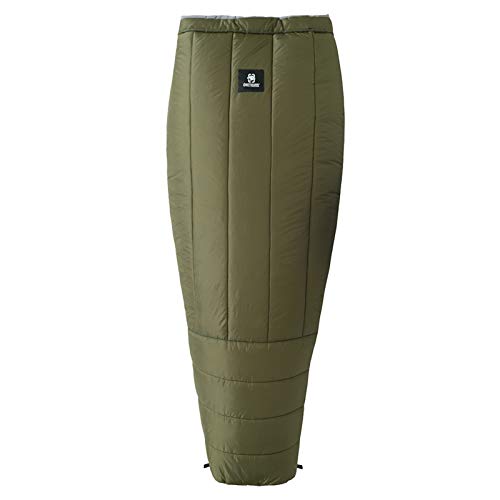
For comparison, an Ultralight Sleeping Bag Top Quilt with 850-fill down, a listed 30°F rating, and a 1.9-pound weight is priced for under $150. The OneTigris Featherlite Ultralight Sleeping Quilt is listed at 35 ounces and under $70. These examples show the basic market trade-off: lower prices can make quilts accessible, but heavier construction, less efficient insulation, or less refined pad attachment may reduce the weight advantage.
Pay attention to the temperature rating. A 30°F quilt is not automatically comfortable for every sleeper at 30°F. Ratings depend on the pad beneath it, your base layers, shelter, wind protection, metabolism, and how well you seal the quilt around your shoulders and feet. For many people, a quilt rated around 20°F to 30°F is a practical three-season starting point.
Pros
- Lower weight: Removing the back panel, zipper, and hood can save several ounces compared with a similarly warm sleeping bag. A well-designed quilt may weigh 18 to 25 ounces for mild three-season use.
- Smaller packed size: Down quilts compress efficiently, leaving more room in a 40- to 55-liter backpack for food and clothing.
- Better ventilation: You can loosen the top edge, open the footbox, or use the quilt like a blanket when temperatures rise. This is often more comfortable than fighting a full-length zipper.
- More freedom to move: The open design suits side sleepers and people who dislike the restrictive shape of a mummy bag.
- Strong warmth-to-cost potential: Entry-level quilts can deliver useful three-season performance for roughly $70 to $180, although the lowest-priced options deserve careful inspection.
- Flexible layering: A quilt can cover you over a sleeping bag liner, insulated clothing, or another blanket when conditions change.
- Less zipper trouble: There is no long zipper to snag, break, or collect dirt. Footbox closures and pad straps are simpler to maintain.
Cons
- Draft management takes practice: You must adjust the straps and tuck the edges around your shoulders. A small opening can feel surprisingly cold on a windy night.
- Not ideal for restless sleepers: Frequent rolling can pull the quilt loose from the pad or expose your back. Wider quilts help, but they add weight and cost.
- No built-in hood: You need a beanie, insulated hood, balaclava, or separate sleeping hood when temperatures drop. That extra item may offset some of the weight savings.
- Greater dependence on your sleeping pad: Because the quilt does not insulate your underside, a poorly insulated pad can make you cold. For near-freezing trips, an R-value around 4 to 5 is a reasonable starting point; colder conditions call for more.
- Less forgiving in extreme cold: A sleeping bag seals around your body more naturally and generally provides more reliable protection in subfreezing weather, especially for inexperienced campers.
- Sizing matters: A quilt that is too narrow cannot wrap around your shoulders, while one that is too short may leave your feet exposed. Common widths range from about 52 to 58 inches, with wide versions around 60 to 65 inches.
- Quality varies widely: Budget listings may use vague temperature claims, heavier fabrics, inconsistent fill, or weak straps. A low price is not necessarily a bargain if the quilt is uncomfortable or unreliable.
Who Should Buy It
A backpacking quilt makes sense for hikers who prioritize low pack weight and usually camp in spring, summer, and fall. It is especially well suited to back and side sleepers who stay relatively still, already own a good sleeping pad, and are comfortable wearing a warm hat or hood at night.
It is also a good choice for hikers who run warm or like flexible ventilation. A quilt can be loosened during a warm evening and cinched tight after midnight. Backpackers on a budget may benefit too, provided they compare actual weight, insulation type, dimensions, and attachment hardware instead of choosing solely by price.
Choose a wider model if you sleep on your side, move often, have broad shoulders, or want to use the quilt without carefully positioning every strap. For a 6-foot sleeper, a regular length commonly works, but taller users should look for long versions around 78 to 84 inches. Leave enough room to pull the quilt over your shoulders without compressing the insulation.
Who Should Skip It
Skip a quilt if you are a restless sleeper who regularly kicks off blankets, cannot tolerate drafts, or wants a simple system that works with minimal adjustment. A sleeping bag is also the safer choice for winter camping, exposed campsites, and trips where temperatures may fall well below the stated rating.
Very cold sleepers should be cautious. You can add clothing and a liner, but those solutions may be less efficient than starting with a properly rated sleeping bag. A quilt may also be a poor first purchase if you do not yet own an insulated sleeping pad. The pad, quilt, shelter, and sleepwear work as one system; upgrading only one piece may not solve a cold-night problem.
Cheaper Alternatives
| Option | Cost | Trade-off |
|---|---|---|
| Budget synthetic sleeping bag | $40–$90 | Lower upfront cost, but commonly weighs 35–55 ounces and packs larger. |
| Fleece blanket or camping blanket | $15–$50 | Useful in warm weather, but bulky and usually inadequate near freezing. |
| Secondhand down sleeping bag | $50–$150 | Can provide excellent value, but inspect loft, moisture damage, odors, and zipper condition. |
| Sleeping bag liner plus warm clothing | $30–$120 | Extends an existing bag or blanket, but rarely matches the warmth-to-weight efficiency of a real quilt. |
| Entry-level backpacking quilt | $70–$180 | More affordable than premium quilts, though it may be heavier and have simpler straps or less precise temperature ratings. |
FAQ
Is a backpacking quilt warmer than a sleeping bag?
Not automatically. A quilt can be just as warm when its insulation, fit, and temperature rating are comparable, but it requires a well-insulated pad and careful draft control. A sleeping bag is usually more forgiving because its hood, zipper, and enclosed shape reduce openings.
Can you use a backpacking quilt in winter?
Yes, but choose a model specifically designed for winter temperatures and pair it with a high-R-value pad, warm head insulation, and a weatherproof shelter. For temperatures below about 20°F, many beginners will find a winter sleeping bag easier and more dependable. Always build in a safety margin instead of treating the rating as a guarantee.
Do you need straps for a backpacking quilt?
Usually, yes. Straps help keep the quilt centered over the pad and reduce gaps when you move. Some warm-weather quilts can be used without them, but attachment systems are especially valuable near freezing or for side sleepers. Check that the straps fit your pad without crushing its edges.
What temperature rating should a first quilt have?
For general three-season use, a 20°F to 30°F quilt is the most versatile range. Choose 30°F if you mostly camp during mild weather and tend to sleep warm. Choose 20°F if shoulder-season nights are common or you sleep cold. If your trips are mainly summer weekend outings, a 40°F quilt can save weight and money, but it offers less margin when the forecast changes.