Key takeaways
- Choosing by maximum lumens alone. A 2,000-lumen claim does not tell you how long the lamp stays that bright, how wide the beam is, or how hot it becomes.
- Ignoring weight. A few extra ounces at the front of your head can cause slipping, forehead pressure, or neck fatigue.
- Buying a beam that is too narrow. Spot beams reach farther, but a flood beam is safer and more comfortable for close work and uneven ground.
- Forgetting headwear. A band that fits your bare head may not fit over a thick hat or helmet.
- Confusing watts with brightness. LED wattage describes electrical power use, not a direct brightness rating. Lumens are more relevant for comparing light output, although manufacturer testing methods can vary.
- Overlooking controls. A complicated sequence of buttons is frustrating in the dark. Choose direct access to low, medium, and high modes.
The Short Answer
For most people, a headlamp between 200 and 400 lumens is enough. That range gives you a useful walking beam, hands-free light for household repairs, and enough brightness for camping without draining the battery too quickly.
Choose 100 to 200 lumens for reading, finding your way around a tent, walking the dog, or using a headlamp indoors. Choose 400 to 800 lumens for hiking on dark trails, cycling, hunting, running, or working outdoors. A headlamp rated at 800 to 1,200 lumens is better for search tasks, technical work, wide-open terrain, and situations where you need a long beam.
Our top picks
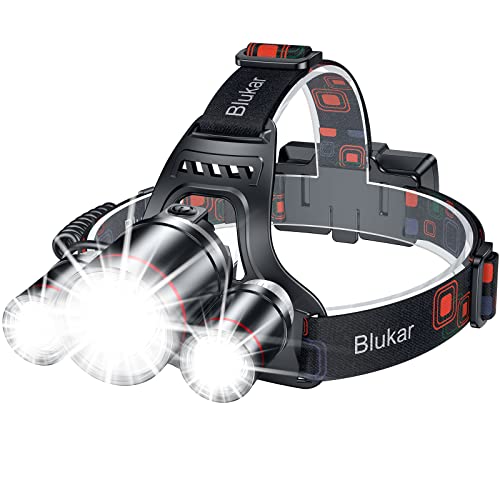
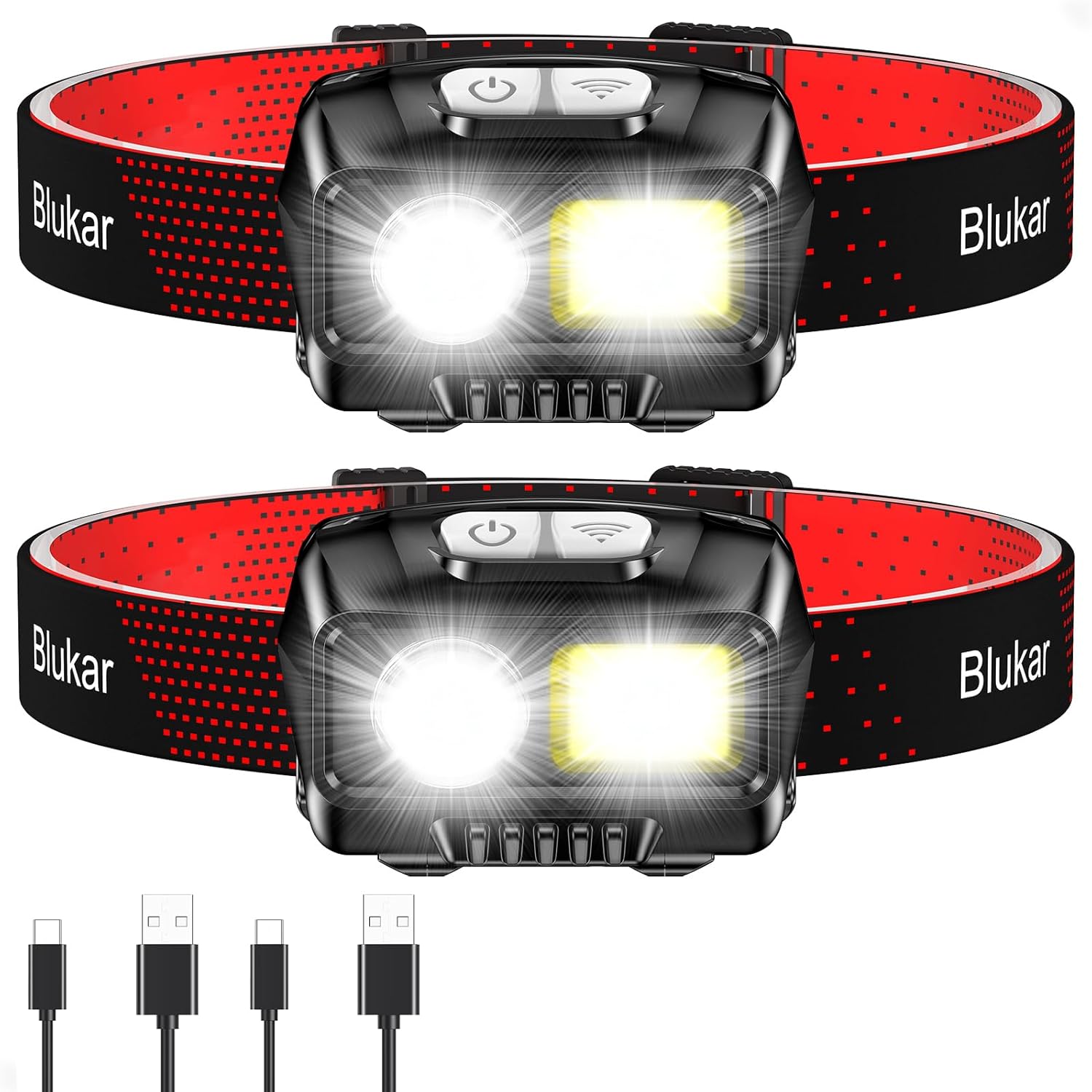 Blukar LED Headlamp Rechargeable
- Power Source: Battery Powered
- Light Source Type: LED
- White Brightness: 2000 Lumens

As an Amazon Associate we earn from qualifying purchases at no extra cost to you. Ratings are shown as listed on Amazon.
In 2026, many inexpensive headlamps advertise 1,000, 2,000, or even higher lumen figures. Those numbers can describe a brief maximum setting rather than the brightness the lamp maintains during normal use. Compare the usable modes, beam pattern, battery capacity, comfort, weather resistance, and runtime—not just the largest number on the package.
Standard Sizes
Headlamps do not have a universal “size” system like shoes or hats. Instead, size refers to the lamp body, headband, battery pack, and overall weight. Most adult models fit head circumferences from approximately 20 to 24 inches (51 to 61 cm), with an adjustable top strap on many outdoor models.
| Headlamp type | Typical brightness | Front housing size | Overall weight | Best for |
|---|---|---|---|---|
| Compact reading lamp | 50–150 lumens | 2.0–2.8 x 1.2–1.8 in (5.1–7.1 x 3.0–4.6 cm) | 1.5–3.5 oz (43–99 g) | Reading, tents, emergency use |
| General-purpose lamp | 150–400 lumens | 2.4–3.5 x 1.5–2.2 in (6.1–8.9 x 3.8–5.6 cm) | 2.5–5.5 oz (71–156 g) | Walking, chores, camping |
| Trail and work lamp | 400–800 lumens | 2.8–4.0 x 1.7–2.5 in (7.1–10.2 x 4.3–6.4 cm) | 3.5–7.5 oz (99–213 g) | Hiking, running, repairs, hard hats |
| High-output lamp | 800–1,500+ lumens | 3.0–4.5 x 1.8–2.8 in (7.6–11.4 x 4.6–7.1 cm) | 5–12 oz (142–340 g) | Search work, hunting, remote trails |
These are practical size ranges rather than strict industry standards. A lamp with a rear battery pack may have a smaller front housing but more total weight. The headband itself commonly measures about 0.75 to 1.25 inches (1.9 to 3.2 cm) wide. A wider band distributes pressure better, while a top strap helps keep a heavier lamp from sliding down.
Battery design also affects size. Small USB-rechargeable lamps may weigh 2 to 4 ounces (57 to 113 g). Larger models with a high-capacity battery or separate rear pack may weigh 6 to 12 ounces (170 to 340 g). For long wear, a comfortable 300-lumen lamp can be more useful than an uncomfortable 1,000-lumen model.
How to Measure Your Space
For a headlamp, “measuring your space” means checking the area you need to illuminate and making sure the lamp will fit your head, helmet, or work gear.
- Measure your head circumference. Wrap a flexible tape measure around your forehead, above your ears, and around the widest part of the back of your head. Do not pull the tape tight. Most adult headlamps fit roughly 20 to 24 inches (51 to 61 cm).
- Measure over your intended gear. If you will wear the lamp over a winter hat, hard hat, or helmet, repeat the measurement with that gear on. Look for a long enough adjustable band or a model designed for helmet mounting.
- Estimate your working distance. Measure or estimate how far ahead you need to see. A 100-lumen reading lamp may cover a nearby tent, while a trail user may need a focused beam reaching 50 to 100 feet (15 to 30 m) or more.
- Check the beam width. A flood beam spreads light over a wide area and is useful for repairs, cooking, and close walking. A spot beam concentrates light farther ahead. Some lamps combine both patterns.
- Check the lamp’s physical clearance. Measure the front housing and confirm it will not interfere with a helmet brim, safety glasses, or a hood. A front unit around 3 inches (7.6 cm) wide is common, but larger units may feel bulky.
- Plan for battery space. If the battery is built into the front housing, the lamp may feel heavier at your forehead. A rear battery pack balances the weight but adds a cable, extra bulk, or more parts to manage.
By Room or Use Case
Reading, Bedtime, and Inside a Tent
Look for 30 to 100 lumens with a low mode, dimming, or a red-light setting. A high-output lamp can create glare and disturb someone nearby. A compact lamp weighing less than 3 ounces (85 g) is usually comfortable for an hour or two of reading. Red light can help preserve night vision, but it does not replace a bright white beam when you need to move around.
Household Repairs and Power Outages
A 100- to 300-lumen headlamp is generally sufficient for checking a breaker panel, fixing a faucet, working under a sink, or navigating a dark hallway. Choose a wide beam and a simple button that is easy to operate with one hand. Rechargeable models commonly cost about $13 to $36 in this category, depending on battery size, controls, and included accessories.
For example, basic Blukar rechargeable models are listed around under $20 to under $20. Their advertised maximum outputs are much higher than what you may need for ordinary indoor tasks, so use the lower modes when possible to reduce glare and extend runtime.
Camping and General Outdoor Use
Choose 200 to 400 lumens for campsite setup, cooking, packing, and walking established paths. A lamp with several modes is more practical than one with only a powerful setting. Look for splash resistance, a tilting head, a lockout feature to prevent accidental activation, and at least 6 to 10 hours of usable low-mode runtime if you will be away from a charger.
Hiking, Running, and Cycling
For a dark trail, start with 300 to 600 lumens. Faster movement requires more seeing distance, so beam reach and stability matter as much as raw output. Running lamps should be lightweight and secure, while cycling may require a brighter, more focused beam. A top strap or rear battery pack can reduce bouncing during movement.
Worksites and Hard Hats
For construction, maintenance, and outdoor work, 300 to 800 lumens is a useful range. Check for helmet compatibility, impact resistance, water resistance, glove-friendly controls, and a secure mounting system. The DanForce headlamp listed at about under $40 advertises 1,080 lumens, red light, zoom adjustment, and IPX54 protection. Features like these can be valuable, but confirm that the mounting method fits your specific hard hat.
Search, Hunting, and Remote Areas
Use 800 lumens or more when you need to identify objects at a distance or illuminate a large, open area. High-output lamps consume more power and often produce more heat. Carry a spare battery or backup light, and do not assume the highest mode will last for the entire advertised runtime. A lower setting is often adequate for walking between longer-range searches.
Common Sizing Mistakes
- Choosing by maximum lumens alone. A 2,000-lumen claim does not tell you how long the lamp stays that bright, how wide the beam is, or how hot it becomes.
- Ignoring weight. A few extra ounces at the front of your head can cause slipping, forehead pressure, or neck fatigue.
- Buying a beam that is too narrow. Spot beams reach farther, but a flood beam is safer and more comfortable for close work and uneven ground.
- Forgetting headwear. A band that fits your bare head may not fit over a thick hat or helmet.
- Confusing watts with brightness. LED wattage describes electrical power use, not a direct brightness rating. Lumens are more relevant for comparing light output, although manufacturer testing methods can vary.
- Overlooking controls. A complicated sequence of buttons is frustrating in the dark. Choose direct access to low, medium, and high modes.
FAQ
Is 300 lumens enough for a headlamp?
Yes. Three hundred lumens is a versatile middle ground for camping, household repairs, walking, and many established trails. Select a stronger lamp if you move quickly, need long-distance visibility, or work in open terrain.
Is 1,000 lumens too bright for a headlamp?
Not necessarily, but it is more than most indoor or casual outdoor tasks require. A 1,000-lumen lamp is useful when it includes lower settings, good heat management, and a beam suited to your work. Avoid shining it directly at another person’s eyes.
How many lumens do I need for walking at night?
Choose 150 to 300 lumens for sidewalks and familiar paths. Choose 300 to 600 lumens for uneven trails, faster walking, or areas without street lighting. A wide, stable beam is often more useful than an extreme maximum output.
What is the best headlamp size for adults?
For general use, look for an adjustable 20- to 24-inch (51- to 61-cm) headband, a front housing about 2.5 to 3.5 inches (6.4 to 8.9 cm) wide, and a total weight under 6 ounces (170 g). If you need a helmet or winter-hat fit, measure with that gear on before buying.