Key takeaways
What's inside
Portable water filter review shopping gets confusing when every filter claims to be the lightest and fastest. This roundup compares five field-tested filters head-to-head across flow rate, weight, durability, and protection, from the thru-hiker favorite to a virus-removing bottle, so you can see which one actually fits your hikes.
As an Amazon Associate we earn from qualifying purchases.
By Jake Thompson
How to Read a Portable Water Filter Review
Specs only matter once you know your trips. A useful portable water filter review weighs flow rate, weight, durability, and protection together, since a filter that wins on one can lose on another. Before the picks, it helps to understand the three trade-offs that separate every filter on the market.
Flow Rate vs Longevity
Fast flow feels great but can fade. Some filters flow quickly out of the box yet slow sooner, while others start slower but restore flow through backflushing for a long service life. Decide whether you value quick drinking now or a filter that lasts across a whole thru-hike.
Real-world flow drops with use. Sediment clogs pores, so a filter’s rated flow is a best case that declines without maintenance. A fair portable water filter review looks at how a filter holds up over hundreds of liters, not just its speed on the first clean squeeze.
Weight and Durability
Weight and toughness pull against each other. Ultralight filters and soft flasks save grams but can crack, puncture, or fail if frozen, while sturdier filters and reservoirs weigh more but survive rough handling. Match the build to how hard you are on gear and how remote your trips are.
Durability protects you when it counts. A filter that fails mid-trip leaves you without safe water, so reliability matters as much as weight. This portable water filter review favors filters that balance a light build with the ruggedness to keep working deep in the backcountry.
Protection and Backup
Know what each filter removes. Standard hollow-fiber filters stop bacteria and protozoa but not viruses, while press-style purifier bottles add virus removal for travel and contaminated sources. Match protection to where you hike, since most North American water needs only a filter, not a full purifier.
Redundancy is cheap insurance. No filter is failure-proof, so carrying purification tablets as a backup protects you if a filter clogs, cracks, or freezes. Any honest portable water filter review recommends pairing your filter with a lightweight chemical backup on serious or remote trips.
Top Picks: The Best Portable Water Filters
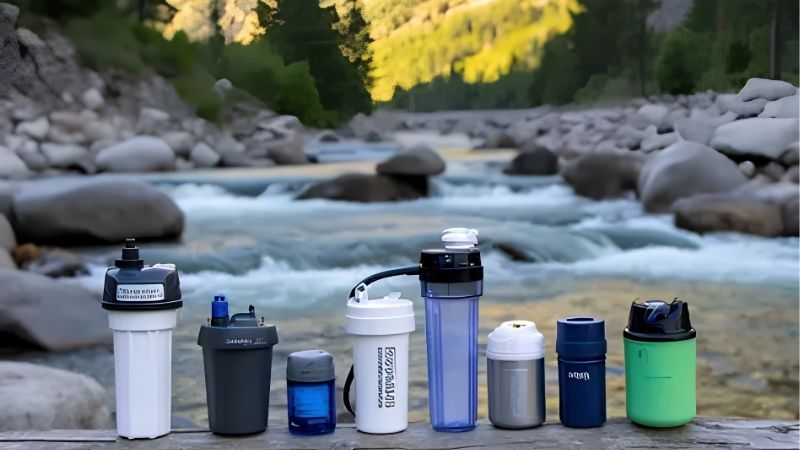
With those trade-offs in mind, this portable water filter review lines up five field-tested filters, each a clear winner for a different hiker. The table sums up the essentials, and the reviews below explain who each one suits and the trade-offs to weigh before you buy.
| Filter | Weight | Flow | Key Feature | Best For |
|---|---|---|---|---|
| Sawyer Squeeze | ~3 oz | ~1.7 L/min | Backflushable | Overall |
| Katadyn BeFree | ~2 oz | ~2 L/min | Fast, collapsible | Flow speed |
| Platypus QuickDraw | Moderate | Very fast | Durable reservoir | Durability |
| Sawyer Mini | ~2 oz | Slower | Cheap and tiny | Budget ultralight |
| Grayl GeoPress | ~15 oz | ~12 sec/L | Virus removal | Travel |
Sawyer Squeeze – Best Overall
The Sawyer Squeeze earns the top spot in this portable water filter review. Its 0.1-micron hollow-fiber membrane removes bacteria and protozoa, it weighs about three ounces, and it backflushes in the field to restore flow while threading onto standard bottles, giving it flexibility and longevity that few filters match.
The included pouches can develop seam leaks, so many hikers add tougher aftermarket bags. But for a proven, versatile, long-lasting filter carried by a huge share of thru-hikers, it is the reliable default and a genuine benchmark.
Katadyn BeFree – Best Flow
The Katadyn BeFree is the speed champion among personal filters. Its 0.1-micron membrane flows fast at roughly two liters per minute, its wide soft flask scoops shallow sources with ease, and cleaning is a quick swish, making hydration nearly effortless on the move for solo hikers and pairs.
Its soft flask is less durable than a hard bottle and its replacement flasks are harder to source. But for the fastest, lowest-fuss drinking among the filters here, it is the clear flow-rate winner.
Platypus QuickDraw – Best Durability
The Platypus QuickDraw pairs a fast flow with a rugged build. It filters quickly, its reservoir is noticeably sturdier than the bags bundled with rival squeeze filters, and its cartridge threads onto standard bottles, making it a great pick for thru-hikers and anyone hard on their gear.
It is slightly heavier than the lightest squeeze filters, and its top flow claim is optimistic in real use. But for a durable, fast filter with a premium reservoir, it offers an excellent balance of speed and toughness.
Sawyer Mini – Best Budget Ultralight
The Sawyer Mini is the featherweight, wallet-friendly option. At around two ounces and a very low price, it filters to the same 0.1 micron as its bigger sibling, backflushes to restore flow, and packs down tiny, making it a favorite for ultralight solo hikers and emergency kits.
Its slower flow rate makes drinking more tedious, especially over long days. But for hikers who prize minimum weight and cost over speed, or want a cheap backup filter, it delivers safe water for very little.
Grayl GeoPress – Best for Travel
The Grayl GeoPress is the pick when viruses are a risk. Fill the bottle, press the cartridge down like a French press, and in about twelve seconds you have purified water that removes viruses along with bacteria and protozoa, making it ideal for international travel and questionable sources.
It is heavy for backpacking and its cartridge life and flow are limited compared to hollow-fiber filters. But for travelers who need virus protection in an all-in-one bottle, its one-press convenience is hard to match.
Frequently Asked Questions
A few questions come up again and again in any portable water filter review. Here are quick, practical answers to help you choose.
Which filter is best for thru-hiking?
The Sawyer Squeeze and Platypus QuickDraw are top thru-hiking picks because they backflush to maintain flow, thread onto standard bottles, and last a long time. The Katadyn BeFree is great for speed but its flasks are harder to replace. Choose based on whether longevity or flow speed matters more to you.
Do these filters remove viruses?
Most, including the Sawyer, Katadyn, and Platypus models, remove bacteria and protozoa but not viruses. Only the press-style Grayl GeoPress adds virus removal. For North American backcountry, a standard filter is fine; for international travel or contaminated water, choose a purifier or add chemical treatment to handle viruses.
How long do portable filters last?
Hollow-fiber filters like the Sawyer are rated for very high volumes and can last for years with proper backflushing, while soft-flask filters and cartridges may need replacing sooner. Real lifespan depends on water quality and maintenance, so clean your filter regularly and never let it freeze, which ruins it.
Do I need a backup filter or tablets?
Yes, a backup is smart. Filters can clog, crack, or freeze, so carrying purification tablets adds reliable insurance for almost no weight. If your primary filter fails deep in the backcountry, a few tablets can keep your water safe and your trip on track, which is why many hikers carry both.
See More:
- Best camp chair
- Lightweight camp chair
- Camping table review
- Backpacking cookware set
- Camp stove review
Final Thoughts
This portable water filter review shows there is no single best filter, only the right one for your trips. The Sawyer Squeeze leads overall, the Katadyn BeFree flows fastest, and the Platypus QuickDraw is toughest, while the Sawyer Mini saves weight and money and the Grayl GeoPress removes viruses for travel. Match flow, weight, and protection to your hikes, and carry a backup to stay safe.