Key takeaways
What's inside
First aid kit for hiking shopping is about matching supplies to your trips, not buying the biggest box. This roundup compares five field-tested pre-made kits across weight, contents, waterproofing, and coverage, from a featherweight ultralight pouch to a trauma-ready group kit, so you can carry the right gear you will actually use.
As an Amazon Associate we earn from qualifying purchases.
By Jake Thompson
How to Choose a Hiking First Aid Kit
Before comparing kits, think about your trips and your group. A solo day-hiker needs far less than a guide leading a multi-day trek. Choosing the right first aid kit for hiking comes down to three factors that decide whether it earns its place or just adds dead weight.
Weight and Trip Length
Match the kit’s size to how long and far you go. Ultralight kits around six to eight ounces cover the common injuries of a day hike or short trip, while multi-day and group trips justify heavier, better-stocked kits. Buying more than you need means the kit stays home, defeating its purpose.
Remember that a kit only helps if you carry it. The best first aid kit for hiking is one light enough that you never leave it behind, so err toward compact for short outings and scale up only when a longer or higher-consequence trip truly demands it.
Contents and Coverage
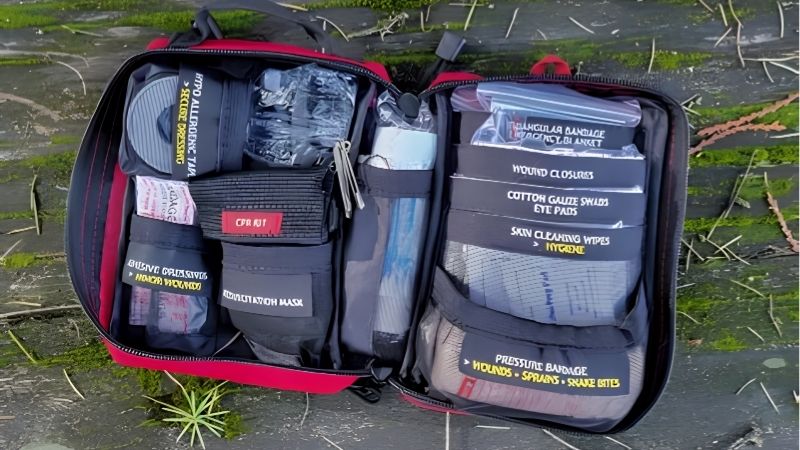
Read the supply list before buying. Almost every kit includes adhesive bandages, gauze, antibiotic ointment, and tape, but check for the items that matter most to you, such as blister care, basic medications, trauma pads, and a finger splint. Quantities matter as much as the piece count.
Consider the injuries you are likely to face. For most hikers, a solid blister-and-wound kit covers the realistic risks, while remote or group trips warrant trauma supplies. Match the coverage to your terrain and skills rather than being impressed by a high but low-quality item count.
Waterproofing and Organization
Wet supplies are useless, so waterproofing matters. Kits with sealed inner bags or a water-resistant outer case keep contents dry through river crossings and rain, and any kit can be upgraded with a dry bag or zip-top bag. A bright, easy-to-spot case helps you find it fast.
Organization saves precious time in an emergency. Labeled compartments let anyone locate supplies quickly, which matters when you are treating someone else or are stressed. A well-organized first aid kit for hiking turns a frantic search into a calm, quick response when it counts most.
Top Picks: The Best Hiking First Aid Kits
With those factors in mind, here are five field-tested options for a first aid kit for hiking, each a clear winner for a different kind of trip. The table sums up the essentials, and the reviews below explain who each kit suits and the trade-offs to weigh before you buy.
| Kit | Weight | Best Use | Best For |
|---|---|---|---|
| AMK Ultralight/Watertight .7 | ~6-8 oz | Day and light backpacking | Overall and ultralight |
| AMK Mountain Series Backpacker | ~15 oz | Groups up to 4 days | Multi-day groups |
| Surviveware Small | ~1 lb | Basecamp and family | Value and organization |
| AMK Hiker | Light | Day hikes | Budget day hike |
| MyMedic MyFAK Mini Pro | Heavier | Trauma-ready | Comprehensive |
AMK Ultralight/Watertight .7 – Best Overall
As a first aid kit for hiking, the Adventure Medical Kits Ultralight/Watertight .7 is the standard for most people. At roughly six to eight ounces, its two-stage waterproofing keeps supplies bone-dry, and it packs a surprising variety of bandages, medications, blister care, and wound supplies that handle the vast majority of common trail injuries.
It is sized for one or two people on shorter trips, so groups or long expeditions need more. But for a compact, genuinely waterproof kit that covers the realistic risks of day hikes and backpacking alike, it is hard to beat.
AMK Mountain Series Backpacker – Best for Groups
The Adventure Medical Kits Mountain Series Backpacker is built for multi-day backcountry trips with several people. At around 15 ounces, it stocks plenty of the most-used supplies plus a first aid manual, and its labeled compartments keep everything organized for up to four people across several days.
It is heavier and larger than a solo kit, so it is overkill for a quick day hike. But for group trips and longer expeditions where you need depth of supplies and clear organization, it is an excellent, well-rounded choice.
Surviveware Small – Best Value
The Surviveware Small First Aid Kit delivers impressive organization and coverage for the price. Its water-resistant case holds around 100 quality pieces in labeled compartments, so anyone can find supplies fast, and it offers strong basecamp and family utility without the premium cost of comprehensive kits.
It is heavier than an ultralight pouch and not as fully waterproof as sealed kits. But for value-conscious hikers who want a well-stocked, well-organized kit for weekends and family trips, its bang-for-buck is genuinely hard to match.
AMK Hiker – Best Budget Day Hike
The Adventure Medical Kits Hiker is a compact, affordable kit for short outings. It covers the common day-hike injuries with bandages, wound care, and basic medications in a small, cheap package, making it an easy grab for casual hikers who want essential coverage without spending much.
Its supply list is basic and best suited to one person on a day trip, so it lacks trauma gear and depth. But for the most common cuts, blisters, and aches on a short hike, it does exactly what most people need.
MyMedic MyFAK Mini Pro – Best Comprehensive
The MyMedic MyFAK Mini Pro is the most trauma-ready kit here. It bundles comprehensive basic first aid with more advanced supplies for serious situations, each item prepackaged for easy mixing and replacement, giving guides and higher-consequence trips the depth to handle everything from burns to significant bleeding.
It is heavier and pricier than most hiking kits, and its advanced supplies reward some training to use well. But for those who venture far from help or want maximum readiness, its thorough, durable setup is reassuring.
Frequently Asked Questions
A few questions come up again and again when hikers shop for a first aid kit for hiking. Here are quick, practical answers to help you finalize your choice.
What should a hiking first aid kit contain?
At minimum, adhesive bandages, gauze, medical tape, antibiotic ointment, blister care, basic pain and allergy medications, and nitrile gloves. Longer or remote trips add trauma pads, a splint, and wound-closure supplies. Tailor the contents to your trip length, group size, and the injuries you are most likely to face.
Should I buy a pre-made kit or build my own?
Pre-made kits give you an organized case and a sensible starting selection, which is ideal for beginners. Many experienced hikers buy a quality kit, then strip out what they never use and add their own medications and extra blister supplies. Starting pre-made and refining over a season works well.
How much should a hiking first aid kit weigh?
A solo day-hike kit can weigh as little as six to eight ounces, while a multi-day group kit runs closer to a pound. Since a kit only helps if you carry it, favor a lightweight option for short trips and scale up only when the trip length or group size demands it.
How often should I restock my kit?
Check your kit before each significant trip and at least a couple of times a year. Replace anything you have used, and watch expiration dates on medications, ointments, and adhesives, since they degrade over time. A kit that sits untouched for years may let you down exactly when you need it.
See More:
- Best camp chair
- Lightweight camp chair
- Camping table review
- Backpacking cookware set
- Camp stove review
Final Thoughts
The best first aid kit for hiking is the one whose weight and contents match your trips. The AMK Ultralight/Watertight .7 leads for most hikers, the Mountain Series Backpacker suits groups, and the Surviveware Small offers value, while the AMK Hiker covers budgets and the MyFAK Mini Pro handles trauma. Match the kit to your trip, keep it stocked, and you will be ready for the common mishaps of the trail.